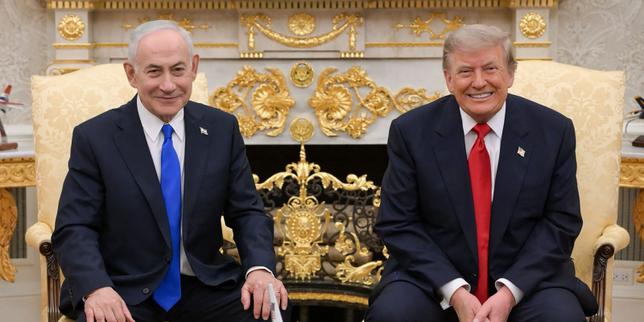
The tension behind closed doors rarely matches the public displays of solidarity. When Donald Trump and Benjamin Netanyahu cross paths, the choreography of their relationship is meticulously designed to project absolute alignment. Yet, underneath the theatrical handshakes and shared rhetoric on Middle Eastern security, a quiet frustration has taken root in Washington. Donald Trump views foreign policy through the lens of transaction and immediate return. Benjamin Netanyahu operates on a generational timeline of existential survival, where strategic patience is often discarded in favor of kinetic preemption.
This friction defines the core dynamic of their recent interactions regarding Iran. The United States under a second Trump administration approaches the Islamic Republic with an unpredictable mix of maximum pressure economics and a distinct aversion to getting bogged down in protracted foreign quagmires. Trump wants deals, or he wants adversaries brought to financial ruin without American boots on the ground. Netanyahu, conversely, sees the regional network of Iranian proxies not merely as an irritant to be managed economically, but as an immediate threat requiring decisive military intervention. This divergence in strategic calculus creates a volatile diplomatic environment.
The Limits of Maximum Pressure
Economic coercion has its ceiling. When Washington talks about cutting off Tehran's oil revenues and squeezing its banking sector, the assumption is that financial collapse will force the regime to capitulate or implode. History tells a more complicated story. Sanctions inflict immense suffering on the civilian population while the ruling apparatus adapts, creates shadow economies, and diverts remaining capital toward its nuclear ambitions and regional proxy network.
Trump loves the concept of the ultimate economic embargo because it requires minimal military exposure while projecting absolute power. Netanyahu looks at the same sanctions and sees a slow-bleed strategy that gives Tehran precious time to cross the nuclear threshold. The Israeli establishment operates under the heavy shadow of the Holocaust and a doctrine of zero-tolerance for existential threats. Waiting for an economic embargo to change the behavior of a deeply ideological regime is a luxury Jerusalem believes it cannot afford.
This creates a fundamental mismatch in expectations. Trump feels that his administration provides unprecedented diplomatic cover and military assistance to Israel, yet he frequently encounters an ally that refuses to be reined in. When Netanyahu acts unilaterally or pushes for aggressive strikes against nuclear infrastructure, Washington is left managing the geopolitical fallout. The American president hates being dragged into crises of someone else's making, especially when those crises threaten to spike oil prices and disrupt global markets right before domestic political milestones.
The Proxy Dilemma and Regional Realities
Tehran does not fight its wars face-to-face. The architecture of Iranian regional influence relies entirely on its axis of resistance, stretching from Lebanon to Yemen. Managing this web of non-state actors requires a comprehensive strategy that goes beyond isolated retaliatory strikes.
Washington prefers a containment model, relying on maritime patrols, intelligence sharing, and targeted defensive operations to protect shipping lanes and regional allies. This approach keeps American involvement limited and manageable. For Netanyahu, containment is a failing strategy that merely delays an inevitable collision. Every month that passes allows groups like Hezbollah to stockpile precision-guided munitions and refine their underground tunnel networks.
The disagreement extends to how the United States and Israel view regional diplomacy. Washington periodically entertains back-channel diplomatic openings, hoping to secure a grand bargain that caps uranium enrichment in exchange for sanctions relief. Netanyahu views any diplomatic engagement with Tehran as a sign of weakness, an act of appeasénent that will ultimately legitimize a threshold nuclear state.
+-----------------------------------+-----------------------------------+
|     US Strategic Preference       |    Israeli Strategic Preference   |
+-----------------------------------+-----------------------------------+
| Maximum economic pressure         | Immediate kinetic disruption      |
| Regional containment and defense  | Preemptive dismantling of proxies |
| Diplomatic off-ramps and deals    | Zero-tolerance for enrichment     |
| Avoidance of prolonged conflicts  | Existential survival priority     |
+-----------------------------------+-----------------------------------+
The Ghost of Past Miscalculations
Every American president fears becoming the commander-in-chief who starts a sprawling Middle Eastern war. Trump is no exception. Despite his hardline rhetoric against Iran during his first term and his authorization of high-profile targeted strikes, he has consistently campaigned on ending endless wars. He wants to bring troops home, not deploy them to secure a pulverized Iranian plateau.
Netanyahu knows this hesitation well. He has spent decades cultivating relationships across the American political spectrum precisely to hedge against executive reluctance in Washington. Yet, working with Trump presents a unique challenge because the American leader's positions can shift based on personal rapport and media cycles. A glowing cable news segment can shift policy overnight, while a perceived slight can freeze diplomatic coordination.
The frustration is mutual. Netanyahu finds American domestic political constraints baffling, often wondering why a superpower allows internal partisan bickering to dictate long-term strategic commitments in the Middle East. Trump, meanwhile, grows weary of foreign leaders who treat American military might as an unlimited insurance policy for their own neighborhood.
Navigating the Precipice
The danger of this fractured alliance is miscalculation. If Tehran misreads the friction between Washington and Jerusalem as a sign of permanent paralysis, it may push its nuclear program past the point of no return. Conversely, if Netanyahu decides that American hesitation leaves him no choice but to launch a massive, unilateral strike on Iranian nuclear facilities, the subsequent regional conflagration will force Washington's hand regardless of presidential preferences.
Diplomacy in the shadows leaves little room for error. The rhetoric will remain warm for the cameras, featuring joint statements about unbreakable bonds and shared democratic values. But behind closed doors, the conversation is blunt, transactional, and increasingly anxious. Trump wants a quiet Middle East that lets him claim victory and pivot elsewhere. Netanyahu wants absolute security regardless of the turbulence it creates. Those two objectives cannot coexist forever without a major reckoning