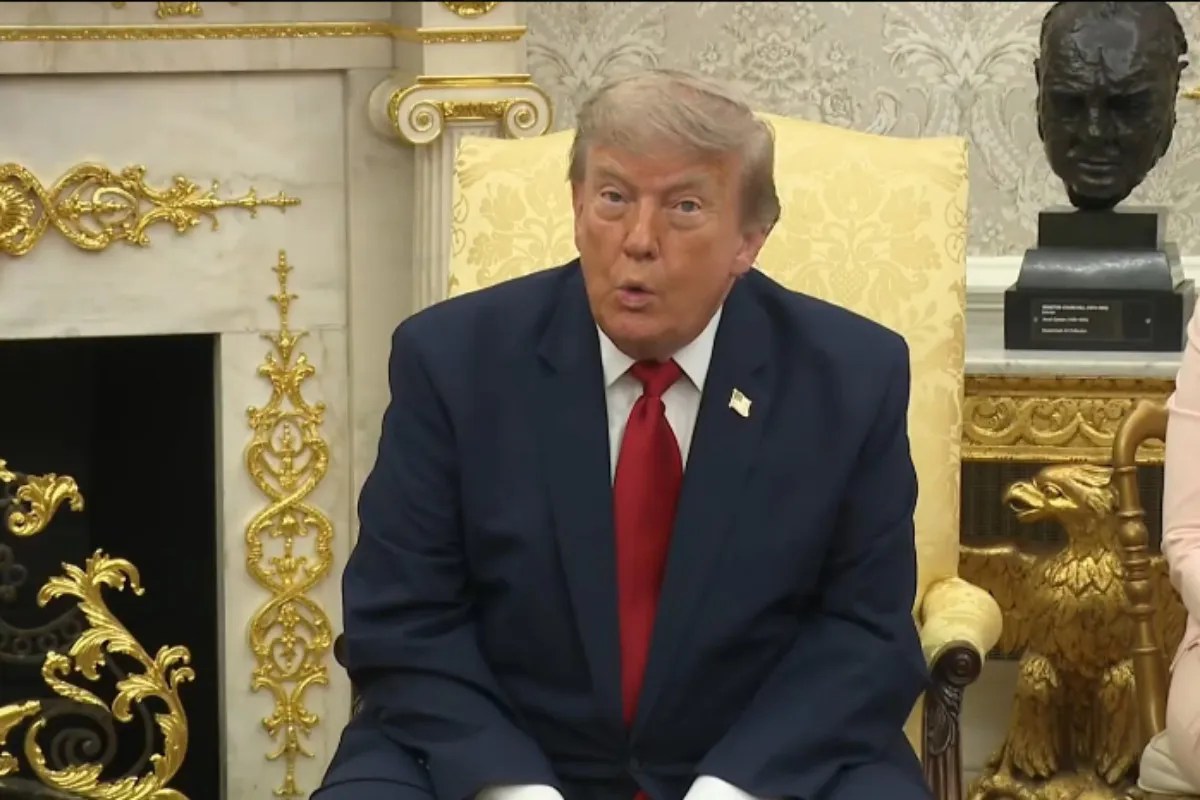
President Donald Trump announced that Washington and Tehran are engaged in active, high-level discussions, offering a fragile window of diplomacy following a turbulent two-week air campaign. Speaking to reporters, Trump pointed to a genuine opening for an agreement, even as regional flashpoints and competing narratives from Iranian officials threaten to derail the process before it solidifies.
The sudden pivot from heavy bombardments to back-channel talks exposes the exhausting friction defining the multi-month conflict. Beneath the public posturing lies a complex web of military limitations, economic pressures, and regional mediation efforts led by nations like Qatar and Oman. Understanding this diplomatic thaw requires looking past the surface claims to examine the structural realities driving both capitals toward the table.
The Military Ceiling and the Real Push for Dialogue
The decision to pause the two-week bombing campaign was not born purely out of sudden goodwill. Pentagon insiders and regional analysts note that military operations had reached a critical operational threshold.
- Target Depletion: Military commanders advised the White House that the campaign had largely exhausted primary strategic targets within immediate reach.
- Munitions Stockpiles: Concerns over the continuous expenditure of advanced air munitions forced a strategic reassessment of sustained high-intensity aerial operations.
- Market Shockwaves: The persistent volatility in energy markets, exacerbated by disruptions in the Strait of Hormuz, created intense economic blowback that required immediate stabilization.
When high-tempo campaigns hit logistical ceilings, political leaders routinely rebrand necessity as diplomatic momentum. Trump's assertion that "good talks" are underway reflects this exact convergence of military reality and political expediency. Yet, describing these exchanges requires nuance. While Washington insists formal channels are active through intermediaries, Iranian state spokespersons have publicly downplayed direct requests for negotiations, revealing an internal regime division over how to engage the United States without projecting weakness domestically.
The Strait of Hormuz Chokepoint
At the heart of the ongoing negotiations sits the Strait of Hormuz, a narrow maritime corridor through which a significant portion of global petroleum supplies moves. Control over this waterway remains the ultimate bargaining chip.
Washington demands unrestricted commercial passage for international shipping, viewing the waterway as a global commons that cannot be held hostage by geopolitical friction. Conversely, Tehran asserts sovereign authority to regulate transit and supervise traffic through its coastal channels, utilizing naval mines, drones, and asymmetric positioning to exert maximum leverage.
Proposals floated by regional mediators, including an Omani framework for joint management and voluntary fee collection, aim to break this deadlock. However, previous frameworks have repeatedly collapsed under the weight of mistrust and conflicting interpretations of preliminary memorandums.
Political Pressures and Domestic Calculations
As the conflict stretches past the five-month mark, domestic political considerations in the United States weigh heavily on the trajectory of these talks. With upcoming midterm elections approaching, public weariness regarding foreign military entanglements is palpable. Polling data indicates limited popular enthusiasm for prolonged military action, creating a strong incentive for the administration to secure a verifiable diplomatic win or at least an orderly de-escalation.
At the same time, Trump maintains a dual-track strategy. Warning that military strikes will resume instantly if diplomacy collapses serves a dual purpose. It pressures Tehran to take the talks seriously while signaling to hawkish domestic allies that the administration has not abandoned its posture of maximum pressure. This oscillation between conciliation and coercion is a hallmark of the current administration's foreign policy playbook, keeping adversaries off-balance while testing the limits of deterrence.
The path forward remains fraught with contradictory signals. Even as delegations exchange messages via third-party states, regional proxies continue sporadic engagements, and mutual suspicion runs deep. Whether this current diplomatic opening matures into a durable framework or simply serves as a brief pause before hostilities resume depends entirely on the willingness of both governments to bridge fundamental divides over sovereignty, security, and regional influence before the end of August.