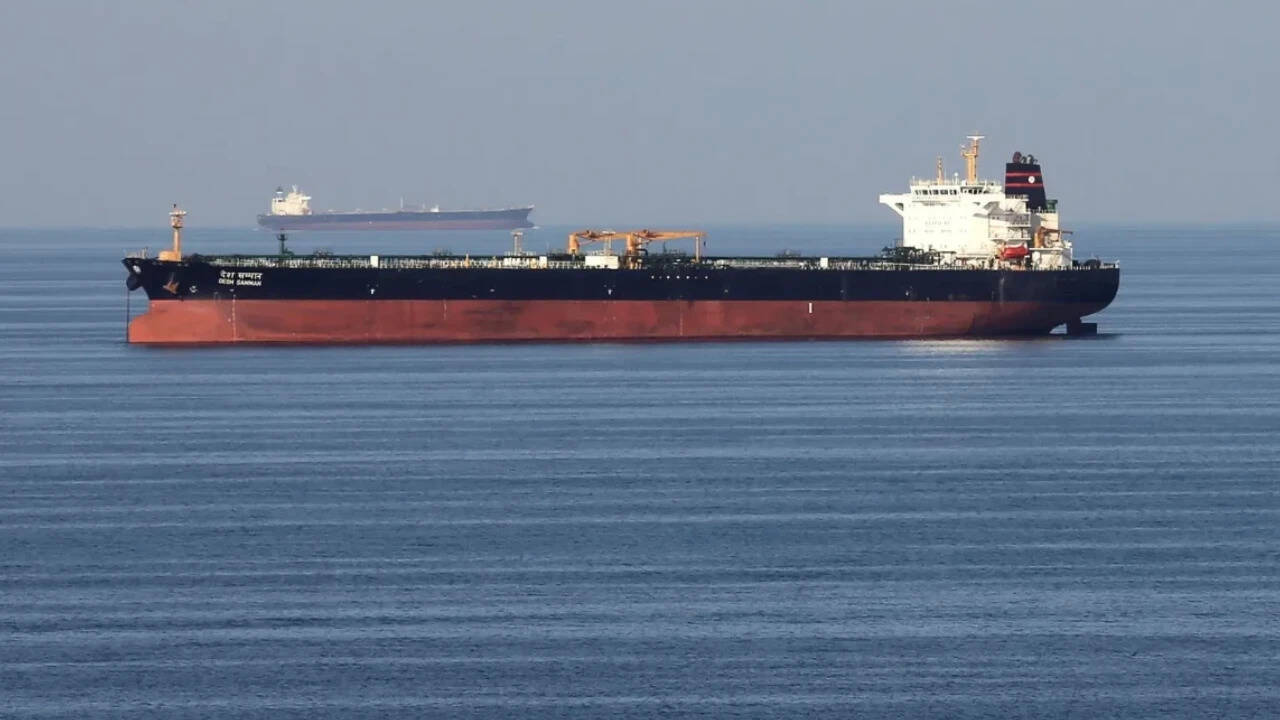
In late October 2026, Sri Lankan authorities brought 40 Iranian sailors ashore at Galle Harbor for emergency medical treatment before facilitating their repatriation to Tehran. The evacuation, conducted via vessels arranged by the Iranian Embassy and local shipping agents, pulled sick mariners off roughly 19 to 21 commercial tankers stranded in international waters roughly 24 nautical miles off Sri Lanka's southern coast. While officials framed the intervention as a standard humanitarian response, the rescue actually exposes a high-stakes geopolitical standoff—one where Colombo is forced to balance maritime law against devastating U.S. secondary sanctions and an active naval blockade.
Most wire reports treated the Galle extraction as a routine mercy mission. They missed the real story. Those 40 sailors were not victims of a sudden tropical storm or a freak mechanical accident on the high seas. They were collateral damage in a months-long maritime siege.
The Shadow Fleet Parked Off Galle
To understand why dozens of Iranian mariners required simultaneous medical evacuation from anchored merchant ships, you have to look at the timeline leading up to October. Since March 2026, the Indian Ocean off Sri Lanka has transformed from a quiet shipping lane into an active theater of economic and naval warfare.
On March 4, a U.S. submarine fired a torpedo that sank the Iranian naval warship IRIS Dena outside Sri Lankan territorial waters, killing more than 80 sailors. Days later, another Iranian naval vessel, IRIS Bushehr, suffered engine failure in the same vicinity. Colombo towed the Bushehr to the eastern port of Trincomalee, repatriated 208 personnel in April, and kept a skeleton crew of 13 under guard and care.
Then came the commercial squeeze. Following Washington's imposition of a naval blockade on Iranian shipping and the rollout of aggressive U.S. secondary sanctions on August 24, dozens of Iranian merchant vessels and oil tankers found themselves trapped. By September, Sri Lankan Foreign Minister Vijitha Herath acknowledged that Iranian tankers were among 47 vessels loitering just beyond Sri Lanka's territorial limits. While some ships eventually pushed east toward Singapore and the Strait of Malacca, around 19 to 21 Iranian tankers remained anchored roughly 24 nautical miles off Galle.
They could not go forward. They could not easily go back. And critically, they could not get resupplied.
How Secondary Sanctions Starve a Ship
When a vessel sits at anchor for months in tropical heat without port access, the ship becomes a slow-motion humanitarian crisis. Maritime law makes a sharp distinction between aiding a vessel and saving a human life, a line Colombo has had to walk with surgical precision.
Under the U.S. Treasury's secondary sanctions framework announced in late August, any private company, shipping agent, or port authority that supplies fuel, food, water, or mechanical provisions to designated Iranian vessels risks immediate exile from the U.S. financial system. For a port city like Galle or Colombo, losing dollar-clearing privileges is an economic death sentence.
The warning from Washington was neither subtle nor theoretical. Between September 9 and 11, the U.S. Embassy in Colombo ran a three-day training workshop for more than 40 senior officials from the Sri Lankan Navy, Coast Guard, Ports Authority, Central Bank, and Ministry of Defence. U.S. Ambassador Eric Meyer publicly reminded Colombo that servicing sanctioned ships exposes local entities to severe civil and criminal penalties.
The result was a total freeze on commercial chandlery. Local suppliers stopped delivering fresh food, clean water, and basic pharmaceuticals to the anchored tankers. Left stranded in international waters, crews began running out of essentials. Chronic illnesses went untreated. Minor infections festered. When the Iranian Embassy finally transmitted a diplomatic request for urgent medical evacuations, the 40 sailors brought ashore were not suffering from battle wounds—they were suffering from the predictable physical toll of prolonged maritime isolation.
Colombo's Impossible Balancing Act
Sri Lanka's government is not an ideological ally of Tehran, nor is it a proxy for Washington. It is an island nation clawing its way out of a historic sovereign debt default. Every decision made in Colombo is filtered through one brutal reality: economic survival.
Consider the competing pressures sitting on Foreign Minister Vijitha Herath's desk:
- The IMF Lifeline: Sri Lanka's macroeconomic stabilization depends heavily on its International Monetary Fund bailout program, a deal that required crucial diplomatic backing from the United States. Alienating Washington over Iranian oil tankers could jeopardize debt restructuring and bilateral aid.
- The Tea-for-Oil Lifeline: Iran remains a vital buyer of Ceylon tea, Sri Lanka's premier agricultural export. Historically, the two nations have relied on barter mechanisms to settle hundreds of millions of dollars in tea shipments against legacy Iranian oil debts, bypassing Western banking channels entirely.
- The Legal Mandate: As a signatory to the United Nations Convention on the Law of the Sea (UNCLOS) and the International Convention on Maritime Search and Rescue, Sri Lanka is legally obligated to render assistance to mariners in distress, regardless of nationality or political affiliation.
This explains why Foreign Ministry spokesman Thushara Rodrigo was extraordinarily careful with his words when confirming the Galle operation. After the 40 sailors were treated at local hospitals and put on an early Saturday morning flight back to Tehran—a flight paid for entirely by the Iranian Embassy—Rodrigo immediately drew a hard boundary. Assisting sick crew members, he emphasized, did not mean Sri Lanka would provide fuel, provisions, or port services to the 19 vessels still sitting offshore.
The Limits of Humanitarian Loopholes
In international maritime law, the duty to render assistance is absolute. Customary law and treaty obligations require coastal states to rescue persons in peril at sea. Humanitarian exemptions are also standard in U.S. sanctions regimes, technically permitting life-saving medical care even when commercial transactions are prohibited.
Yet in practice, the line between humanitarian rescue and material support blurs quickly.
When Sri Lankan authorities allowed local shipping agents and Embassy-chartered boats to ferry 40 men from anchored tankers into Galle Harbor, they solved an immediate medical emergency. What they did not solve is the underlying operational hazard bobbing 24 nautical miles off their southern coast.
An oil tanker cannot safely remain anchored indefinitely with a depleted crew. Modern commercial vessels require minimum safe manning levels to maintain engine readiness, monitor anchor drag during monsoon squalls, and prevent catastrophic hull or cargo failures. Every time Sri Lanka evacuates sick sailors without replacing them—because sanctions and blockades prevent fresh crews from flying in and boarding—the remaining ships become slightly less stable and slightly more dangerous.
Colombo knows this. Cabinet spokesman Nalinda Jayatissa and Foreign Minister Herath have repeatedly insisted that Sri Lanka maintains a non-aligned posture and will take no action harmful to its national interest. Behind closed doors, however, maritime officials face a grim math problem. With roughly two dozen sanctioned tankers still loitering near one of the busiest east-west shipping lanes in the world, Galle's hospitals may soon become a revolving door for stranded crews—until one of those undermanned ships finally breaks its anchor chain and drifts toward the reef.


