Federal investigators across Germany are racing to contain a dangerous security vacuum following coordinated physical assaults on critical energy infrastructure. Recent high-voltage grid incidents near Cologne and eastern Brandenburg exposed a systemic vulnerability that leaves Europe’s industrial heartland exposed to hybrid warfare. While initial public statements from regional authorities point vaguely toward a mix of radical fringe elements and state-directed actors, the underlying tradecraft reveals a troubling evolution in domestic vulnerability.
The mechanics of these assaults bypass sophisticated cyber intrusions entirely, relying instead on low-tech, high-impact disruption. In the Bergheim district near Cologne, perpetrators deployed improvised pyrotechnic launchers designed to propel conductive lines directly into extra-high-voltage transmission networks. The resulting short circuits triggered massive regional flashes, localized outages, and emergency shutdowns. A parallel assault struck near the Jänschwalde brown-coal power station in Brandenburg, utilizing identical tactical signatures. Investigators recovered multiple pyrotechnic deployment devices at the scenes, confirming that these were not random acts of vandalism by opportunistic youths, but calculated strikes executed by individuals possessing an understanding of high-voltage phase mechanics.
The Anatomy of a Hybrid Threat
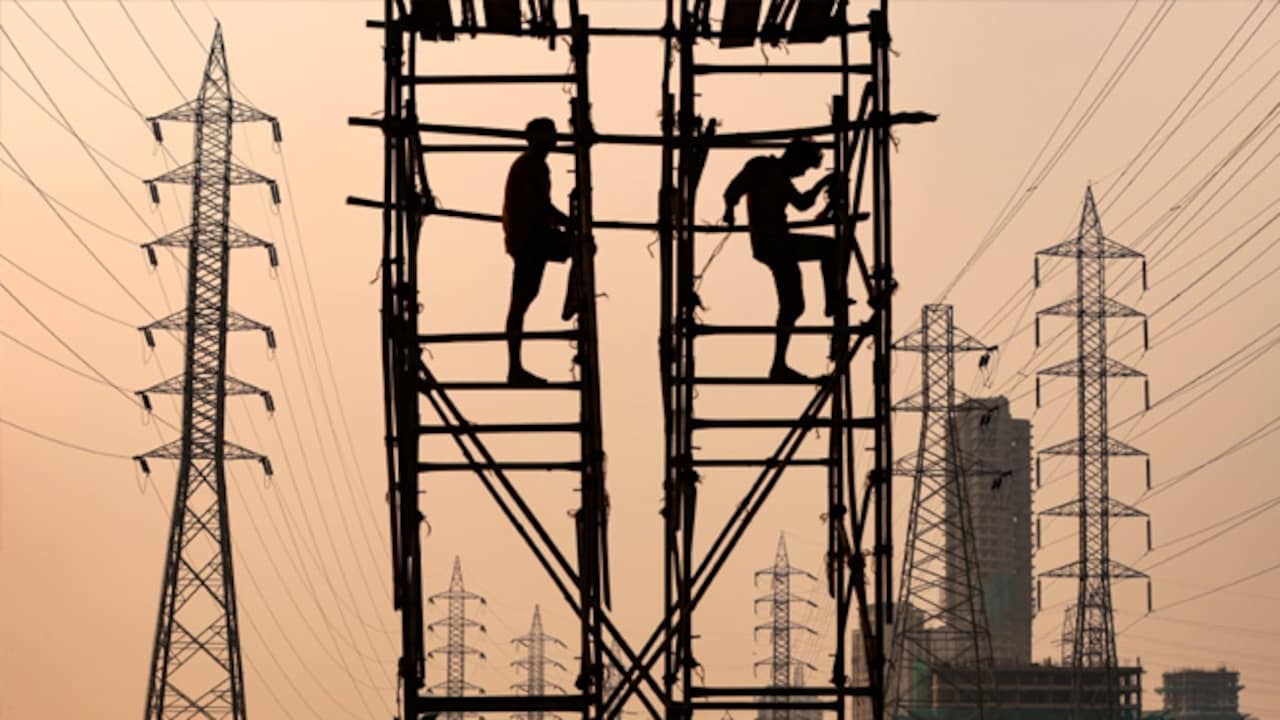
For years, risk assessments produced by security agencies obsessed over digital threats. Billions of euros flowed into firewalls, intrusion detection systems, and air-gapped industrial control networks. Yet, physical security along thousands of kilometers of open-air transmission corridors remains dangerously lax. Substations and high-voltage pylons stand in isolated rural fields or unmonitored suburban perimeters, protected largely by chain-link fences and basic motion sensors.
When saboteurs can disable major transmission pathways using homemade pyrotechnics worth less than a hundred euros, the foundational logic of modern critical infrastructure protection collapses. North Rhine-Westphalia Interior Minister Herbert Reul acknowledged the severity of the crisis following emergency briefings, noting that investigators are treating the incidents as direct attacks against the constitutional state.
Federal security analysts are examining whether these localized strikes serve as probes for a broader campaign. In modern intelligence frameworks, hybrid actors frequently deploy disposable proxies to test response times, map emergency redundancies, and measure how quickly grid operators can reroute power loads. If a foreign intelligence service wants to understand the breaking point of the Western European synchronous grid, they do not need to launch an elite cyber unit. They simply need to observe how long it takes state police to lock down a rural grid corridor after a localized blackout.
The Blind Spots of Decentralized Energy
Germany’s ongoing transition toward renewable generation has inadvertently complicated physical defense. The traditional model relied on a manageable number of massive, heavily guarded fossil-fuel and nuclear generation hubs. Today, the grid resembles an intricate web of thousands of decentralized wind parks, solar installations, and regional distribution nodes.
Securing every single kilometer of overhead transmission lines is a logistical impossibility. Transmission system operators face a brutal economic and operational trade-off. Hardening every exposed transformer station with military-grade perimeter defense, active drone monitoring, and continuous patrols would require staggering capital expenditures, costs that would ultimately land on residential and industrial ratepayers already strained by high energy prices.
Compounding this vulnerability is the political polarization surrounding national infrastructure projects and environmental policies. Investigators cannot yet dismiss domestic extremist elements because Germany’s radical political fringes possess both the ideological motivation and the tactical capability to target industrial assets. Left-wing extremist groups have historically targeted railway and electrical infrastructure to protest industrial policy or defense manufacturing. At the same time, security agencies remain acutely aware that foreign actors are adept at exploiting existing domestic grievances to obscure their own direct involvement.
The Broader European Ripple Effect
An unstable German grid does not stay local. The Central European synchronous grid is an interdependent marvel of engineering where power flows freely across national borders to balance supply and demand in real-time. A localized disruption in Brandenburg or North Rhine-Westphalia forces automated safety systems to shift massive electrical loads across interconnectors linking Poland, the Czech Republic, France, and the Netherlands.
If repeated attacks succeed in triggering cascading failures during periods of peak industrial demand, the economic contagion would spread across the continent within minutes. Major manufacturing hubs in the Ruhr Valley rely on uninterrupted, stable frequency power. Microchip fabrication lines, chemical synthesis plants, and automotive assembly floors cannot tolerate sudden voltage drops without sustaining catastrophic equipment damage and financial loss.
Intelligence sharing between state and federal police forces has accelerated, but bureaucratic friction remains a persistent bottleneck. Federal criminal police are attempting to consolidate evidence from the Brandenburg and North Rhine-Westphalia incidents to establish a definitive operational profile of the perpetrators. Yet, jurisdictional divides between regional state authorities and federal intelligence agencies often slow the dissemination of critical threat indicators.
The physical vulnerability of Europe's power grid is no longer a theoretical risk scenario debated in academic seminars. It is an active battlefield where low-cost disruption meets high-consequence exposure. As investigators comb through the charred debris beneath high-voltage lines, the sobering reality is that the most vital economy in Europe remains painfully defenseless against the simplest form of sabotage.