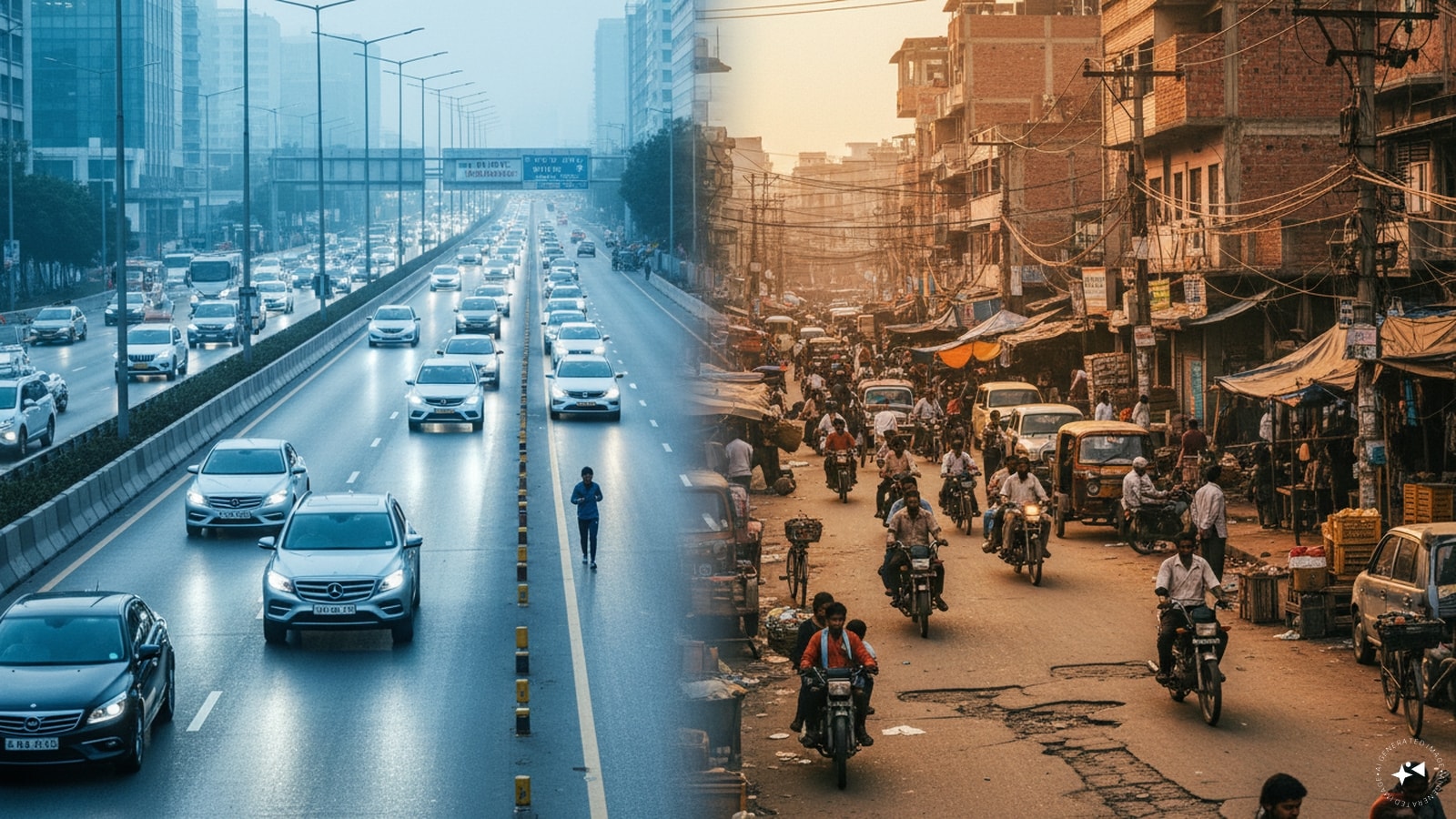
Global road deaths have steadily declined over the last three decades, yet ninety percent of all traffic fatalities remain concentrated in low- and middle-income countries. This persistent imbalance is not an accident of geography. It is the direct consequence of rapid urbanization running headlong into outdated infrastructure, weak regulatory enforcement, and a global automotive safety standards cartel that treats human life differently depending on where a buyer lives. While high-income nations refine autonomous braking systems, developing roads operate as high-speed mixing zones where unshielded pedestrians, overloaded vehicles, and heavy commercial freight battle for the same poorly lit pavement.
The Infrastructure Trap
For thirty years, global health agencies have celebrated incremental drops in overall road mortality. The macro numbers look encouraging on paper. In reality, that progress is almost entirely concentrated in Western Europe, East Asia, and North America. Meanwhile, you can read related stories here: The Geopolitical Mirage of International Intervention in Human Rights Appeals.
Poorer nations face a structural trap. When a developing economy grows, its middle class buys motorized transportation immediately. First comes the explosion of two-wheelers, followed by cheap second-hand passenger cars. Road construction, however, lags behind vehicle adoption by years or decades.
Municipalities build highways straight through dense residential settlements without constructing pedestrian overpasses, sidewalks, or physical barriers. They construct high-speed corridors designed for maximum vehicle throughput, ignoring the reality that millions of citizens walk, cycle, or set up informal storefronts right along the asphalt edge. To explore the complete picture, we recommend the excellent analysis by The Washington Post.
Speed differential kills. When a heavy commercial truck traveling at sixty miles per hour occupies the exact same unsignaled lane as a family of four on a single motor scooter, the outcome is mathematically predetermined.
Double Standards on Four Wheels
Infrastructure is only half the equation. The vehicles themselves are built to vastly different safety baselines depending on the destination market.
Major global automakers regularly sell stripped-down vehicle models in Africa, Latin America, and South Asia that would be illegal to register in the European Union or North America. Essential features like electronic stability control, structural crash protection, and standard side airbags are frequently treated as luxury add-ons or left out entirely to keep retail prices low.
Automakers argue they are simply responding to consumer price sensitivity in price-conscious markets. If a car is too expensive, consumers will stay on far more dangerous motorcycles, the argument goes.
That framing ignores the systemic externalization of cost. By exporting lower safety standards, manufacturers push the financial and medical burdens of severe collisions onto underfunded public health systems that cannot support them. A basic structural frame failure in a crash does not just cost a life; it eliminates a family’s primary earner and drains municipal trauma care resources.
The Myth of Bad Driving
Public awareness campaigns in developing nations routinely focus on driver education, urging motorists to wear helmets, obey speed limits, and avoid drinking before driving. While behavioral factors play a role in every collision, focusing exclusively on individual responsibility shields governments and planners from accountability.
Modern safe-system design—pioneered in Scandinavia—accepts human error as an inevitable reality. People will make mistakes. They will misjudge gaps, fail to see signals, or react slowly.
A well-designed transportation network accounts for human frailty by physically limiting vehicle speeds in areas where pedestrians and cars intersect. It uses roundabouts instead of traditional intersections to eliminate ninety-degree broadside crashes. It installs concrete median barriers to stop head-on collisions.
In low-income nations, these forgiving design elements are almost entirely absent. A minor lapse in driver judgment in a high-income city leads to a crumpled fender. The exact same mistake on an unlit road in sub-Saharan Africa or Southeast Asia results in a multi-fatality catastrophe because there are zero physical buffers to absorb the kinetic energy.
The True Cost of Neglect
The economic impact of traffic violence in developing nations is staggering.
+-----------------------------------------------------------------------+
|  Economic Impact of Traffic Fatalities in Low/Middle-Income Nations   |
+-----------------------------------------------------------------------+
|  - GDP Loss: 3% to 5% annually                                        |
|  - Demographic Hit: 50%+ of deaths occur among ages 15-29             |
|  - Healthcare Impact: Up to 60% of trauma beds occupied by road victims|
+-----------------------------------------------------------------------+
Road traffic injuries strip low- and middle-income countries of three to five percent of their gross domestic product every year. That financial bleed exceeds the total amount of foreign development assistance many of those nations receive annually.
The demographic toll hits the most economically productive segment of the population. More than half of all global road traffic deaths occur among young adults between fifteen and twenty-nine years old. These are breadwinners, parents, and workers entering their peak productive years. When a young adult is killed or permanently disabled on an unsafe road, the economic shockwaves cascade across generations.
Funding the Wrong Priorities
International development financing bears part of the blame. For decades, major international lenders poured billions into massive highway infrastructure projects designed solely to speed up trade and cargo transit, without conditioning those loans on strict safety audits.
Local governments, eager to demonstrate visible industrial progress, routinely prioritize miles of new asphalt over maintenance and safety equipment. A shiny new six-lane bypass makes for a great press photo during an election cycle; a well-lit pedestrian crossing or a fleet of vehicle inspection trucks does not.
Without dedicated funding mechanisms specifically earmarked for traffic safety engineering, emergency medical services, and automated traffic enforcement, the death counts in emerging economies will track upward alongside economic growth.
Rebuilding the Paradigm
Fixing this crisis does not require groundbreaking scientific discoveries. The engineering and policy blueprints already exist and have been tested for decades in Western Europe.
The barrier is priority and capital allocation.
Governments must mandate international vehicle safety standards across all domestic markets, refusing to allow auto manufacturers to sell sub-standard crash-test models. International development banks must make road safety audits a mandatory prerequisite for funding infrastructure grants. Urban planners must redesign transit corridors around the principle that pedestrians and two-wheelers require physical isolation from heavy transport.
Until global leaders treat traffic violence as an urgent systemic crisis rather than an unavoidable cost of economic development, millions of preventable deaths will continue to be written off as the cost of doing business.