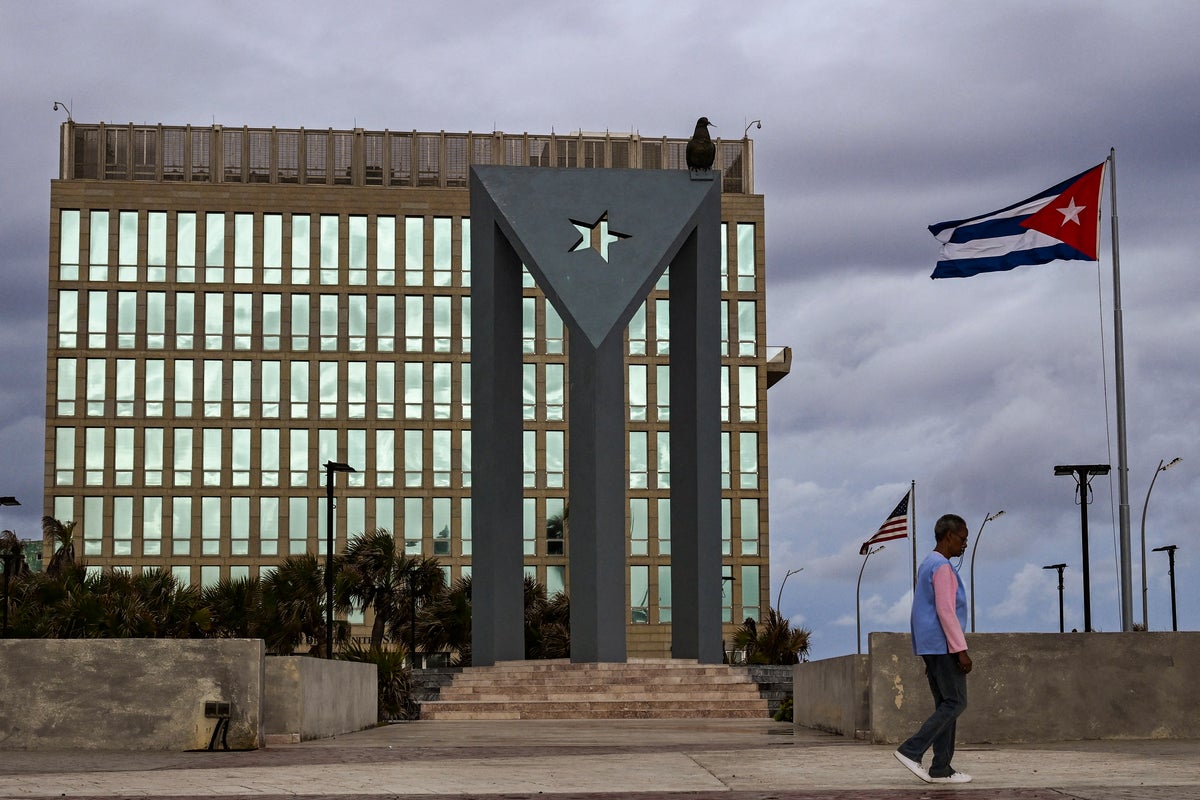
The lights in Havana do not flicker anymore; they simply stay off. In a city where the hum of refrigeration once signaled a baseline of modern life, the silence is now broken only by the sporadic, guttural roar of private generators. It was against this backdrop of systemic energy collapse that the U.S. Embassy in Havana issued a request that the Cuban government has now branded as "shameless." Washington asked for permission to import its own dedicated supply of diesel to keep its diplomatic compound running.
Havana’s answer was a flat, public rejection. To the Cuban Ministry of Foreign Affairs, the request was a bitter irony. The United States is currently enforcing an aggressive "fuel blockade" that has effectively severed the island’s energy arteries, yet it sought a private bypass to shield its own officials from the consequences. This is not merely a diplomatic spat; it is the frontline of a high-stakes squeeze play by the Trump administration aimed at forcing a total political transformation on the island.
The Architecture of a Total Blockade
The current crisis is not a result of simple decay, though Cuba’s infrastructure is undeniably ancient. It is the result of a calculated geopolitical strangulation. In early 2026, the White House issued an executive order that transformed the long-standing embargo into a literal no-fly and no-sail zone for energy. By threatening massive tariffs on any nation—specifically targeting Mexico and post-Maduro Venezuela—that provides oil to the island, the U.S. has achieved what decades of policy could not: a dry tap.
Cuba traditionally requires roughly 8 million tons of fuel annually to maintain its grid and basic transport. Since the first week of January, official imports have plummeted to near zero. The result is a nation of 11 million people living in a state of "energy apartheid," where the only reliable power exists in islands of privilege—embassies, high-end hotels, and government fortified zones. By asking to import its own diesel, the U.S. Embassy attempted to solidify its status as one of those islands, a move Havana correctly identified as a PR disaster in the making.
The Generator Economy and the Spanish Precedent
The rejection of the U.S. request followed a similar, albeit quieter, move involving the Spanish Embassy. Reports from within Havana indicate that Spanish diplomats, who had accumulated a surplus of diesel originally intended for Spanish-owned tourist resorts, offered to share their reserves with other European missions. The Cuban government blocked the transfer.
The logic from the Palace of the Revolution is consistent: if there is fuel on the island, it must serve the collective "vital services"—hospitals, water pumping stations, and food distribution. Allowing foreign embassies to operate as independent energy hubs while local surgeons perform operations by flashlight is a visual the Díaz-Canel administration cannot afford to tolerate.
The White House Gambit
President Trump has been unusually candid about the objective. Following the total collapse of the Cuban grid earlier this week, he remarked that he might soon have "the honor of taking Cuba," suggesting that the "weakened nation" is ripe for a transition. This is "Maximum Pressure" 2.0. By cutting off the fuel, the U.S. is betting that the resulting domestic misery will trigger a tipping point.
However, the strategy carries immense risk. The "why" behind the U.S. embassy’s request for fuel is practical—without diesel, the mission faces a "drawdown" of staff. If the U.S. reduces its footprint in Havana, Cuba will almost certainly demand a reciprocal reduction of Cuban diplomats in Washington. This would effectively shutter the remaining channels of communication at the exact moment the administration claims to be seeking a "deal."
The China and Russia Factor
While Washington tightens the noose, Havana is looking for a stool to stand on. Two major players are moving into the vacuum:
- China: Beijing has rapidly accelerated the export of solar components to Cuba. In a stunningly fast transition, solar power now accounts for nearly 10% of the island’s generation. While this is nowhere near enough to run heavy industry or a national grid, it provides a "survival tier" of energy for local neighborhoods that is immune to naval blockades.
- Russia: Moscow has signaled that a tanker is en route, the first in months. Whether this ship actually docks at the Port of Mariel or is intercepted by U.S. naval "monitoring" remains the most volatile question in the Caribbean.
The Human Cost of the Diesel Standoff
The reality on the ground is far grimmer than the diplomatic cables suggest. At the University of Havana, classes have been suspended because students cannot commute and the buildings have no light. In the provinces, the lack of fuel for tractors and transport means that crops are rotting in the fields while food shortages peak in the cities.
The U.S. position is that these hardships are the fault of a "failing regime" that refuses to liberalize. Havana’s position is that the U.S. is committing "genocidal" acts by targeting the very subsistence of the population.
This brings us to the core of the embassy's "shameless" request. By asking for an exemption from the very blockade it is enforcing, the U.S. gave the Cuban government a potent narrative tool. It allowed Díaz-Canel to frame the energy crisis not as a failure of socialism, but as a siege where the besiegers are asking for a lunch break.
The standoff over a few thousand gallons of diesel is a microcosm of the broader conflict. Washington wants a collapse; Havana is betting on a slow-motion pivot to a "resistance economy" powered by Chinese sun and Russian luck. Neither side appears willing to blink, even as the lights go out for good.
If you want to understand the next phase of this crisis, keep a close eye on the shipping lanes between Caracas and Mariel over the next 72 hours.

.png?width=1200&auto=webp&trim=0%2C0%2C0%2C0)