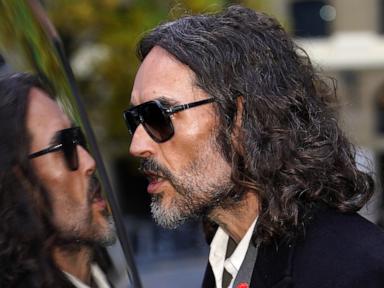
Twelve ordinary citizens have retreated behind closed doors to weigh the criminal fate of Russell Brand, marking the decisive phase of a rape and sexual assault trial that has scrutinized both his past conduct and the entertainment industry's historical blind spots. After weeks of testimony, legal maneuvering, and intense public scrutiny, the prosecution and defense have rested their cases, leaving the jury to determine whether the allegations brought against the comedian and actor meet the strict threshold of criminal guilt beyond a reasonable doubt.
The core question now facing the courtroom is no longer about celebrity reputation or media narratives. It is a matter of cold legal standards.
When a high-profile criminal trial reaches the deliberation room, the atmosphere shifts immediately. The theater of cross-examination ends. What remains is a group of jurors tasked with filtering emotional testimony, historical timelines, and conflicting accounts through the rigid framework of the law. For Brand, whose career transitioned from mainstream Hollywood and British broadcasting into independent digital commentary, the verdict carries consequences that extend far beyond the courtroom walls.
The Mechanics of the Deliberation Room
To understand what happens next, you have to strip away the sensationalism that surrounds celebrity trials. Jurors are not asked to decide whether a defendant behaved badly, acted recklessly, or violated modern workplace norms. They are instructed to evaluate specific statutory elements for each individual charge.
In cases involving historical allegations of sexual offenses, the burden of proof rests entirely on the prosecution. The jury must be sure of guilt. Not merely suspicious. Not inclined to believe one side over the other on a balance of probabilities, which is the standard reserved for civil disputes. In a criminal court, lingering reasonable doubt requires an acquittal.
This distinction creates a unique tension during deliberations, particularly when physical forensic evidence is absent due to the passage of time. Jurors must rely heavily on corroborative testimony, digital footprints, contemporaneous communications, and the internal consistency of witness accounts. They examine whether a complainant's actions after an alleged incident align with human behavior under trauma, a concept courts frequently address through specific judicial directions designed to counter outdated myths about how victims ought to react.
Defense teams in these proceedings focus relentlessly on memory degradation and external influence. Over a decade or more, human recollection naturally shifts. Lawyers argue that media coverage, civil litigation, or public discourse can inadvertently reshape how events are remembered, introducing reasonable doubt even when a witness appears entirely sincere on the stand.
Why Historical Celebrity Trials Test the Legal System
The road to this deliberation room began long before formal charges were filed. Following major investigative reporting in September 2023 by British media outlets, multiple women came forward with allegations spanning the height of Brand's fame between 2006 and 2013. Brand has consistently and vehemently denied all allegations of non-consensual sexual activity, maintaining that his past relationships, while promiscuous, were always consensual.
Police investigations into historical entertainment industry offenses move slowly for a reason. Detectives must track down production schedules, call sheets, hotel logs, and former colleagues scattered across different continents. Every piece of metadata matters. A single text message or a dated travel itinerary can either anchor a timeline or dismantle it entirely.
When these cases finally reach a jury, they expose a fundamental friction between public accountability and due process. In the court of public opinion, patterns of behavior carry immense weight. If several people tell similar stories independently, the public tends to view those accounts as mutually reinforcing.
Criminal courts operate under much tighter rules regarding similar fact evidence or bad character evidence. Judges carefully gatekeep what a jury is permitted to hear so that a defendant is not convicted simply because of their past lifestyle or persona. Brand built his early comedy career on a hyper-sexualized, boundary-pushing public image. Throughout the trial, the court had to ensure jurors separated that deliberate stage persona from the specific criminal acts alleged in the indictment.
The Anatomy of the Defense and Prosecution Strategies
Throughout the proceedings, both legal teams operated along predictable yet high-stakes fault lines. Understanding how these arguments clash explains why deliberations in complex sexual offense trials often stretch over several days.
The Prosecution's Case
Prosecutors build historical cases around the concept of institutional enabling and power dynamics. Rather than relying on a single isolated event, they present a broader context in which a powerful figure operated with minimal oversight.
- Pattern and Consistency: Highlighting common threads across different accounts, such as methods of contact, use of production resources, or specific behavioral patterns.
- Contemporaneous Disclosures: Calling witnesses—friends, therapists, or colleagues—who were told about the alleged incidents years before any media investigation or police report existed.
- The Absence of Motive: Arguing that complainants endured intrusive cross-examination and public exposure with no financial or personal gain attached to a criminal prosecution.
The Defense's Counter-Narrative
Defense counsel attacks the structural weaknesses inherent in retrospective cases. Their objective is not necessarily to prove a conspiracy, though suggestions of coordinated narratives occasionally surface, but to demonstrate that certainty is impossible.
- Timeline Discrepancies: Pinpointing minor inconsistencies between initial police statements, media interviews, and courtroom testimony.
- Consent and Ambiguity: Framing encounters as consensual interactions that were later reinterpreted through a modern lens or personal regret.
- Investigative Contamination: Questioning whether journalists or investigators inadvertently shaped witness recollections during the pre-charge phase.
What Jurors Actually Look For
Having observed dozens of complex criminal trials over the decades, one pattern remains constant: juries take their instructions far more seriously than cynical commentators assume. Once the courtroom doors close, personality fades and paperwork takes over.
Jurors routinely request transcripts of specific cross-examinations. They ask judges for clarification on the legal definition of consent, particularly regarding reasonable belief in consent—a critical legal test that examines not just whether a complainant consented, but whether the defendant reasonably believed they did at the time.
Consider a hypothetical scenario frequently used in legal training to illustrate this exact hurdle. Suppose two people attend an industry after-party, exchange flirtatious messages, and return to a private hotel room. One party later testifies that they froze out of fear and never agreed to sexual contact, while the other testifies that the prior enthusiasm led them to believe the encounter was entirely mutual. In that room, the jury must decide not only whose memory is accurate, but whether the accused's perception of consent was reasonable under the circumstances. That gray area is where deliberations stall and where verdicts are won or lost.
The Industry Reckoning Behind the Headlines
Regardless of the verdict the jury eventually delivers, the trial itself has already exposed deep structural flaws in how television networks, film studios, and talent agencies operated during the late 2000s.
During that era, entertainment executives routinely prioritized ratings and ticket sales over workplace governance. Talent was treated as untouchable. Junior staffers, runners, and young guests lacked clear reporting mechanisms, and human resources departments were either non-existent on chaotic production sets or structurally aligned with protecting the star.
Internal inquiries launched by broadcasters following the initial 2023 revelations acknowledged that complaints and behavioral red flags were frequently brushed aside as eccentricities of comedy culture. That institutional failure is precisely why these matters ended up in a criminal court years later. When internal accountability mechanisms fail, the criminal justice system becomes the only remaining venue for resolution, even though criminal courts are blunt instruments poorly suited to resolving decade-old disputes.
Unanimous Verdicts and the Deadlock Protocol
As the jury deliberates, the court operates under strict procedural rules regarding timing and consensus. Initially, the trial judge directs the panel to strive for a unanimous verdict on every count. Every single juror must agree on guilt or acquittal for each individual charge.
If hours turn into days without agreement, the legal process follows an established escalation path:
- Jury Notes: The foreperson sends written questions to the judge requesting clarification on points of law or asking to review specific exhibits.
- The Majority Direction: If the jury indicates they are deadlocked after a substantial period of deliberation, the judge may issue a formal direction permitting a majority verdict—typically 11-1 or 10-2 in jurisdictions following English criminal procedure.
- Hung Jury: If the panel remains irreconcilably split even after a majority direction, the judge must discharge the jury. This results in a mistrial, leaving prosecutors to decide whether to pursue a costly and emotionally exhausting retrial.
Split verdicts are also common in multi-count indictments. A jury might convict on one charge where corroborating digital or witness evidence is rock solid, while acquitting on another count where the passage of time leaves too much room for doubt.
The Stakes Beyond the Verdict
For Russell Brand, the outcome defines the remainder of his public and private life. A conviction on rape or sexual assault charges carries severe custodial sentences, mandatory registration on sex offender lists, and permanent exclusion from mainstream media platforms. Even an acquittal, while clearing him of criminal liability, will not automatically restore the mainstream Hollywood career he once commanded, though it would significantly bolster his standing among his loyal independent online audience and validate his claims of a media-driven witch hunt.
For the complainants, the verdict represents the culmination of a grueling public ordeal. Stepping into a witness box to recount intimate trauma before a packed courtroom and global press corps requires immense resilience, with zero guarantee of validation at the end.
The courtroom corridors remain quiet while twelve citizens sit around a table, weighing human memory against the highest standard of proof known to law.