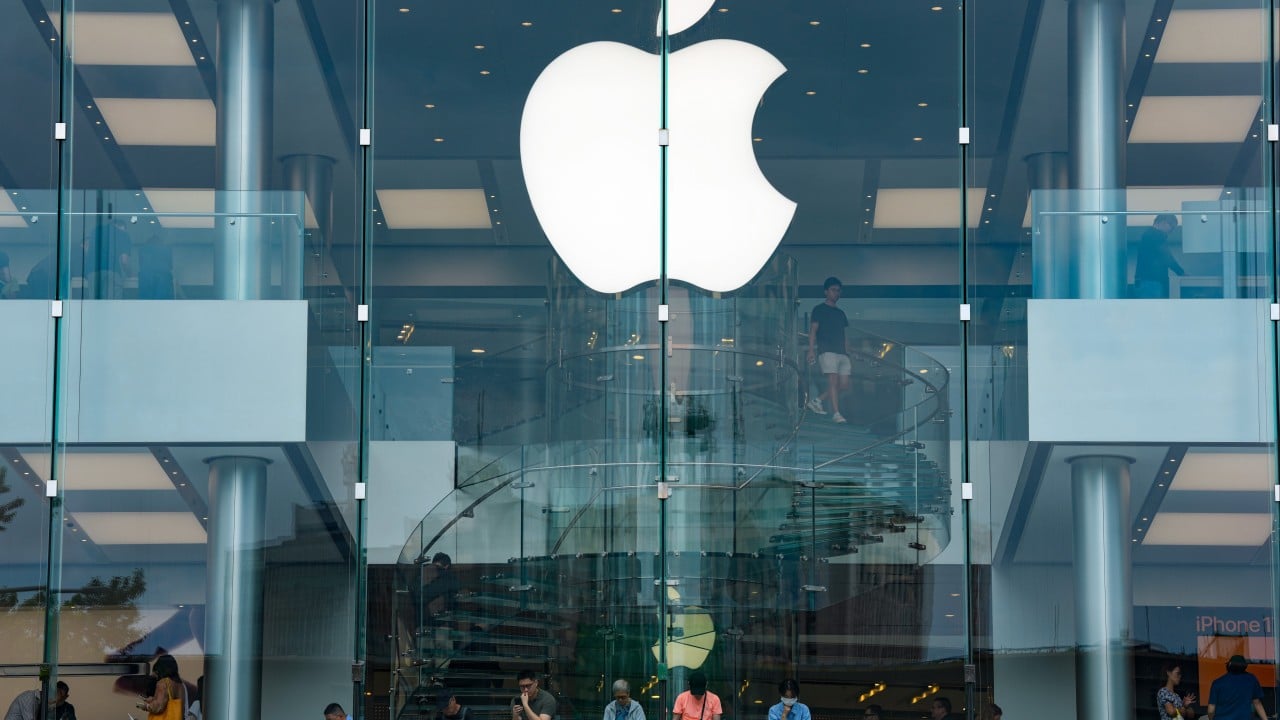
When pre-orders for Apple's flagship iPhone series open, the digital corridors of global finance usually hum with the predictable friction of peak consumer demand. In Hong Kong, however, that hum recently curdled into a high-stakes security crisis. Law enforcement officials revealed that over 1,500 suspicious credit card charges tied to unauthorized iPhone purchases slammed local banking institutions, racking up more than HK$30 million in attempted fraud within days.
For anyone who watches financial crime evolve, the headline numbers are startling, but the mechanics are entirely unsurprising. High-demand consumer electronics have long served as the world's most liquid shadow currency. An iPhone is not just a pocket computer; it is a portable bullion bar. It holds its value on secondary markets, strips clean of geographic tracking with a factory reset, and can be fenced within hours of delivery.
Yet, treating this incident as a simple cluster of stolen credit cards misses the structural rot exposed beneath the surface. This was a stress test of the global digital transaction ecosystem, and major financial nodes failed the evaluation.
The Anatomy of the Attack
How do criminals siphon millions of dollars into high-end hardware before cardholders even wake up to check their banking apps?
The blueprint relies on a terrifyingly efficient triad: data leakage, automated scripting, and systemic friction reduction. Long before the pre-sale launch window blinked green on Apple’s regional storefront, underground syndicates had already stockpiled millions of compromised credit card credentials harvested from dark web data breaches, phishing campaigns, and credential-stuffing attacks.
When the launch countdown hit zero, these syndicates did not deploy human shoppers clicking frantically through checkout pages. They unleashed automated botnets programmed to mimic legitimate user sessions, bypassing basic rate-limiting defenses.
Crucially, many of these transactions slid through authorization gates without triggering a One-Time Password (OTP) or multi-factor verification check. Why? Because global payment networks and merchant gateways are chronically tuned to prioritize conversion velocity over absolute security. Every extra layer of authentication introduced at checkout causes cart abandonment. Retail giants, including Apple, walk a razor-thin compliance tightrope. They want to friction-test fraud without alienating legitimate buyers who will abandon a purchase if forced to dig through SMS codes or banking apps.
Criminals weaponized that exact commercial hesitation. By targeting accounts where tokenized card data or stored credentials already existed, the bad actors bypassed the need for physical card possession entirely. They ordered fleets of devices to drop-ship addresses managed by local proxy networks, planning to intercept the courier long before the real owner spotted an unauthorized push notification.
The Regulatory Blind Spot
The fallout forced Hong Kong Police Commissioner Joe Chow Yat-ming into a public appeal, urging authorities to plug glaring statutory loopholes. At the center of the regulatory failure is the city's telecommunications framework, which historically permitted individuals to register multiple prepaid SIM cards per carrier.
Even after implementing real-name registration laws designed to curb anonymous communications, structural loopholes remained wide enough to drive a truck through. When investigators traced the phone numbers attached to fraudulent delivery slots and proxy accounts, they routinely hit dead ends. The registered owners of the SIM cards were often straw men, unsuspecting citizens whose identities had been exploited, or individuals who claimed total ignorance of how their personal data was weaponized.
A digital economy built on real-name identity verification collapses when enforcement agencies cannot bridge the gap between the paper identity and the physical perpetrator. The syndicate operates in the gray space between lax telecom onboarding and hyper-fast banking authorization protocols.
Consider a hypothetical scenario to understand the scale. Imagine a syndicate that acquires five hundred valid credit card numbers from a third-party database leak. They pair these credentials with five hundred burner phone accounts registered under fabricated or manipulated identities. Within ninety seconds of the pre-order window opening, their custom script executes five hundred simultaneous checkout commands across different IP addresses, deliberately keeping individual order volumes under strict thresholds to avoid automated velocity flags set by risk management systems.
By the time the risk engine calculates a anomaly score, the electronic funds have cleared, and the physical units are already boxed in a sorting facility.
Why Banks and Merchants Play Chicken
The most telling detail of the Hong Kong incident is not that the fraud occurred, but how it was handled post-detection. Law enforcement confirmed that the vast majority of the suspicious transactions were ultimately frozen or canceled before the devices reached the destination points.
This points to an emergency feedback loop between local banks, Apple's fraud mitigation teams, and the police cybercrime bureau. When the sheer volume of anomalous transactions spiked past statistical norms, the alarm bells drowned out the routine noise of retail traffic.
Yet, relying on reactive emergency cancellations is a terrible long-term security strategy. It treats the symptom while leaving the pipeline wide open. Banks absorb the chargeback friction, merchants adjust their algorithmic risk thresholds temporarily, and consumers are left with the lingering anxiety of monitoring their account statements like hawks.
The underlying tension is economic. Total security is cheap to conceptualize and infinitely expensive to deploy. If financial institutions forced absolute biometric and multi-factor authentication on every single transaction involving high-demand consumer goods during a flash sale, legitimate conversion rates would plummet. Apple and its banking partners make billions on frictionless purchasing habits. As long as convenience translates directly into quarterly revenue growth, institutional appetite for heavy-handed security friction remains remarkably low.
The Next Iteration of Digital Heists
Syndicates do not abandon playbooks that generate millions in prospective revenue; they refine them. As banks tighten their behavioral analytics and merchants deploy more aggressive device-fingerprinting scripts, fraudsters are already pivoting toward more insidious vectors.
We are moving away from brute-force credit card testing toward deep credential compromise, where malware installs silent session-hijacking tools directly onto victim devices, allowing bad actors to mimic authentic user behavior with terrifying accuracy. In this environment, asking Apple or local police forces to simply "review their transaction processes" is a superficial fix for a deep architectural flaw.
The security architecture of digital retail was designed for an era when buying a luxury item required a physical card present at a terminal, or at least a deliberate, thoughtful interaction between buyer and seller. That era is gone. We now run global commerce on a high-speed transit network where billions of dollars move across international borders in the time it takes to blink, protected largely by fragile assumptions about who is sitting behind the screen. Until the financial sector decides that structural security matters more than shave-point conversion metrics, incidents like the Hong Kong iPhone fraud wave will remain regular features of the modern technological landscape, scaling efficiently alongside the very devices they target.