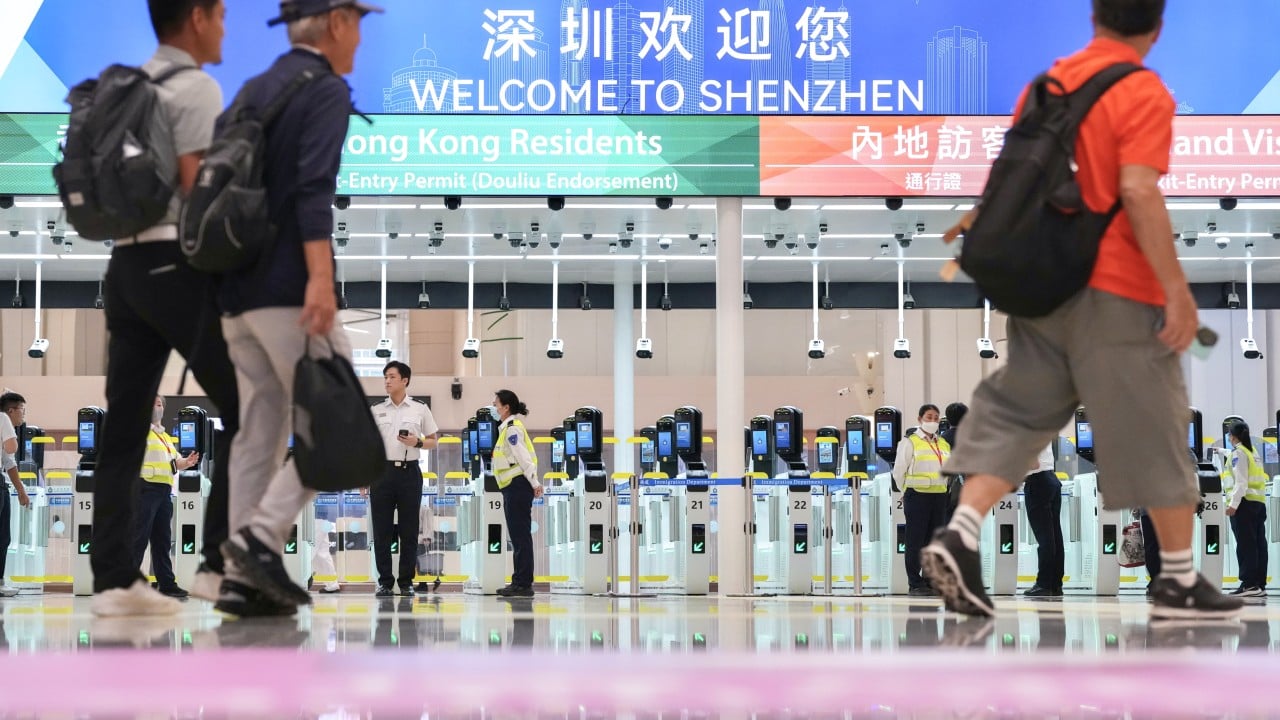
Port infrastructure rarely makes headlines for aesthetic triumph. Usually, border crossings are associated with fluorescent lighting, the aggressive hum of industrial HVAC units, and the soul-crushing despair of winding switchback queues behind families carrying too much luggage. Yet Huanggang Port has managed to capture public fascination. Travelers cross the boundary between Shenzhen and Hong Kong and emerge into an environment that looks less like a customs checkpoint and more like an airport terminal designed by an architect who hates gray concrete.
The media calls it a revolution. Passengers post selfies by the illuminated glass facades, marveling at the speed of biometric gates and the sleek, minimalist wayfinding systems. But behind the polished granite floors and the social media buzz lies a much older story about trade, geopolitical friction, and the relentless pressure to optimize human movement through restricted space. Don't forget to check out our previous post on this related article.
Huanggang Port is undergoing a massive reconstruction project designed to merge operations, eliminate redundant checks, and handle an unprecedented volume of cross-boundary commuters. The old port, built in the late 1980s, was cracking under the weight of modern economic integration. Millions of people flow through this corridor annually, carrying everything from corporate contracts to weekend groceries. When politicians talk about regional integration in the Greater Bay Area, Huanggang is the physical bottleneck where that rhetoric meets reality.
The gleaming new facilities represent a profound shift in how checkpoints function. Instead of traditional sequential stops where travelers hand passports to one authority, walk fifty meters, and hand them to another, the modern design relies on co-location models. Collaborative clearance allows officers from different jurisdictions to operate side by side, effectively cutting processing time in half. It sounds simple on paper. In practice, it requires unprecedented diplomatic alignment, shared data security frameworks, and a total rethinking of jurisdictional boundaries. To read more about the context of this, Travel + Leisure provides an in-depth summary.
Visitors posting photos of the terminal architecture see the surface benefits. The high ceilings and natural light reduce the psychological claustrophobia that typically defines international borders. Glass panels replace solid concrete walls, creating visual transparency that helps crowds self-organize without constant intervention from security personnel.
Yet the friction has not disappeared; it has merely migrated.
During peak morning and evening rushes, the sleek biometric scanners occasionally stutter. When a high-resolution facial recognition camera fails to match a passenger due to poor lighting angles or fatigue, the system defaults to manual override. That triggers a cascading bottleneck. The automated queue backs up into the wider concourse, transforming a smooth digital highway into a familiar gridlock of frustrated commuters staring at their phones.
This is the dirty secret of modern infrastructure projects. Technology scales efficiently until it hits the messy reality of human variance. A tourist taking a selfie near the departure gates captures a curated moment of stillness. Ten minutes later, that same spot can resemble a mosh pit of businessmen trying to clear customs before a morning meeting in Central.
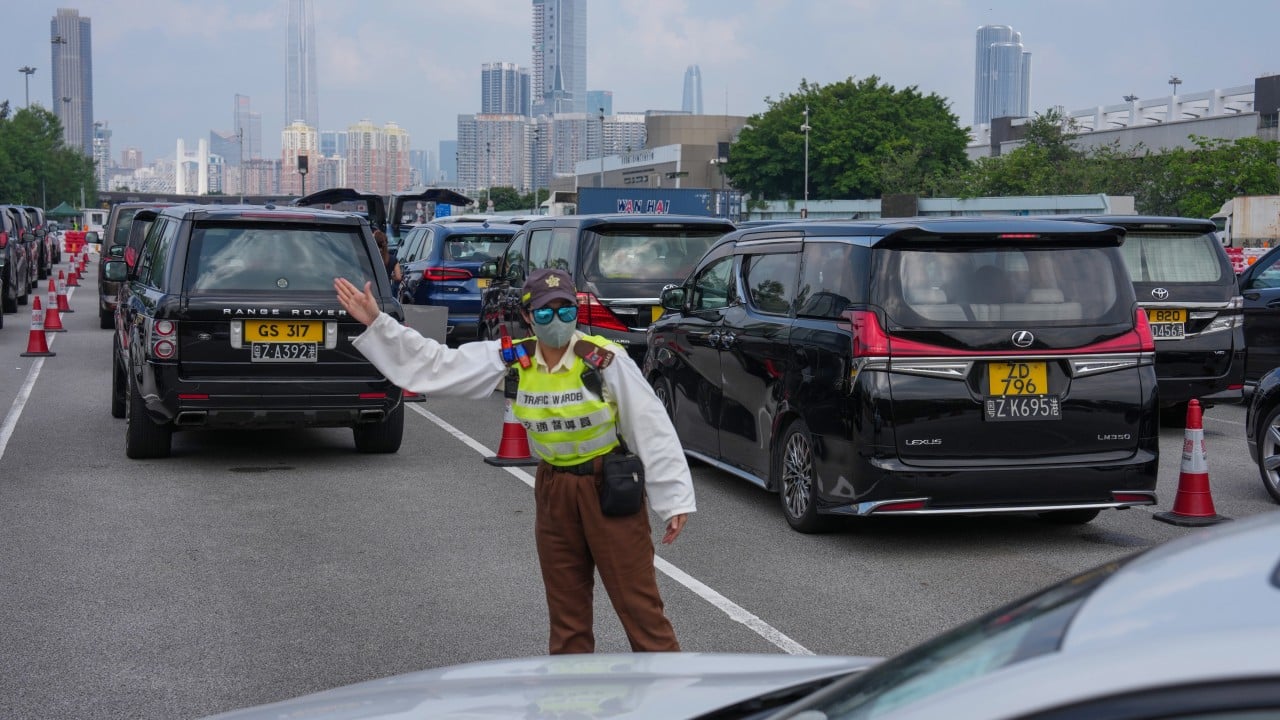
Urban planners and logistics experts understand that a border crossing is only as fast as its slowest bottleneck. You can install twenty-million-dollar scanning arrays, but if the narrow access roads leading to the port remain congested with commercial trucks and buses, the passenger experience is fundamentally compromised. The new Huanggang Port design attempts to separate passenger traffic from cargo logistics entirely, sinking freight handling into subterranean levels while pedestrians move across elevated, light-filled concourses.
This separation is where the engineering ambition actually shines. For decades, mixing freight and passenger traffic created perpetual gridlock. Trucks idling next to tourist buses poisoned the air quality and turned the surrounding tarmac into a logistical nightmare. By reorganizing the vertical space, the port operators reclaimed ground-level square footage for public transit hubs and pedestrian plazas.
The economic stakes are massive. Shenzhen and Hong Kong operate in a delicate symbiosis. Financial services, manufacturing supply chains, and talent pools rely entirely on fluid cross-boundary transit. Every minute saved at the port translates to millions of dollars in regional productivity. When a CEO can clear customs in under three minutes, the psychological distance between the two cities shrinks, encouraging deeper economic integration.
Yet, this efficiency comes with a quiet trade-off regarding privacy and data collection. The biometric systems that generate such praise from travelers also require the continuous harvesting and processing of facial data, travel histories, and real-time behavioral metrics. The seamless experience depends entirely on institutional trust in how that data is stored, shared, and protected across distinct legal systems. Most passengers are willing to trade their biometric markers for a shorter queue, but the long-term implications of permanent, frictionless digital surveillance at borders remain largely unexamined in the rush to admire the architecture.
The wow factor of Huanggang Port is real, but it is also fragile. It represents a triumph of engineering and design over historical administrative bloat. But architecture alone cannot solve the fundamental tension of borders. As long as nations maintain distinct legal codes, currencies, and security policies, checkpoints will always be choke points.
The selfies will eventually stop as the novelty fades. What remains will be the daily grind of commuters testing the limits of the new concrete and code. The true test of Huanggang Port will not be how it looks on opening day, but how it performs ten years from now when the paint starts to chip, the technology ages, and millions more bodies test the resilience of its design.