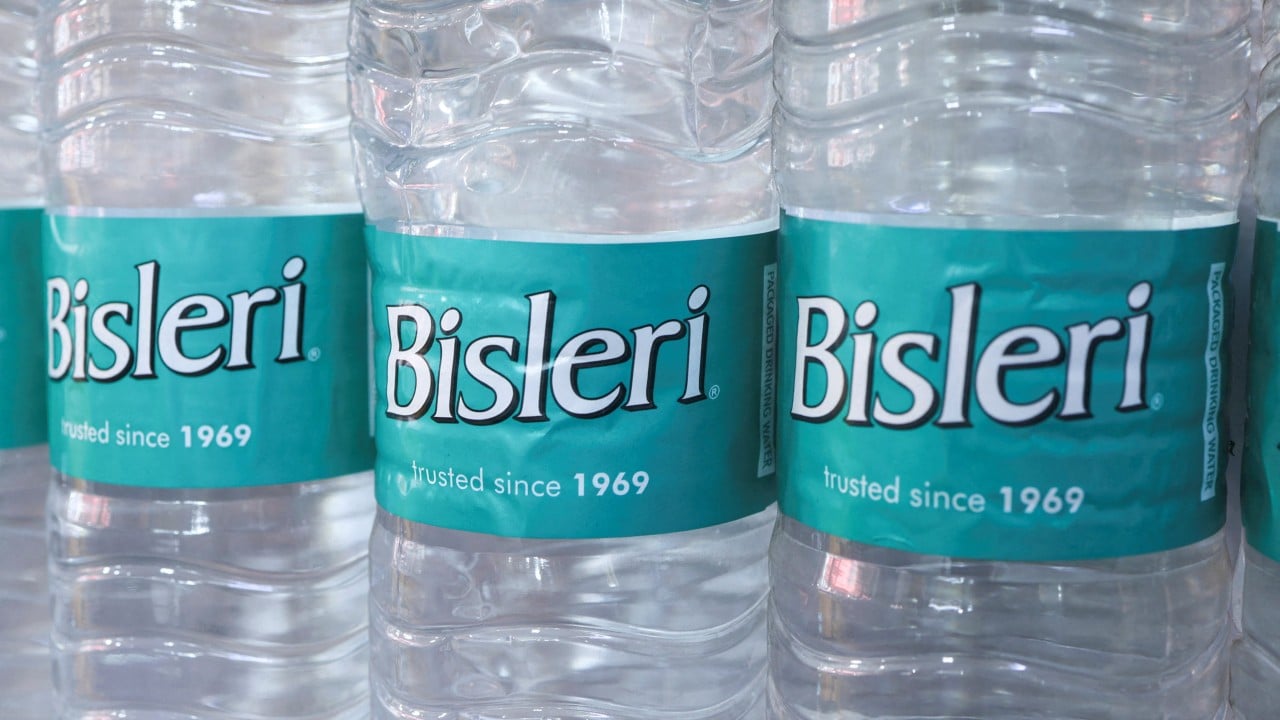
Indian food safety regulators have ordered nationwide testing of packaged drinking water brands after laboratory checks flagged safety failures in samples linked to market leader Bisleri. That single enforcement directive exposes a deeper reality across the country's multi-billion-dollar hydration market. Millions of consumers pay a premium for sealed plastic bottles under the assumption that clear water equals clean water, yet fragmented oversight, aggressive franchise bottling, and inconsistent local enforcement turn basic quality assurance into a gamble.
For decades, the blue-and-green Bisleri label served as the default shorthand for safe hydration at railway stations, highway dhabas, and neighborhood pharmacies across India. When a flagship brand stumbles in regulatory testing, the shockwaves hit every tier of the supply chain. The issue is rarely a single rogue batch. It is a structural collision between hyper-fast distribution and thin regulatory supervision.
Why a Failed Sample Exposes a Broken System
Bottled water looks like a simple product. Pump water from the ground, filter it, seal it in polyethylene terephthalate plastic, and ship it out. In practice, maintaining microbiological and chemical safety across a tropical country with erratic power grids and extreme ambient temperatures requires relentless discipline at every node of production.
When regulators pull a bottle off a retail shelf and find it unsafe, the failure usually falls into one of three buckets:
- Microbiological contamination, where coliform bacteria, yeast, or mold survive incomplete ozonation or enter through compromised bottle caps.
- Chemical and heavy metal breaches, often caused by exhausted reverse osmosis membranes failing to strip out fluoride, arsenic, nitrates, or dissolved solids from stressed local aquifers.
- Bromate formation, a known byproduct that occurs when ozone disinfection reacts with naturally occurring bromide in source water at poorly calibrated dosing levels.
A single failed test does not mean every bottle on the market is toxic. It does prove that the safety net designed to catch bad batches before they reach consumers failed at the exact moment it mattered most.
How the Franchise Bottling Model Stretches Quality Control
To understand how a dominant brand ends up in regulatory crosshairs, look at the economics of shipping water. Water is heavy, bulky, and cheap per unit. Transporting filled crates more than a few hundred kilometers destroys profit margins through diesel costs alone.
Major brands solve this logistics problem by relying on sprawling networks of company-owned plants alongside third-party co-packers and franchisees. Under a typical franchise arrangement, a local entrepreneur owns the land, draws from a local borewell, and operates the filtration line under strict brand standard operating procedures. The parent company supplies the branding, technical audits, and concentrate formulas for added minerals.
On paper, the system works cleanly. On the ground, friction builds fast.
Consider a hypothetical scenario at a mid-sized franchise plant during peak summer demand in May. Ambient temperatures cross 45 degrees Celsius, and retail orders spike by forty percent overnight. Simultaneously, erratic voltage fluctuations trip the plant's automated dosing pumps, and a reverse osmosis membrane reaches the end of its rated lifespan three weeks ahead of schedule due to deteriorating groundwater salinity. Shutting down the line for forty-eight hours to sanitize tanks and swap membranes means forfeiting peak-season revenue to local competitors. Under intense commercial pressure, cutting corners on backwash cycles or delaying filter replacements becomes an operational temptation.
The Counterfeit Shadow Market
Legitimate franchise plants face an even murkier threat right outside their factory gates. Counterfeiters routinely collect discarded genuine bottles from wedding halls, trains, and roadside eateries, refill them with untreated tap water, and heat-shrink fake neck sleeves over the caps.
To the hurried commuter buying a chilled bottle through a train window, a counterfeit bottle bearing a slightly altered spelling—such as "Bislery" or "Bilseri"—looks identical to the real thing. When state food safety officers conduct sweeps, separating genuine manufacturing lapses from sophisticated counterfeiting rings requires batch-code tracing that local enforcement teams often lack the staffing to execute quickly.
The Regulatory Tug of War Between BIS and FSSAI
India's packaged drinking water sector has long operated under a split regulatory architecture that creates compliance blind spots. Historically, manufacturers had to clear two separate hurdles before selling a single drop: mandatory certification from the Bureau of Indian Standards (BIS) under standard IS 14543 for packaged drinking water (or IS 13428 for natural mineral water), alongside licensing from the Food Safety and Standards Authority of India (FSSAI).
This dual-control setup created years of friction. BIS focused heavily on factory infrastructure, in-house laboratory equipment, and periodic plant inspections, while FSSAI held statutory authority over retail surveillance, labeling, and food safety prosecution.
Recent policy shifts moved to streamline oversight by removing the mandatory dual-certification burden and bringing the sector squarely under unified FSSAI compliance frameworks. Industry associations welcomed the move as an end to bureaucratic duplication. Veteran food safety inspectors saw a different risk. Removing a layer of pre-market technical inspection works only if post-market surveillance scales up simultaneously to fill the gap.
Right now, post-market enforcement across many Indian districts remains severely outgunned. A single Food Safety Officer is often responsible for inspecting restaurants, dairy processors, grain markets, street vendors, and dozens of local water bottling units across an entire administrative block.
What Laboratory Tests Actually Measure and What They Miss
When state laboratories test packaged drinking water, technicians run a battery of physical, chemical, and microbiological checks. Understanding what those tests cover—and where their blind spots lie—helps clarify why nationwide sweeps frequently uncover compliance gaps.
| Test Category | Key Parameters Checked | Common Cause of Failure |
|---|---|---|
| Microbiological | Total coliforms, E. coli, Pseudomonas aeruginosa, yeast, and mold | Dirty filling nozzles, unsterilized caps, or weak ozone contact time |
| Chemical & Mineral | Total Dissolved Solids (TDS), pH, fluoride, nitrates, and residual chlorine | Degraded RO membranes or improper mineral dosing after filtration |
| Heavy Metals | Lead, arsenic, cadmium, mercury, and chromium | Contaminated industrial groundwater and inadequate ion-exchange treatment |
| Disinfection Byproducts | Bromate and trihalomethanes | Over-ozonation of bromide-rich borewell water |
Notice what rarely shows up in routine spot checks. Microplastics and non-intentionally added substances leaching from low-grade recycled PET resin sit largely outside standard enforcement sweeps.
Storage conditions after the bottle leaves the factory gate add another layer of risk that no pre-shipment lab test can capture. Crates of bottled water routinely sit stacked in direct sunlight outside wholesale depots and kirana stores for weeks. Ultraviolet radiation and sustained heat accelerate chemical migration from plastic walls into the water, degrading taste and altering chemical stability long after the quality control manager signed the batch release log.
Why India's Groundwater Crisis Directly Threatens Bottled Water Quality
You cannot separate the safety of bottled water from the state of the aquifers underneath the bottling plants. India is the world's largest extractor of groundwater, and industrial belts alongside agricultural plains face steep water-table depletion and rising chemical contamination.
When a bottling plant draws raw water from a borewell that has dropped fifty feet over five years, the feedwater chemistry changes fundamentally. Salinity climbs. Heavy metal concentrations spike. Agricultural runoff pushes nitrate levels higher.
Treatment systems engineered five years ago for moderately hard water suddenly struggle to strip out complex dissolved pollutants without aggressive chemical pre-treatment and frequent membrane replacement. Every extra stage of filtration drives up reject-water ratios—meaning a plant may waste two to three liters of raw water to produce one liter of compliant packaged water—and increases operating costs per bottle. In a price-sensitive retail market where a one-liter bottle has remained anchored near twenty rupees for years, rising treatment costs squeeze plant margins from below.
The Unorganized Local Bottler Problem
National brands attract headlines when a sample fails because their names carry public recognition. Behind them operates a vast shadow industry of thousands of small, regional, and hyper-local water plants selling unbranded or loosely branded bottles and twenty-liter bulk jars.
In suburban industrial estates and semi-urban towns, small units frequently operate without functional in-house microbiology labs. Under standard protocols, a bottling facility is supposed to hold finished batches in quarantine until internal lab cultures confirm the absence of bacterial growth—a process that takes up to forty-eight hours for standard plate counts.
Small operators running on thin working capital rarely hold inventory for two days. Water goes from the borewell, through a basic sand filter and commercial RO skid, into a bottle, and onto a delivery truck within three hours. If a batch fails a downstream municipal test weeks later, the water has already been consumed.
How Consumers Can Spot Red Flags Before Drinking
Until nationwide testing translates into consistent plant closures and transparent public databases, consumers carry the final burden of verification at the point of purchase. A few quick physical checks eliminate the most obvious risks:
- Inspect the neck seal and cap alignment. Genuine automated capping machines apply uniform torque and crisp, unbroken perforation rings. Loose caps, uneven shrink-wrap sleeves, or glue residue around the neck point toward manual refilling.
- Check the batch code and manufacturing date. Look for sharp, laser-etched or clean inkjet printing on the shoulder or cap of the bottle. Smudged ink, missing batch numbers, or dates that rub off easily with a thumb signal tampered or counterfeit packaging.
- Verify the brand spelling and FSSAI license number. Counterfeiters rely on phonetic mimicry and identical color palettes. Read the brand name letter by letter and confirm a fourteen-digit FSSAI license number is printed clearly on the label.
- Reject sun-baked stock. Avoid buying bottles displayed on outdoor pavement racks exposed to direct afternoon sun, regardless of the brand name printed on the label.
- Test the seal integrity. Squeeze the closed bottle gently before twisting the cap. A properly sealed carbonated or ozonated PET bottle holds firm internal pressure; a soft, collapsing bottle with a hiss of escaping air often has a compromised seal.
Nationwide testing orders generate immediate headlines and temporary spikes in factory inspections, yet laboratory sweeps only work when regulators publish brand-by-brand results openly and strip licenses from repeat offenders without quiet administrative settlements.