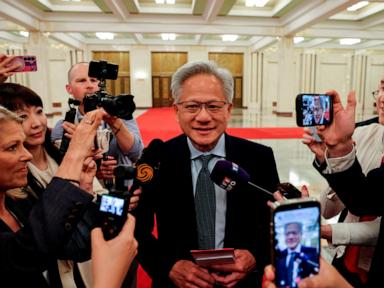
The claim that Jensen Huang lost his luster in his birthplace Taiwan makes for a neat headline, yet street-level reality and equity trading floors in Taipei tell a far messier story. Even after disclosures of extramarital affairs, intelligence scrutiny tied to his personal life, an 11-day exit from Nvidia in November 2026, and a rapid board reinstatement, Taiwan's reaction has been defined less by moral rejection than by cold-eyed industrial math. When Huang stepped down on November 12, Taiwan's benchmark stock index slid toward an eight-month low. When he returned on November 23, the market rebounded sharply and Taipei shopkeepers and engineers celebrated what locals call Jensanity.
Anyone who has covered semiconductor supply chains for twenty years knows better than to confuse celebrity affection with sentimentality. Taiwan does not treat Nvidia's chief executive like a pop idol whose sheen rubs off the moment a tabloid-grade story hits Washington and New York. In Taipei, Hsinchu, and Tainan, Huang functions as both a cultural mascot and a walking conduit for high-margin wafer, packaging, testing, and server orders.
Why Taipei Treated Personal Scandal Differently From Washington
In the United States, a chief executive's private conduct collides quickly with congressional committees, partisan posturing, and corporate governance optics. Lawmakers in Washington seized on reports surrounding Huang's affairs and alleged ties involving Chinese intelligence figures, demanding transcribed interviews and questioning whether export-control compliance or national security had been compromised.
Taipei views the same facts through a sharper survival lens. Taiwanese families live with geopolitical tension every day. A personal betrayal or an awkward public sighting in Taipei feels secondary to an existential question: does the person steering the world's most consequential AI chip designer keep orders flowing to Taiwan's factories?
That distinction explains why local reactions split along practical lines rather than moral outrage. A night-market vendor or restaurant owner who saw footage of Huang around town may react with surprise or gossip, yet an engineer or finance worker in Taipei looks straight at the ticker tape. When Huang exited, anxiety rippled through suppliers and retail portfolios. When he returned, relief followed.
The Myth of the Handshake Supply Chain
Much of the commentary around Huang's relationship with Taiwan leans heavily on romantic shorthand. Street-food tours. Night-market crowds. Banquets with foundry and assembly executives. Those moments are real. They also obscure how hard-nosed semiconductor manufacturing actually is.
Huang has spoken openly for years about operating with close partners like TSMC without relying on rigid, adversarial contracts for every technical adjustment. Informal trust helps teams move fast when thermal limits spike, packaging yields wobble, or rack architectures change mid-cycle. Still, trust in silicon is earned through engineering alignment, volume commitments, and recurring capital expenditure—not shared bowls of tofu pudding or photo ops.
Consider a hypothetical example to see how those mechanics work in practice. Suppose a Taiwanese advanced packaging supplier commits hundreds of millions of dollars to new capacity based on a multi-year AI accelerator roadmap. Even if the supplier's executives personally admire Huang, their board still demands visibility into customer demand, export licensing rules, and order stability. Goodwill opens doors faster. Physics and purchase orders keep the lines running.
Think-tank researchers in Taiwan have already pointed out a crucial vulnerability behind personality-driven diplomacy. Institutional guardrails outlast any single founder. Relying too heavily on one executive's personal rapport leaves an entire supply chain exposed if Washington tightens licensing rules, restricts remote compute access, or forces sudden governance shifts.
Where Huang Actually Lost Ground
Saying Huang did not lose his shine across Taiwan is not the same as saying his standing went untouched. Cracks appeared in three specific places.
First, reputational invulnerability took a hit. For years, Huang enjoyed near-mythic status in Taiwan—an immigrant success story who returned home speaking Mandarin and Taiwanese, praising local workers, and embodying Taiwan's centrality to global computing. Admissions of infidelity and months of intelligence-linked scrutiny punctured that image. Even supporters who cheered his reinstatement acknowledged the turbulence of the preceding weeks.
Second, strategic predictability eroded. A company leader who resigns one week and returns the next under new board oversight—while facing congressional questioning—introduces friction. Suppliers may not abandon Nvidia overnight, because switching ecosystems at this scale is nearly impossible in the short run. Yet executives at fabrication, testing, and server firms have every reason to watch export control compliance and board oversight more closely than before.
Third, Beijing's shadow complicated his position. Reports touching on potential Chinese intelligence angles, data-center dealings, and chip-export controversies put Huang squarely inside the U.S.-China tech vise. In Taiwan, any hint of compromised security around advanced chips carries heightened sensitivity, even when local market participants focus primarily on near-term equity gains and AI server demand.
Comparing Narratives Against Market Reality
Competitor coverage often treats a dramatic scandal as a clean verdict. Either a leader is finished, or they are unscathed. Neither label fits what happened between late October and late November 2026.
| Dimension | Sensationalist Narrative | Ground-Level Reality in Taiwan |
|---|---|---|
| Public Mood | Broad public rejection in Taiwan | Mixed shock and gossip paired with strong pragmatic backing after reinstatement |
| Equity Reaction | Permanent erosion of local tech confidence | Sharp drop during his exit followed by a rapid rebound upon his return |
| Supply Chain Ties | Fragile bonds built purely on charm | Deep, multi-decade engineering and manufacturing interdependence backed by new compliance scrutiny |
| Political Risk | Mostly a local cultural story | Driven heavily by U.S. congressional investigations, export rules, and U.S.-China friction |
The table highlights a recurring blind spot in international tech reporting. Outsiders often read Taiwan's excitement around Huang's visits as pure hero worship. Local observers know there is a heavy dose of economic self-interest mixed into the applause. When AI capital spending stays strong, Taiwan's export engine hums.
What Changed Inside Nvidia After the Reinstatement
Huang did not walk back into the exact same arrangement he left. His reinstatement came alongside heightened board scrutiny, an ongoing independent investigation, new compliance expectations, and looming testimony before U.S. lawmakers.
For Taiwan's tech ecosystem, those structural shifts matter more than speeches. Nvidia's leadership style has long been famously hands-on, with a huge span of direct reports and intense personal involvement in product direction. Adding stricter national security oversight and tighter licensing compliance means technical execution and regulatory checks are now tightly intertwined.
Even with those guardrails, industry sources in Taiwan have noted that global AI infrastructure demand is driven by massive cloud and enterprise commitments that extend far beyond one executive. Hyperscalers still need compute capacity. Foundries and packaging houses still hold irreplaceable manufacturing scale.
How to Read Future Headlines Out of Taipei
When future stories claim Huang has fallen from grace in Taiwan, look past the drama and check three concrete indicators. Watch how Taiwanese semiconductor and server stocks trade around regulatory or congressional headlines. Watch whether supply chain executives adjust capital expenditure plans or shipping schedules due to U.S. licensing rules. Watch whether governance changes inside Nvidia alter how quickly engineering specifications reach partners in Hsinchu and Tainan.
Scandals fade or harden depending on what they cost in real leverage. In Taiwan, Jensen Huang's shine has been smudged by controversy, but his industrial weight remains intact—and anyone tracking the chip war should measure him by supply chain execution rather than headlines.