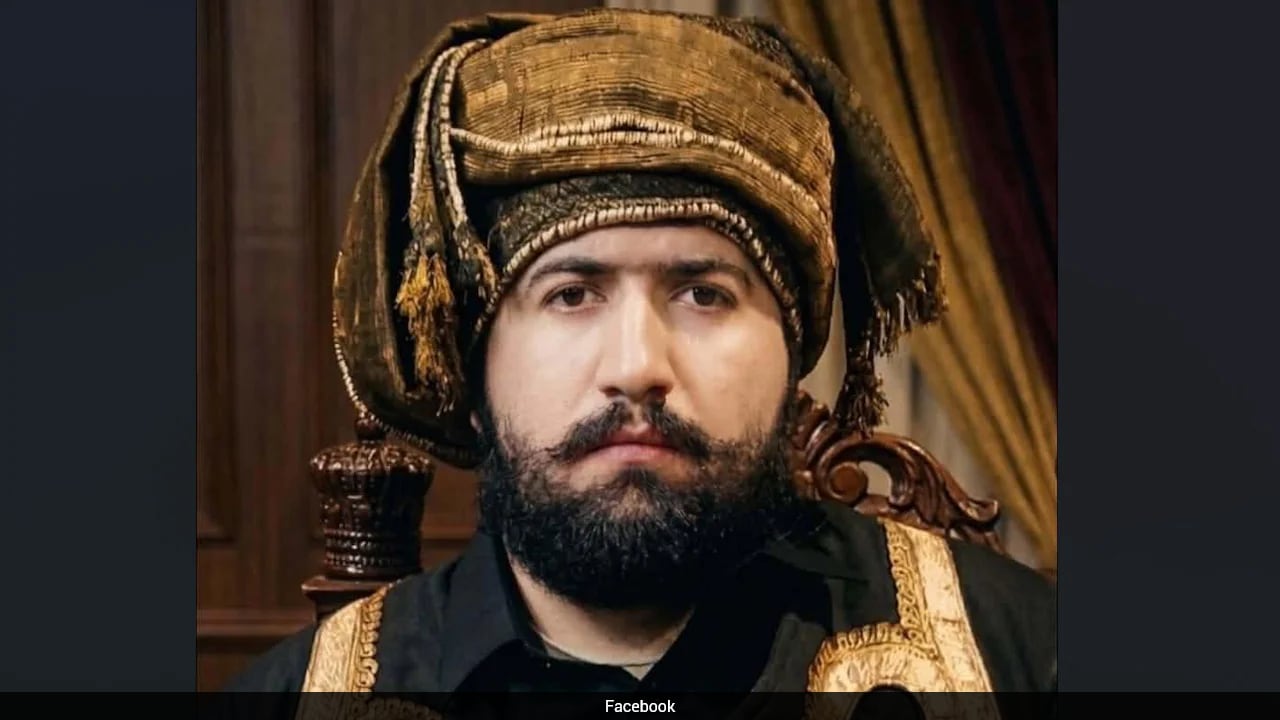
The abduction of a Baloch prince, the son of the Khan of Kalat, along with three of his armed guards in Pakistan is far more than an isolated criminal incident. It strikes at the raw, unresolved nerve of Balochistan’s centuries-old struggle over sovereignty, tribal authority, and state control. When a direct descendant of the historic rulers of Kalat is seized alongside his personal security detail, the event immediately exposes the fragile security architecture of Pakistan's largest province and revives deep historical grievances that Islamabad has spent decades trying to contain.
To understand why this kidnapping carries such immense political weight, you have to look beyond the immediate police reports and examine the title itself. The Khan of Kalat is not a ceremonial relic. Prior to 1948, Kalat was a sovereign princely state with treaty relations directly with the British Crown, distinct from British India. Its controversial accession to Pakistan remains the foundational fault line of modern Baloch nationalism. Any strike against the ruling house of Kalat reverberates across tribal lines, political factions, and insurgent networks alike.
The Anatomy of a High-Profile Abduction in Balochistan
Kidnapping a member of the Kalat royal family requires intelligence, logistical coordination, and territorial confidence. A prince traveling with three armed gunmen does not move casually through Balochistan. Tribal notables maintain strict movement protocols, rely on local scouts, and travel with vetted guards drawn from loyal sub-tribes. Intercepting such a convoy means the perpetrators knew the route, anticipated the defensive response, and possessed enough firepower to neutralize four armed men without triggering an immediate military interception.
Security analysts tracking the region point out that high-value abductions in Balochistan generally fall into three distinct operational categories.
- Criminal Ransom Syndicates Operating along the porous borders with Iran and Afghanistan, well-armed criminal networks frequently target wealthy landowners, contractors, and tribal elites for financial extortion. These groups often maintain tacit understandings with local power brokers to move hostages across rugged terrain.
- Insurgent and Separatist Factions Armed Baloch groups occasionally target tribal elders or royal family members whom they view as overly accommodating to the federal government or state security establishment. In these cases, the abduction serves as a public warning against political collaboration.
- Enforced Disappearances and State-Linked Operations Human rights organizations, including the Human Rights Commission of Pakistan, have long documented the phenomenon of enforced disappearances in Balochistan. When high-profile figures vanish without immediate ransom demands or insurgent claims, suspicion among the local population reflexively turns toward intelligence agencies and state-backed militia groups, known locally as death squads.
Each of these possibilities carries radically different consequences for regional stability. If criminal gangs pulled off the kidnapping, it signals a complete collapse of basic law enforcement even for heavily guarded elites. If insurgents took him, it marks a dangerous escalation in intra-Baloch conflict. If state-linked actors are involved, it suggests a severe breakdown in backchannel negotiations between Islamabad and traditional tribal leadership.
The Historical Weight of the Khanate of Kalat
You cannot separate modern violence in Balochistan from the events of March 1948. When the British partitioned India in August 1947, the Khan of Kalat, Mir Ahmad Yar Khan, declared independence, arguing that Kalat’s treaty status resembled that of Nepal rather than other Indian princely states. For seven months, Kalat functioned as an independent entity with its own bicameral legislature.
That independence ended when the Pakistani military moved into the coastal regions of Makran and forced the Khan to sign the Instrument of Accession in Karachi. His younger brother, Prince Abdul Karim, refused to accept the annexation and launched the first Baloch armed insurgency from the hills of Jhalawan. Every subsequent wave of unrest in 1958, 1962, 1973, and the ongoing conflict that began in the early 2000s traces its ideological lineage back to that moment.
Today, the current titular Khan of Kalat, Mir Suleman Dawood Jan, lives in self-imposed exile in the United Kingdom. He left Pakistan following the 2006 killing of veteran Baloch nationalist leader Nawab Akbar Bugti during a military operation. From London, Suleman Dawood has repeatedly petitioned international bodies and called for the restoration of Kalat’s sovereign status. Consequently, any family member remaining inside Pakistan walks a precarious tightrope between maintaining ancestral influence on the ground and avoiding the crosshairs of both state authorities and militant factions.
A Shifting Security Environment on the Ground
For decades, the Pakistani state managed Balochistan through a complex balancing act. Islamabad relied on loyal tribal sardars, or chieftains, to maintain local order in exchange for political patronage, development funds, and autonomy over tribal affairs. That traditional system is fracturing under the weight of demographic changes, generational shifts, and massive geopolitical infrastructure projects.
Younger, educated middle-class Baloch nationalists increasingly reject both the federal government and the traditional feudal sardari system. Groups like the Balochistan Liberation Army and the Baloch Liberation Front no longer take orders from hereditary tribal princes. In fact, many modern insurgents view the old aristocracy with deep skepticism, accusing them of trading national rights for personal privilege.
At the same time, the security establishment has altered its own strategy. Rather than relying solely on established tribal dynasties, authorities have cultivated new local intermediaries, armed local militias, and expanded the footprint of the Frontier Corps across the province. A prince of Kalat with three gunmen represents the old order of power, an order that is now squeezed between state militarization on one side and radicalized insurgency on the other.
The Role of the Levies and Frontier Corps
To understand how an abduction happens in broad daylight or along major transit corridors, look at the overlapping and often competing policing structures in Balochistan. The province is divided into "A" areas, policed by regular provincial police, and "B" areas, which cover roughly ninety percent of the landmass and are policed by the Balochistan Levies.
The Levies are a tribal force recruited locally, deeply embedded in community networks, and historically effective at resolving disputes through customary law. However, over the past twenty years, federal authorities have steadily transferred authority and funding from the Levies to the Frontier Corps, a federally controlled paramilitary force predominantly staffed by personnel from outside the province. This shift created massive intelligence blind spots. The Frontier Corps possesses heavy weaponry and checkpoints, yet lacks the granular local knowledge required to track small, fast-moving kidnapping teams through mountainous terrain.
Geopolitics and the High Stakes of Instability
Balochistan is not a forgotten periphery. It accounts for nearly forty-four percent of Pakistan’s total landmass and holds vast reserves of natural gas, copper, gold, and rare earth minerals. More importantly, it is the geographic linchpin of the China-Pakistan Economic Corridor, known as CPEC, which connects western China to the deep-water port of Gwadar on the Arabian Sea.
Billions of dollars in infrastructure investments depend on basic security along the highways linking Quetta, Kalat, Khuzdar, and Gwadar. Every high-profile kidnapping undermines the official narrative that the province has been pacified and opened for international investment. Foreign diplomats and corporate risk analysts watch incidents involving the Kalat royal family closely because the Khanate historically held suzerainty over much of the territory through which these trade corridors pass.
When a son of the Khan of Kalat cannot travel safely with three armed bodyguards, it sends an unmistakable message to investors in Beijing, Riyadh, and beyond. If the highest tier of local aristocracy is vulnerable to abduction, commercial convoys and foreign engineers face severe, unmitigated risks.
What Happens Behind Closed Doors After an Abduction
In Balochistan, the real negotiation rarely happens in courtrooms or press conferences. Once a member of a prominent family is taken, an intricate, silent mechanism activates immediately. Tribal elders from neighboring clans convene jirgas, or traditional councils, to trace the tracks of the abductors and identify which network holds the hostages.
Backchannel intermediaries move between mountain hideouts, provincial ministries, and intelligence headquarters. If the abductors are criminal opportunists, the demand is straightforward cash, often negotiated down through respected religious figures or neutral tribal mediators. The presence of the three gunmen complicates this equation. In tribal honor codes, abandoning one's guards is unthinkable, meaning any negotiation for the prince's release must encompass the safe return of all four men.
If the abduction is political, the negotiations become infinitely more delicate. Demands may involve the release of detained activists, the halting of specific military operations in Kalat or Khuzdar, or political concessions from family members living abroad. Authorities routinely deny involvement in political abductions while simultaneously using tribal intermediaries to warn prominent families against speaking to the international media. Silence is frequently the price of safe return.
The Gray Areas of Reporting From Balochistan
Journalists covering Balochistan face severe operational constraints that create persistent information vacuums. Local reporters in districts like Kalat, Mastung, and Khuzdar work under constant threat from both militant groups demanding coverage and security officials enforcing strict censorship. As a result, initial reports of a kidnapping often lack crucial details such as the exact location of the ambush, the specific identity of the prince among the Khan’s sons, or whether shots were fired before the capture.
Verification becomes a painstaking exercise in cross-referencing hospital logs, tribal sources, and district administration leaks. Official statements frequently downplay the political status of the victims, framing targeted abductions as routine highway robberies or personal tribal feuds to avoid triggering wider protests. Conversely, nationalist social media networks rapidly amplify unverified claims, attributing every disappearance directly to state intelligence agencies before facts on the ground can be established.
Separating reality from information warfare requires patience. History in this region shows that initial silence from major insurgent groups usually points toward either criminal gangs or covert state detention, as separatist organizations generally claim high-profile operations quickly to maximize psychological impact.
The Broader Consequences for Tribal Cohesion
The kidnapping of a Kalat prince tests the durability of Baloch tribal solidarity. Despite deep political divisions over whether to pursue independence, provincial autonomy, or integration within Pakistan, the symbolic status of the Khanate remains one of the few unifying reference points across different Baloch tribes.
An attack on the royal household forces rival sardars to take a stand. Prolonged detention without resolution risks sparking highway blockades along the vital N-25 national highway, which connects Karachi to Quetta and runs directly through Kalat district. Shutting down the N-25 paralyzes commercial transport across western Pakistan and forces the provincial government into immediate crisis management.
Ultimately, the abduction lays bare the core contradiction governing Balochistan today. Islamabad wants the legitimacy and stability that traditional tribal structures once provided, yet decades of militarization and political manipulation have hollowed out those very institutions, leaving a vacuum filled by gunmen, ransom gangs, and unchecked impunity. Until the underlying political grievances rooted in Kalat’s history are addressed through genuine representation rather than force, even the heirs to the region’s oldest throne remain hostages to an endless cycle of insecurity.