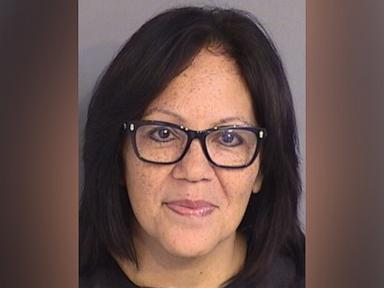
Kissimmee Mayor Jackie Espinosa was arrested on October 21, 2026, on felony charges of grand theft and organized scheme to defraud over alleged misuse of pandemic relief grant money under the city's Business Boost 2.0 program. Florida Attorney General James Uthmeier announced the arrest following an investigation involving state authorities and the Department of Financial Services. Prosecutors allege Espinosa steered public relief funds toward businesses tied to herself and her family. Ten days later, Governor Ron DeSantis suspended her from office via Executive Order 26-226.
Headline coverage treats this like a clean open-and-shut case of a small-city politician with her hand in the till. Real investigative work rarely looks that tidy.
The numbers alone already tangle on closer inspection. Investigators and officials have pointed to $50,000 in direct grants across businesses connected to Espinosa or her family, while state officials and reporting on the case have also cited up to $90,000 in total relief funds tied to the broader scrutiny, including tenant businesses in a property linked to her. Look at the specific payouts cited in reporting from the arrest affidavit: $20,000 to Andanse LLC (or Adanse LLC), $15,000 to The Kissimmee Diner, which closed five months later, and $15,000 to The Real Estate Gallery, tied to her husband.
When a mayor gets arrested in handcuffs and suspended by the governor, public anger arrives fast. Yet the harder questions sit underneath the mugshot. How did a grant program rolled out years after the acute 2020 lockdowns still function as a pipeline for COVID-era money? Why did administrative approvals happen before formal legal warnings landed? And where is the line between a messy conflict of interest and a provable felony crime?
How Late Pandemic Grants Became a Political Trap
Covid relief money had a long tail. Long after emergency travel restrictions faded and dining rooms reopened across Central Florida, municipalities were still pushing out recovery dollars under new labels and second-wave initiatives.
Kissimmee launched its Business Boost 2.0 program in September 2025. Think about the timing. Five years after the pandemic began, "COVID recovery" had shifted from an urgent emergency lifeline into an ongoing municipal economic program with its own rules, rollout pace, and political framing. Espinosa publicly praised small businesses as the backbone of Kissimmee's economy when the program launched. According to state authorities, applications from Espinosa and family members arrived right as the program opened.
That speed exposes a recurring flaw in local grantmaking. City officials want money out the door quickly so they can point to visible support for local storefronts and employers. Yet rapid application windows paired with broad eligibility language create obvious friction when elected officials or their relatives sit anywhere near the program's creation or promotion.
Consider a hypothetical example to see how this trap springs in a mid-sized city. Suppose a council member helps champion a small-business grant fund, a family member owns a cafe that employs local workers, and the application form asks whether the business meets basic operating criteria without flagging every indirect familial or property tie up front. Even if staff members review the paperwork, political gravity hangs over the room. Subordinates rarely relish telling the city's top elected leader that a relative's application looks radioactive.
Ethics Fines Versus Felony Fraud
One of the sharpest legal tensions in the Espinosa case sits right between ethics enforcement and criminal prosecution.
Before the October arrest, ethics complaints had already surfaced earlier in 2026, and in September Espinosa agreed to a public reprimand and a $2,000 civil penalty through the Florida Commission on Ethics. For critics like complainant Lillian Evans, a $2,000 fine felt like a slap on the wrist for public money allegedly diverted from residents. On paper, paying a small civil fine over a conflict of interest looks like a routine administrative headache.
Then came felony charges of grand theft and organized scheme to defraud, carrying the potential for up to 30 years in prison upon conviction.
Her defense attorney, Migdalia Perez, drew a bright line between the two tracks. Perez argued that Business Boost 2.0 was a publicly approved grant program administered by city staff rather than a secret theft scheme, insisting that an alleged ethics violation is not automatically a crime and that prosecutors must prove criminal intent beyond a reasonable doubt. Reporting on the affidavit also noted that economic development staff approved the applications, while a documented warning from a city attorney came after the awards were already made and deposited.
That defense is not a throwaway talking point. In white-collar and public-corruption prosecutions, criminal intent is often the hardest element to lock down. A defendant can be careless, self-serving, tone-deaf to appearances, or even in violation of state ethics rules without having committed theft or an organized fraud scheme in the eyes of a jury.
Conversely, prosecutors do not rely solely on who stamped an approval form. State investigators have alleged that Espinosa shaped or streamlined the process in ways that made it easier for her and immediate family members to seek and receive funds they were not entitled to get. If emails, texts, or witness testimony show deliberate manipulation of rules or false representations on applications, the state's case gains real teeth. If the record mostly shows sloppy oversight and self-dealing without criminal deception, the defense will hammer that gap relentlessly.
What Gets Overlooked in Local Grant Scandals
Most coverage stops at the accused official's name and the dollar figure. That misses two bigger institutional stories happening right beside the arrest.
First, administrative rubber-stamping deserves harder scrutiny. A mayor does not usually print checks alone. When city staff review and approve grants tied to a sitting mayor or her family, municipal managers have to answer how internal controls failed—or whether staff felt pressured not to push back. Kissimmee leaders launched an internal review of Business Boost 2.0 after the arrest, and municipal officials emphasized that day-to-day city operations would continue. Routine operations continuing is reassuring on trash pickup and permitting, yet internal reviews often move slowly and keep uncomfortable internal memos out of early public view.
Second, post-grant accountability rarely matches the fanfare of the ribbon-cutting. Look at the detail regarding The Kissimmee Diner receiving $15,000 and closing five months later before a new business took over the spot. Small businesses close all the time, even well-run ones. A five-month closure after taking public grant money is not proof of a crime by itself. Still, it highlights a broader weakness in local economic programs: cities frequently track how fast funds are awarded, yet spend far less energy verifying whether grant recipients met ongoing terms or how public dollars were actually spent.
| Aspect of the Case | What Headlines Emphasize | What Requires Deeper Scrutiny |
|---|---|---|
| Dollar Amounts | $50,000 in direct grants tied to Espinosa and family businesses | Varying totals cited across reporting (up to $90,000) and tenant/business connections |
| Approval Chain | Arrest by state authorities and suspension by the governor | Role of city staff approvals versus post-award legal warnings |
| Legal Standard | Felony charges and up to 30 years maximum exposure | Proving criminal intent beyond a reasonable doubt versus ethics violations |
| Business Outcomes | Grants meant for pandemic recovery | Follow-up verification, such as a recipient closing five months later |
Suspensions, Bond, and a City in Limbo
Espinosa posted a $70,000 bond the day after her arrest and pleaded not guilty. Governor DeSantis's suspension removed her from her mayoral and City Commission Seat 5 duties under Florida's suspension authority while the criminal case plays out, leaving questions around commission appointments or potential special-election rules as the city navigates the vacancy.
For voters in Kissimmee, the political whiplash is real. Espinosa took office in November 2024 for a term running to 2028. Less than two years into that term, residents are watching a sitting mayor fight felony accusations, a prior ethics penalty, and a gubernatorial suspension all at once.
There is a gray area here that partisans and hot-take commentators routinely flatten. An arrest warrant establishes probable cause; it does not establish guilt beyond a reasonable doubt. At the same time, public officials hold a higher standard of care around taxpayer money than private citizens do, precisely because voters trust them not to turn public programs into family windfalls.
Real accountability in this case will not come from slogans on a press-conference podium or defensive soundbites outside a jailhouse gate. It will come from full public disclosure of the grant guidelines, application records, audit findings, and approval logs so residents can see every link in the chain for themselves.


