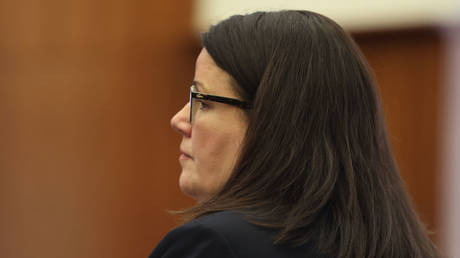
Jury selection is officially underway in Plymouth Superior Court for Lindsay Clancy, the Massachusetts mother accused of strangling her three young children.
She sat in a wheelchair inside the courtroom, paralyzed from the waist down. That physical condition stems from the moment on January 24, 2023, when she jumped out of a second-story window after taking the lives of 5-year-old Cora, 3-year-old Dawson, and 8-month-old Callan.
The case has captured nationwide attention because it forces the American legal system to confront a deeply uncomfortable topic: postpartum psychosis.
A Tragic Break from Reality or Calculated Murder
The prosecution and defense present two entirely different versions of what happened in Duxbury that night.
Prosecutors argue Clancy knew exactly what she was doing. They point out that she sent her husband, Patrick Clancy, out of the house to pick up takeout food and medicine. In their eyes, that brief window gave her the time she needed to execute a planned, deliberate attack using exercise bands before attempting to take her own life.
Defense attorney Kevin Reddington sees a completely different story. He doesn't deny that Clancy caused the deaths of her children. Instead, he intends to raise an insanity defense centered on severe postpartum mental illness and overmedication.
Her legal team argues that Clancy was battling severe delusions. Medical records cited in recent civil filings allege she repeatedly heard voices saying, "This is your last chance. Kill the children so you can kill yourself".
Prosecution's Stance:
- Intentional and planned action
- Sent husband away to create a time window
- Pleaded not guilty to first-degree murder

Defense's Stance:
- Suffering from postpartum psychosis
- Lack of criminal responsibility (insanity defense)
- Overmedication and system failure by healthcare providers
The High Bar for Insanity in Massachussetts
Winning an insanity defense in Massachusetts isn't easy. The legal standard requires the defense to prove that, due to a mental disease or defect, the defendant lacked the substantial capacity to appreciate the criminality of her conduct or conform her behavior to the law.
It isn't enough to prove someone was depressed or struggling with severe mental health issues. The jury has to believe she completely lost connection with moral and legal reality at the exact moment the crime occurred.
What makes this trial particularly unusual is the backing of her husband, Patrick Clancy. He has publicly forgiven his wife, stating that the woman who acted that night was not the caring, loving mother and labor-and-delivery nurse he married. He is listed as a witness for both sides.
Why Seating a Jury Is Taking Days
Finding an impartial jury for a trial like this is a massive challenge.
Court officials brought in a pool of around 130 prospective jurors on the first day, but only five were seated after dozens were questioned. Judge William Sullivan plans to seat 18 jurors in total, including six alternates, for a trial expected to span six to eight weeks.
Prospective jurors are filling out detailed questionnaires regarding their own mental health histories, personal backgrounds, and familiarity with a witness list that includes over 200 names.
The court must weed out people who have already formed unbreakable opinions from heavy media coverage. The graphic nature of the allegations makes finding neutral observers difficult.
What Comes Next for the Defense and Medical Accountability
Beyond the criminal courtroom, the Clancy family filed lawsuits against medical providers, alleging a systemic failure to properly diagnose and monitor Lindsay's psychiatric condition. She had sought help, called crisis hotlines, and spent time in a psychiatric facility shortly before the deaths.
As the criminal trial progresses over the coming weeks, pay close attention to the testimony of expert psychiatric witnesses. The outcome will likely hinge on whether the jury views Clancy's actions as a desperate execution of command hallucinations or a deliberate crime.
If you or someone you know is struggling with severe perinatal mental health issues or suicidal thoughts, help is available by calling or texting 988 in the United States.
Lindsay Clancy trial update
This video provides key court footage and summary details on the first day of jury selection and defense motions in the trial.