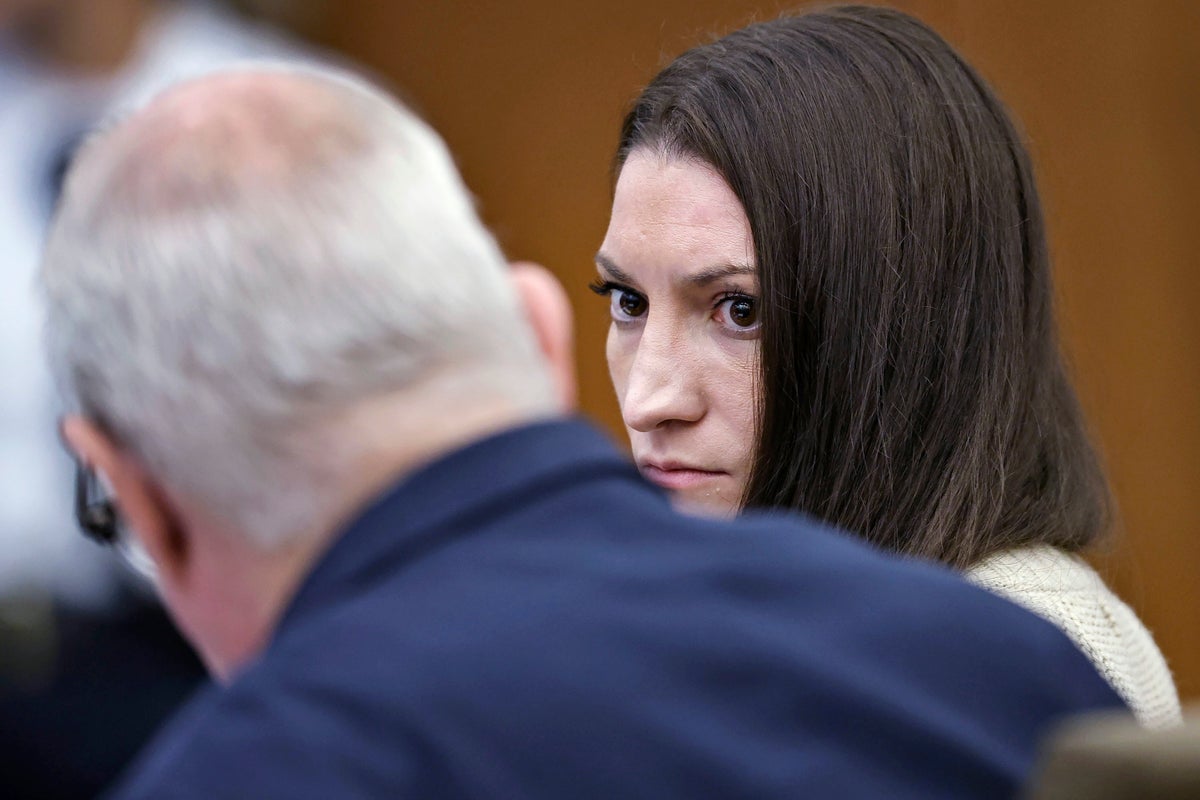
The courtroom in Massachusetts has spent weeks listening to competing psychiatric evaluations, trying to decide whether Lindsay Clancy was a calculating killer or a victim of profound medical collapse. In January 2023, Clancy strangled her three young children—Callan, Dawson, and Cora—before jumping from a second-story window in an attempt to end her own life. She survived, but was left paralyzed from the waist down. Now, as the high-profile murder trial nears its conclusion, forensic experts are clashing over whether a web of misdiagnoses, shifting pharmaceutical cocktails, and unaddressed bipolar disorder drove a dedicated labor and delivery nurse to commit an unimaginable act.
The state's case rests on the premise that Clancy acted with chilling clarity. Prosecutors have argued that she carefully orchestrated her husband's absence by sending him out on errands, executed the killings with deliberate precision, and possessed a full understanding of right and wrong. Conversely, the defense has laid out a harrowing timeline of psychiatric deterioration, detailing how months of severe postpartum depression, profound insomnia, and an ever-shifting regimen of psychiatric drugs warped her grasp of reality.
The Pharmacy of Despair
Long before the tragedy unfolded in Duxbury, Clancy's journal entries painted a picture of a woman drowning in her own mind. She wrote of debilitating brain fog, paralyzing anxiety over daily routines, and an overwhelming terror regarding her youngest child's sleep schedule. She sought help repeatedly. She consulted multiple providers, checked herself into a psychiatric hospital, and begged for relief from a relentless cycle of despair.
Instead of stabilization, she encountered a fragmented medical apparatus. In the span of just a few months, clinicians prescribed an overlapping succession of antidepressants, sleep aids, and mood stabilizers. Toxicological reports presented at trial confirmed the presence of multiple psychiatric medications in her bloodstream. Medical experts have long warned that prescribing certain antidepressants to patients with undiagnosed bipolar disorder can trigger adverse reactions, worsening agitation or inducing manic states.
Yet, the courtroom battle has exposed a stark divide among the professionals tasked with interpreting her mental state.
The Battle of the Experts
Testimony from forensic psychologists and psychiatrists has revealed profound disagreements over diagnostic labels. Prosecution witnesses testified that they found no evidence of acute psychosis or mania during the critical window leading up to the deaths, asserting instead that Clancy suffered from a severe, continuous depressive episode but retained the capacity to understand her actions. Forensic psychologist Kirk Heilbrun testified that while he diagnosed Clancy with bipolar 2 disorder, he ruled out acute psychosis with command hallucinations. In his view, Clancy took her children's lives because she intended to kill herself and could not bear to leave them behind, viewing their deaths through a distorted, religiously tinged lens of joining together in heaven.
Other specialists reached radically different conclusions. Defense witnesses, including renowned forensic psychiatrist Dr. Phillip Resnick, maintained that Clancy was frankly psychotic and entirely detached from reality under the weight of postpartum psychosis. Testimony from hospital chaplains and defense experts recounted Clancy's disclosures of persistent male voices commanding her to act to keep her family safe.
This friction points to a broader, systemic failure in how modern medicine approaches maternal mental health. Postpartum psychosis remains severely misunderstood, frequently misdiagnosed as routine postpartum depression or standard anxiety. When overlapping mood disorders like bipolar illness go unrecognized, the introduction of uncoordinated pharmaceutical treatments can turn a fragile psychological state into a volatile hazard.
Beyond the Courtroom Verdict
Regardless of what the jury ultimately decides regarding criminal responsibility, the proceedings have laid bare the structural vulnerabilities of a healthcare system that routinely fails mothers in crisis. Clinical guidelines often treat postpartum distress as a monolithic issue, failing to screen adequately for underlying bipolar trajectories or the compounding dangers of rapid medication changes.
Families navigating severe psychiatric distress post-childbirth are frequently left to bounce between fragmented outpatient providers, short-term hospitalizations, and overburdened emergency programs. When the safety net frays this completely, the consequences ripple outward with devastating permanence. The courtroom in Massachusetts will soon render a verdict on one woman's legal culpability, but the broader indictment of institutional failure remains unresolved.