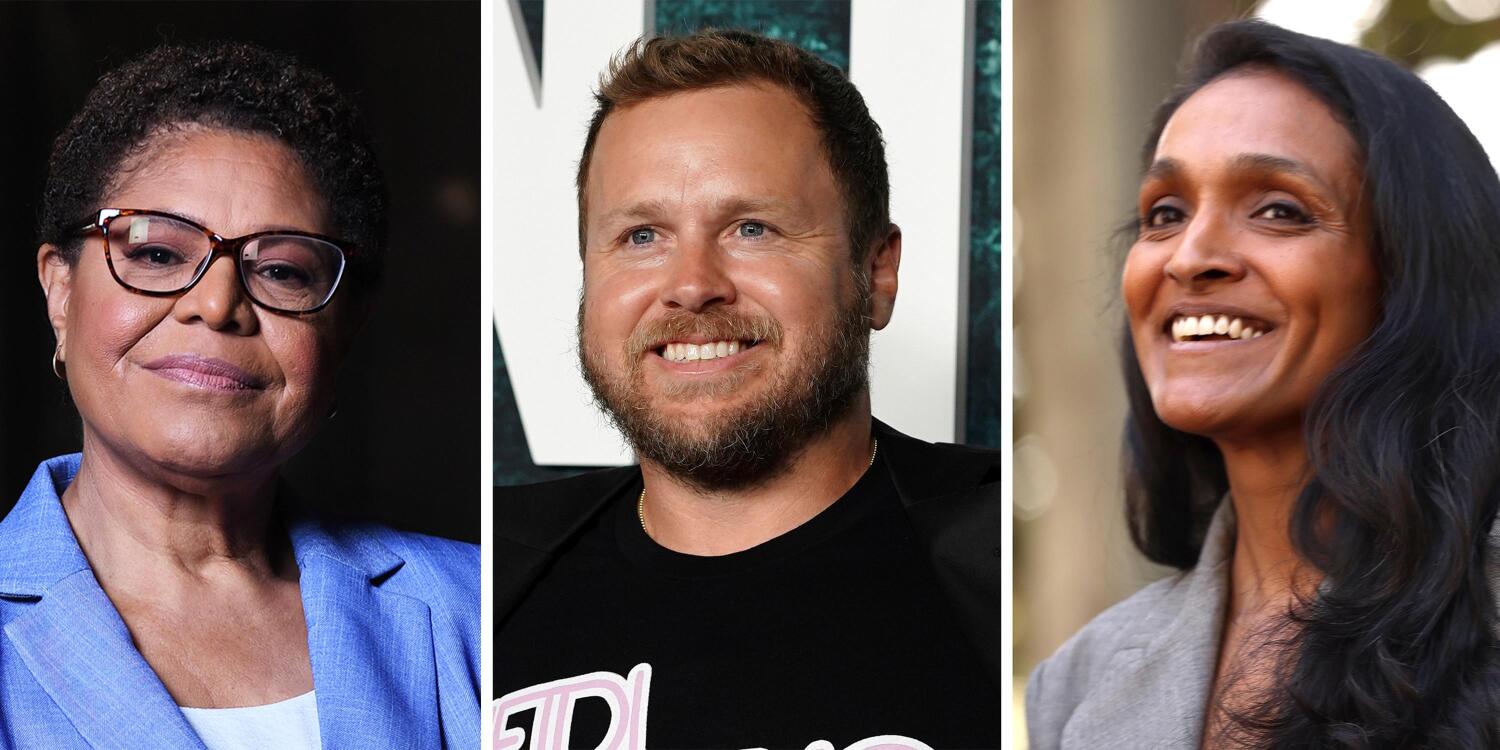
The Democratic Socialists of America (DSA) have officially declined to endorse a candidate in the 2026 Los Angeles mayoral race, a move that effectively sidelines the city's most aggressive grassroots machine during a generational budget crisis. By failing to back either Councilmember Nithya Raman or community organizer Rae Huang, the organization has signaled a profound internal fracture. This isn't just a procedural hiccup; it is a tactical surrender in a city where the "socialist surge" was supposed to be hitting its stride. For the 100,000 members of the national body looking at LA as a bellwether, the silence is deafening.
The decision stems from a deadlock between two camps: one that views Raman as a compromised incumbent and another that sees Huang as a principled but unviable longshot. While Mayor Karen Bass navigates a $1 billion budget gap and the wreckage of the Palisades Fire, the Left has opted for a "none of the above" strategy that risks turning their hard-won political capital into a historical footnote.
The Myth of the United Front
To understand the current paralysis, one must look at the math of the 2022 primary. Back then, DSA-backed Hugo Soto-Martinez unseated an incumbent with roughly 19,000 votes. In a city of nearly four million people, a disciplined bloc of 20,000 voters is a kingmaker. But that discipline has evaporated.
The Los Angeles chapter is no longer the scrappy underdog of the 2016 Bernie Sanders era. It has grown into a complex, often bureaucratic entity with over 13,000 local members, many of whom are "downwardly mobile professionals"—highly educated renters who are seeing the California Dream dissolve into five-figure security deposits and $3,000 studios. This demographic should be a monolith, yet they are currently tearing themselves apart over the definition of "purity."
- The Raman Dilemma: Nithya Raman was the pioneer. She was the first to prove a socialist-backed candidate could win in LA. However, her tenure has been defined by the friction of governing. Her 2024 censure by the chapter over her acceptance of a pro-Israel group's endorsement created a scar that never quite healed. To the "cadre" purists, she is a politician who uses socialist energy to fuel a standard liberal career.
- The Huang Factor: Rae Huang, a Presbyterian minister and housing advocate, checks every ideological box. She refuses corporate donations and speaks the language of the "Care First" model. But in a race against an incumbent mayor with the backing of Nancy Pelosi and Gavin Newsom, the pragmatists in the DSA see a Huang endorsement as a waste of door-knocking hours that could be spent defending city council seats.
A City in Fiscal Cardiac Arrest
While the DSA debates the nuances of "cadre candidates," the reality on the ground in Los Angeles has turned grim. The Palisades Fire didn't just burn homes; it scorched the city's already fragile financial projections. Mayor Bass is currently hunting for cuts to close a deficit that has ballooned past the billion-dollar mark.
For a socialist organization, this should be the ultimate "I told you so" moment. The narrative writes itself: a city that prioritizes police funding and corporate subsidies over climate resiliency and public housing is now literally and figuratively on fire. Yet, without a mayoral candidate to carry that torch, the message is being drowned out by more "moderate" voices like tech entrepreneur Adam Miller or the bizarre, populist entry of reality star Spencer Pratt.
The absence of a socialist endorsement means there is no one on the debate stage forcing the conversation toward radical wealth redistribution or the "Fast and Free" Metro plan that Huang championed. Instead, the discourse is retreating to the safe, technocratic center.
The New York Comparison
The sting of the LA non-endorsement is felt more sharply when compared to New York City. In January 2026, Zohran Mamdani was inaugurated as the first DSA mayor of a major American metropolis. His victory was built on a "mass mobilization of untapped voter blocs"—a strategy the LA chapter has studied but failed to replicate at the mayoral level.
The difference is structural. NYC-DSA functions with a level of central coordination that LA lacks. The LA chapter remains a "big tent" that has become so large the poles are starting to snap. Internal elections in 2025 were marred by disputes over "Approval STV" voting methods and allegations that certain caucuses were filtering out dissenting voices. When an organization spends more energy on the "how" of its internal voting than the "who" of its external leadership, the result is the current vacuum in the mayor's race.
The Cost of Purity
There is a weary confidence among the city's establishment Democrats right now. They know that a fractured Left is a neutered Left. By sitting out the mayoral race, the DSA has effectively given Karen Bass a pass on her most vulnerable flank.
The statistics are clear: DSA-endorsed candidates for lower offices, like city attorney or council seats, still have a high win rate. But the mayor’s office is where the real power to reshape the city’s $13 billion budget resides. Without a horse in that race, the movement is essentially admitting it isn't ready for the "Big Show."
The "Brutal Truth" is that Los Angeles is currently a city of two socialisms. One is the socialism of the ballot box—pragmatic, incremental, and personified by the "Socialists in Office" (SIOs) like Raman. The other is the socialism of the street—uncompromising, loud, and increasingly disillusioned with the electoral process.
The Road to Nowhere
The filing deadline has passed, and the ballots are being set for the June primary. The DSA's decision to stay home doesn't just hurt Huang or Raman; it hurts the thousands of renters who look to the red rose for a sign of who will actually fight the "Status Quo Coalition" of landlords and police unions.
In the 2022 cycle, the socialist bloc was the most feared entity in LA politics. They were the "un-bought" force that incumbents couldn't bribe or bully. By 2026, that fear has been replaced by a quiet relief among the elite. The socialists, it seems, have found a way to do what the billionaire class never could: they have sidelined themselves.
If the goal of democratic socialism is to build an "independent political force," the 2026 mayoral cycle in Los Angeles represents a significant retreat. It is a reminder that in politics, as in the charred hills of the Palisades, nature abhors a vacuum. If the Left won't fill the space, the establishment is more than happy to expand into it.
The city is heading toward a June primary where the most radical voice on the stage might be a reality TV star complaining about his burnt-down mansion. That is not just a failure of the DSA; it is a tragedy for a city that desperately needs a different way forward. Would you like me to analyze the specific demographic shifts in the 13th and 4th Districts to see if the "socialist core" is actually shrinking or just moving?