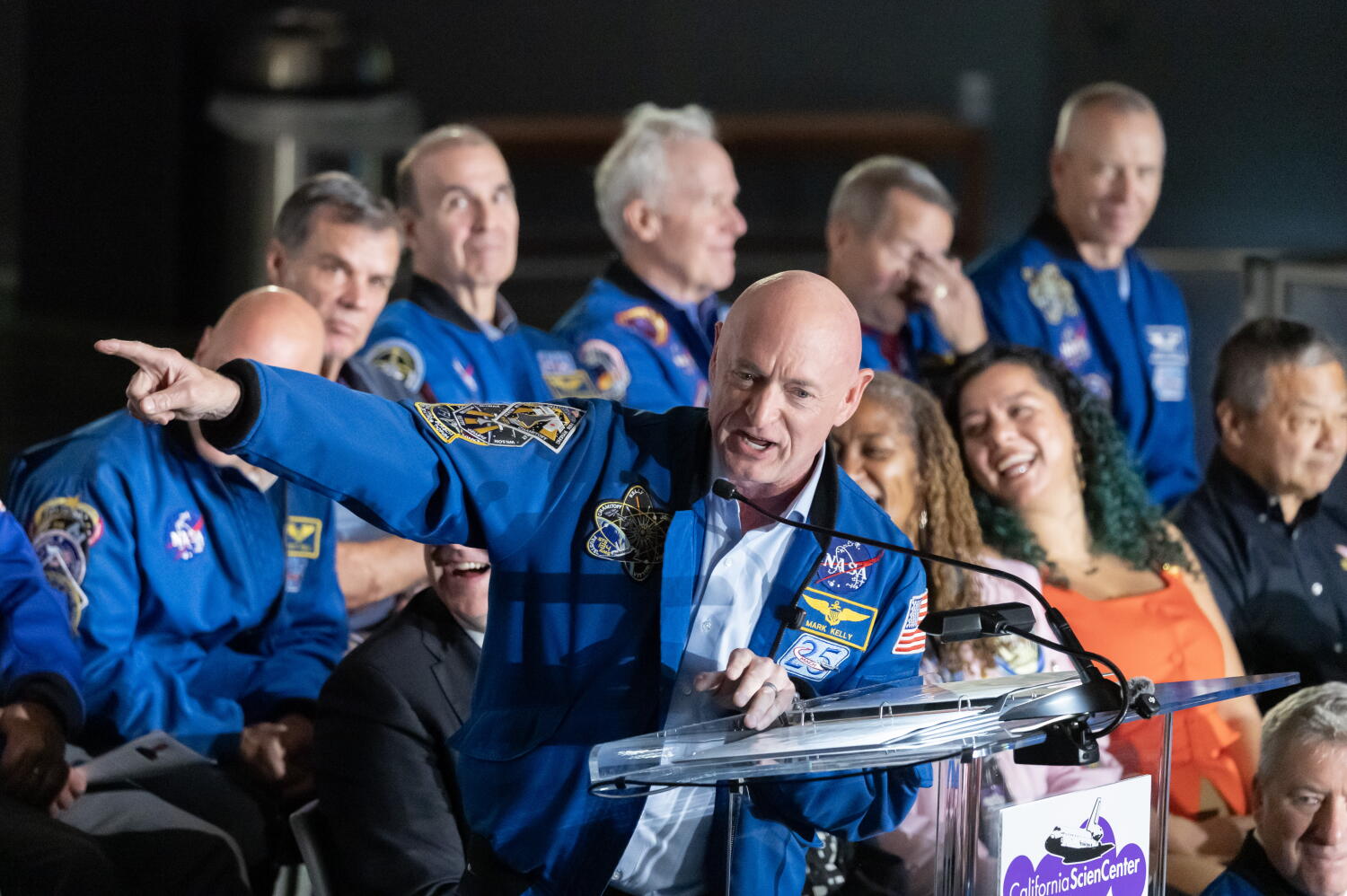
When retired astronaut and U.S. Senator Mark Kelly stood alongside crowd of children to celebrate the unveiling of Los Angeles’s expanded air and space facilities, local media framed the event as a feel-good ribbon cutting. That narrative misses the real story. Behind the photo opportunities with NASA alumni and local politicians lies a calculated multi-hundred-million-dollar bet: that physical, immersive science centers can reverse a nationwide collapse in youth STEM engagement while securing permanent homes for historically significant aerospace artifacts.
Los Angeles has long occupied a unique position in aviation and spaceflight history. From the early test runways of the South Bay to the engineering bays where Apollo-era hardware took shape, Southern California built the infrastructure that carried humanity off the planet. Yet for decades, preserving that heritage was an afterthought. Major historical assets remained tucked away in hangar storage or scattered across regional airfields without unified public access.
The expansion of the city’s premiere space destination—built around the permanent vertical display of Space Shuttle Endeavour in the Samuel Oschin Air and Space Center—represents far more than an architecture project. It is a massive engineering feat. Suspending an orbiter weighing nearly 178,000 pounds in a launch-ready, vertical configuration alongside an authentic external tank and two solid rocket boosters requires specialized seismic isolation systems capable of withstanding major earthquakes along the San Andreas fault zone.
Building such a facility is technically complex, but the institutional challenges are even steeper.
Across the country, traditional museums face declining foot traffic. Interactive digital media, mobile devices, and shifting public interest have forced cultural institutions to reconsider their basic architecture. Simply parking an aircraft in a hangar and slapping an explanatory brass plaque on the wall no longer works. Kids walk past static displays without stopping.
To hold the attention of a generation raised on instant digital stimulation, modern science centers must function as dynamic learning environments. The California Science Center's approach relies heavily on tactile engagement. Visitors don't just look at hardware; they interact with simulator rigs, observe structural engineering components at eye level, and examine the raw thermal protection tiles that survived re-entry temperatures exceeding 3,000 degrees Fahrenheit.
Public officials point to these facilities as critical pipelines for future workforce development. The United States faces an ongoing shortfall in domestic engineering, aerospace, and computer science talent. Federal initiatives have funneled billions into STEM education over the past decade, yet primary school proficiency scores in math and science remain volatile.
VIP appearances by figures like Senator Mark Kelly serve a strategic purpose. Having actual spacefarers explain how liquid oxygen pumps function or how orbit mechanics operate grounds abstract textbook math in tangible reality. When a child stands beneath the main engines of a shuttle, the physical scale of aerospace engineering becomes impossible to ignore.
However, high-profile museum openings hide uncomfortable financial realities that institutional leadership rarely discusses in front of rolling cameras.
Capital campaigns for facilities of this scale regularly cross the $400 million threshold, drawing on a mix of private philanthropy, corporate sponsorships from defense contractors, and state appropriations. While funding the initial construction creates photo opportunities for politicians, funding perpetual operational maintenance, structural inspections, and educational outreach programs is an ongoing battle.
Aerospace artifacts degrade if not kept in strictly controlled environments. Maintaining constant humidity, specialized atmospheric filtration, and structural monitoring for decades-old flight hardware demands significant operational expenditure. If admissions slide or donor interest wanes after the initial grand opening hype fades, institutions find themselves forced to cut back on the very educational programs that justified public funding in the first place.
Moreover, relying on massive central facilities in urban hubs creates an access gap. Children from affluent suburban school districts routinely board buses for field trips to downtown science centers. Students from underfunded rural or distant urban districts rarely get the same opportunity. An expensive museum building cannot solve systemic inequities in regional education systems on its own.
To make these investments yield actual educational results, operators are turning to hybrid outreach strategies. Science centers now deploy mobile laboratory units, partner directly with Title I schools, and distribute free curriculum packages tailored to state standardized testing requirements. The physical facility acts as the flagship anchor, but the institutional mission depends on extending operations far beyond the building's physical footprint.
Southern California’s aerospace legacy was built by engineers who solved problems that had never been tackled before. Preserving that history—and using it to inspire the next cohort of builders, technicians, and scientists—demands the same relentless focus. The shiny new halls and celebrity astronaut appearances make for great headlines today, but the true measure of success will be found ten years down the line in the career paths of the kids who walked through the doors.