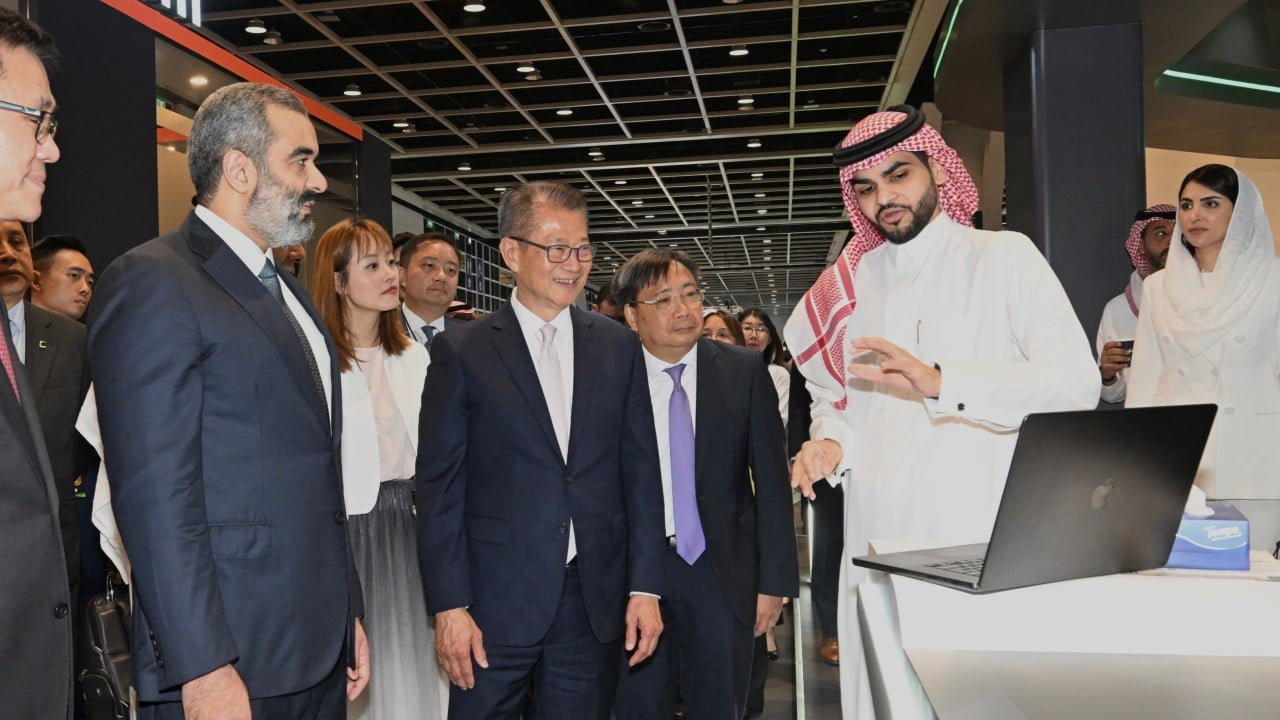
Hong Kong is quietly executing a dramatic pivot in its global financial strategy to counter declining Western investment. Financial Secretary Paul Chan Mo-po announced a major delegation to Saudi Arabia, marking an intensified campaign to secure Middle Eastern capital. This aggressive push follows the high-profile LEAP East tech conference in Hong Kong, where city officials made it clear that survival depends on forging a deep economic corridor with Riyadh. Confronted by geopolitical fragmentation and a shifting regulatory environment, Hong Kong is positioning itself as the primary conduit for Gulf wealth into mainland China.
The strategy is a pragmatic response to hard economic realities rather than a sudden interest in diplomacy. Over the past several years, traditional capital flows from North America and Europe have slowed due to heightened geopolitical tensions and changing risk appetites. Hong Kong requires fresh, massive pools of liquidity to maintain its status as an international financial center. Saudi Arabia, armed with hundreds of billions of dollars via its Public Investment Fund and guided by its ambitious Vision 2030 economic blueprint, represents the ideal counterparty.
Moving Beyond the Exchange Traded Fund Milestone
Early stages of this financial courtship focused primarily on public equity links. The cross-listing of Exchange-Traded Funds tracking underlying benchmarks in both Riyadh and Hong Kong served as a proof of concept. These vehicles allowed Asian investors direct access to Saudi corporate giants, while giving Gulf wealth managers a straightforward route into East Asian equities.
Yet, public equity flows are no longer the ultimate prize. The upcoming delegation signifies a deeper tactical shift toward private markets, infrastructure, and dual-track corporate expansion.
- Alternative Funding: The focus is moving toward cross-border venture capital, green energy initiatives, and co-investment models.
- The Hong Kong Investment Corporation Model: Hong Kong is leveraging its own government-backed investment flagship to anchor deals, attempting to draw in multi-billion-dollar sovereign wealth partners from the Gulf.
- Secondary Listings: Securing secondary listings of Middle Eastern state-backed conglomerates on the Hong Kong Stock Exchange remains a long-term goal, offering a buffer against the reduction of Western initial public offering activity.
The Industrial Reality of Vision 2030
Saudi Arabia does not simply want to deploy cash into passive financial instruments. Riyadh demands localized technological transformation. The Gulf state wants to build its own advanced manufacturing base, domestic supply chains, and domestic tech infrastructure.
This creates a highly specific transaction. Hong Kong provides mainland Chinese technology champions, advanced manufacturing firms, and renewable energy pioneers with an institutional environment that features a familiar common law legal system and robust intellectual property protection. Hong Kong then acts as the launching pad for these companies to physically build factories, labs, and regional headquarters within the Kingdom.
"Going forward, the demand for not just capital, but real business, industry-based supply chains in this part of the world is very substantial," Chan noted during recent trade engagements, emphasizing that the relationship must operate as a two-way corridor.
Overcoming the Execution Gap
The primary challenge lies in executing these complex cross-border agreements. Significant structural differences remain between the fast-moving tech ecosystems of South China and the bureaucratic, sovereign-wealth-driven landscape of Saudi Arabia. Cultural and operational differences often stall initial memorandums of understanding before they materialize into actual capital deployments.
Furthermore, competition for Saudi capital is fierce. London, New York, and Singapore are similarly pitching their own financial ecosystems to Riyadh. Hong Kong’s distinct competitive advantage is its unique regulatory pipeline into mainland China via the various Connect schemes. This mechanism allows international capital to flow directly into mainland markets, a proposition that other financial capitals cannot match.
The success of Chan's upcoming mission will be measured by binding commitments, not polite diplomatic statements. The city's financial leadership understands that relying on traditional Western capital markets is no longer a viable single strategy. Diversifying into the Gulf is a calculated, urgent necessity to anchor the city’s economic future.