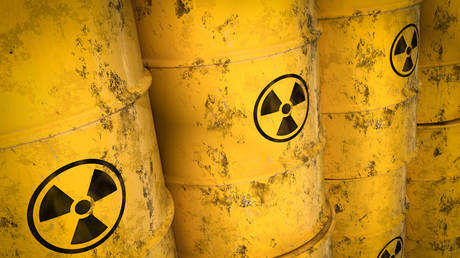
The international community has lost eyes on enough highly enriched uranium to fuel roughly ten nuclear warheads. This is not a theoretical projection or a worst-case scenario. It is the current assessment from the International Atomic Energy Agency (IAEA) as of April 2026. Following two waves of significant military strikes—first in June 2025 and again in February 2026—the chain of custody for Iran’s most dangerous nuclear material has snapped. While the White House describes Iranian enrichment sites as "obliterated," the reality on the ground is far more chaotic. Roughly 440 kilograms of 60% enriched uranium are currently unaccounted for, buried under the rubble of hardened sites like Fordow or, more concerningly, moved into the shadows.
The Ghost Stockpile
Before the February strikes, Tehran’s cache of near-weapons-grade material had surged. This material is a short technical step from the 90% threshold required for a bomb. When the bombs fell, they didn't just destroy centrifuges; they destroyed the IAEA’s ability to monitor what remained. Director General Rafael Grossi has been blunt. The agency has lost "continuity of knowledge." In plain English, they have no idea if the uranium was destroyed, buried, or loaded into transport cylinders and driven into the desert.
Seizing or neutralizing this material is a logistical nightmare that air power cannot solve. High-explosive munitions are effective at collapsing tunnels and shattering delicate machinery, but they do not make uranium vanish. Instead, they create "dirty" wreckage. If the material survived the heat of the impact, it is likely still sitting in the ruins, waiting for someone with a Geiger counter and a lead-lined truck to retrieve it.
Why Air Strikes Failed to Solve the Problem
The fundamental flaw in the recent military campaigns was the assumption that kinetic force equals containment. It doesn't.
- Physical Resilience: Uranium hexafluoride is typically stored in specialized cylinders. These containers are designed to be rugged. Even in a facility collapse, the likelihood of the material being pulverized beyond recovery is low.
- The Dispersal Risk: By targeting these sites, the coalition may have inadvertently incentivized the Iranian Revolutionary Guard Corps (IRGC) to decentralize the stockpile. A centralized target is easy to watch. Twenty small loads hidden in civilian warehouses or remote bunkers are impossible to track.
- Access Denial: Iran has restricted access to damaged sites, citing safety and national security. This prevents the IAEA from verifying if the material is still in the "inventory" or if it has been diverted to a covert weaponization program.
The Third Country Gambit
Diplomacy is currently gasping for air in the Oman-mediated talks. The U.S. demand is total: Iran must surrender its entire 60% stockpile for dilution or transport to a third country. This is the "Libya Model," and Tehran knows exactly how that ended for Muammar Gaddafi. President Trump has claimed Iran "agreed to everything," but the rhetoric from Tehran tells a different story. Mohammad Bagher Ghalibaf recently stated that the material is "not going to be transferred anywhere under any circumstances."
Russia has offered to act as a custodian, reviving its 2015 role under the original nuclear deal. This would involve shipping the uranium to Russian facilities for down-blending into low-enriched fuel. Washington has rejected this, wary of giving Moscow leverage over the Iranian nuclear file while the war in Ukraine continues to simmer. China is the other name on the table, but Beijing’s involvement would come with heavy geopolitical strings that neither Washington nor Israel is eager to pull.
Proliferation in the Rubble
The most pressing danger isn't just a state-led "breakout" toward a bomb. It is the risk of "leakage" during internal chaos. As the Iranian state faces unprecedented pressure, the command and control over its most sensitive assets could fray. Veteran inspectors warn of a Soviet-style collapse scenario where highly enriched material disappears into the black market.
Imagine 20 cylinders, each weighing about 50 kilograms. They are small enough for two people to carry. If the IRGC loses its grip on a specific site or if a faction decides to use the material as a bargaining chip for their own survival, we face a proliferation crisis that makes the 1990s look stable. There is a historical precedent for this. When central authority weakens, the most valuable assets are the first to be "privatized" by local commanders or intelligence cells.
The Technical Reality of 60 Percent
To understand the stakes, you have to ignore the political noise and look at the physics. Enriching uranium from its natural state to 3.5% takes immense effort. Moving from 3.5% to 20% is even harder. But the jump from 60% to 90% is almost trivial. It requires less than 10% of the total effort involved in the entire enrichment process.
The 440 kilograms in question are effectively "pre-fuel." If a covert facility remains operational—even a small one with a few hundred advanced centrifuges—Iran could produce enough 90% material for a warhead in a matter of weeks, not months. The military strikes may have reset the clock on industrial-scale enrichment, but they have also created a blind spot where a small-scale, high-speed dash for a weapon can occur unnoticed.
Deterrence is a Failed Policy
The joint U.S.-Israeli strikes were intended to deter further enrichment. Instead, they appear to have validated the hardline argument in Tehran: that only a nuclear deterrent can prevent regime change. Reports indicate that Mojtaba Khamenei is more receptive to the idea of a nuclear-armed Iran than his predecessor. The fatwa against nuclear weapons, once a cornerstone of Iranian diplomacy, is being openly questioned by regime insiders.
This shift has triggered a regional arms race. Saudi Arabia has made it clear that if Iran goes nuclear, Riyadh will follow. We are no longer talking about a single "rogue state" problem. We are looking at the collapse of the Non-Proliferation Treaty (NPT) in the Middle East.
The current ceasefire is a fragile lid on a boiling pot. Without a verifiable account of where those 440 kilograms of uranium are, and without a mechanism to get them out of the country, the "obliteration" of Iran's nuclear sites is a hollow victory. The material is still there. It is just harder to find. Any agreement that does not begin with a lead-lined container leaving Iranian soil is merely a pause before the next, more radioactive, escalation.

:strip_icc()/pic2513216.jpg)