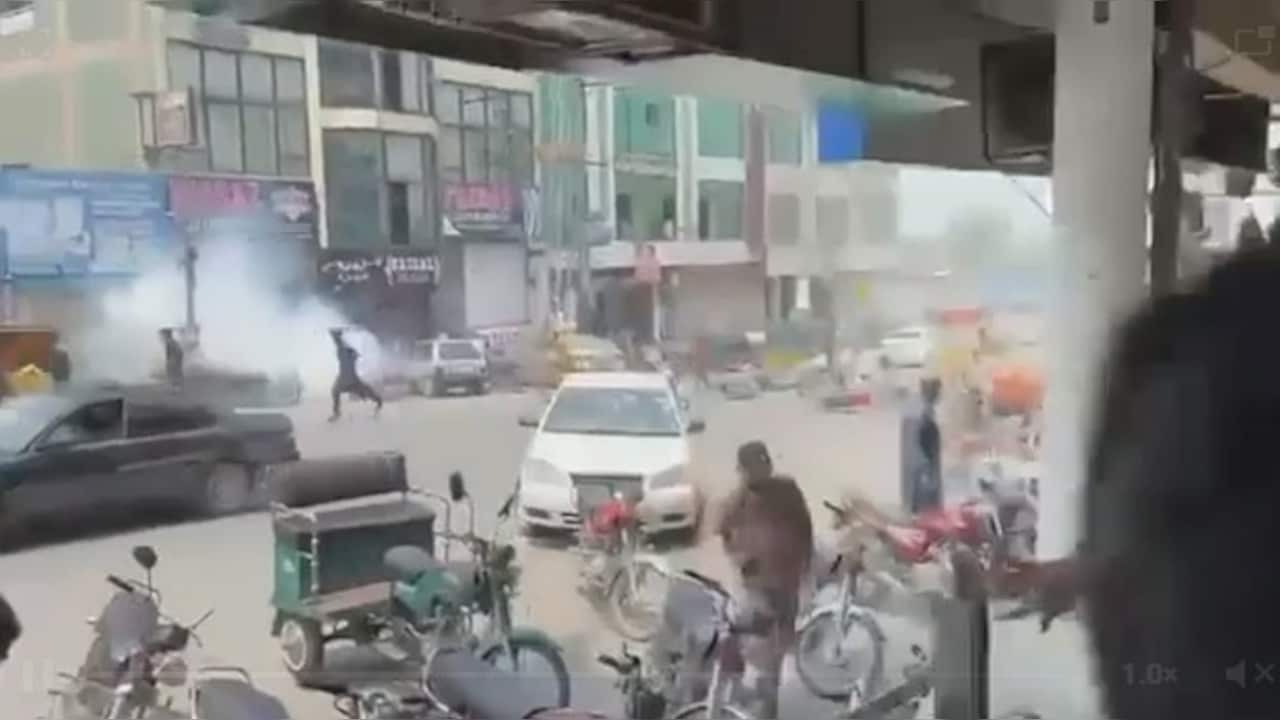
Reports of twenty people killed during a brutal security crackdown by Pakistan forces in Pakistan-administered Kashmir, locally known as Azad Jammu and Kashmir or PoK, highlight a long-simmering political powder keg. This violence is not an isolated flashpoint. It represents the violent collision between local economic grievances, heavy-handed state control, and structural suppression that has defined the region for decades. To understand why security forces turned lethal fire on civilian protesters, one must look past the immediate casualty figures and examine the systemic friction points driving the population into the streets.
The Economic Roots of Discontent
The recent escalation traces directly to bread-and-butter issues rather than immediate geopolitical maneuvering. Protests initially surged over skyrocketing inflation, exorbitant electricity tariffs, and severe shortages of subsidized wheat flour. Residents of a region that generates massive amounts of hydroelectric power for the rest of the country find themselves paying punishing utility rates while experiencing frequent blackouts.
When local populations organize to demand relief, the response from Islamabad frequently relies on police and paramilitary force rather than policy concessions. This mismatch between civilian suffering and state reaction creates an environment where minor demonstrations rapidly transform into large-scale anti-government uprisings.
The Apparatus of Control
Governance in Pakistan-administered Kashmir operates under a heavily constrained administrative framework. While the territory maintains a nominal parliamentary structure, ultimate authority rests with federal institutions in Islamabad, particularly the Ministry of Kashmir Affairs and the powerful security establishment.
- Civil Liberties: Freedom of assembly and speech face severe statutory and physical limitations.
- Economic Dependency: The local budget relies heavily on federal grants, limiting fiscal autonomy.
- Information Blackouts: Authorities routinely throttle internet speeds and cellular networks during unrest to prevent the documentation of state violence.
When protests challenge this architecture, the state treats civil disobedience as a national security threat rather than a domestic governance challenge. This securitized mindset explains why demonstrations involving economic demands are met with tear gas, baton charges, and, in severe cases, live ammunition.
Historical Grievances and Political Alienation
Decades of unfulfilled promises compound current economic pain. Generations have grown up under a system where local political actors are viewed as proxies for federal interests rather than genuine representatives of Kashmiri welfare.
The denial of meaningful constitutional rights further deepens this alienation. Unlike provinces in Pakistan proper, residents of the region occupy a constitutional limbo that restricts their integration into the national political mainstream while simultaneously denying them genuine self-determination. This structural ambiguity fosters deep resentment. Every deployment of security personnel reinforces the perception of an occupying force protecting distant administrative interests at the expense of local lives.
The Regional and International Silence
Despite reports of fatalities and widespread injuries, international coverage of the crackdown remains muted. Global powers often view the situation through the prism of broader bilateral tensions between nuclear-armed neighbors, frequently sidelining the human rights abuses occurring within the territory.
Neighboring India uses such crackdowns to criticize Islamabad's governance record, while international human rights organizations issue periodic condemnations that rarely translate into diplomatic pressure. Meanwhile, local residents bear the brunt of the violence, caught between geopolitical posturing and domestic repression.
The cycle of protest, crackdown, and mourning continues without a clear political off-ramp. As long as economic desperation meets unyielding security responses, the region will remain a volatile frontier where stability is maintained solely through the barrel of a gun.