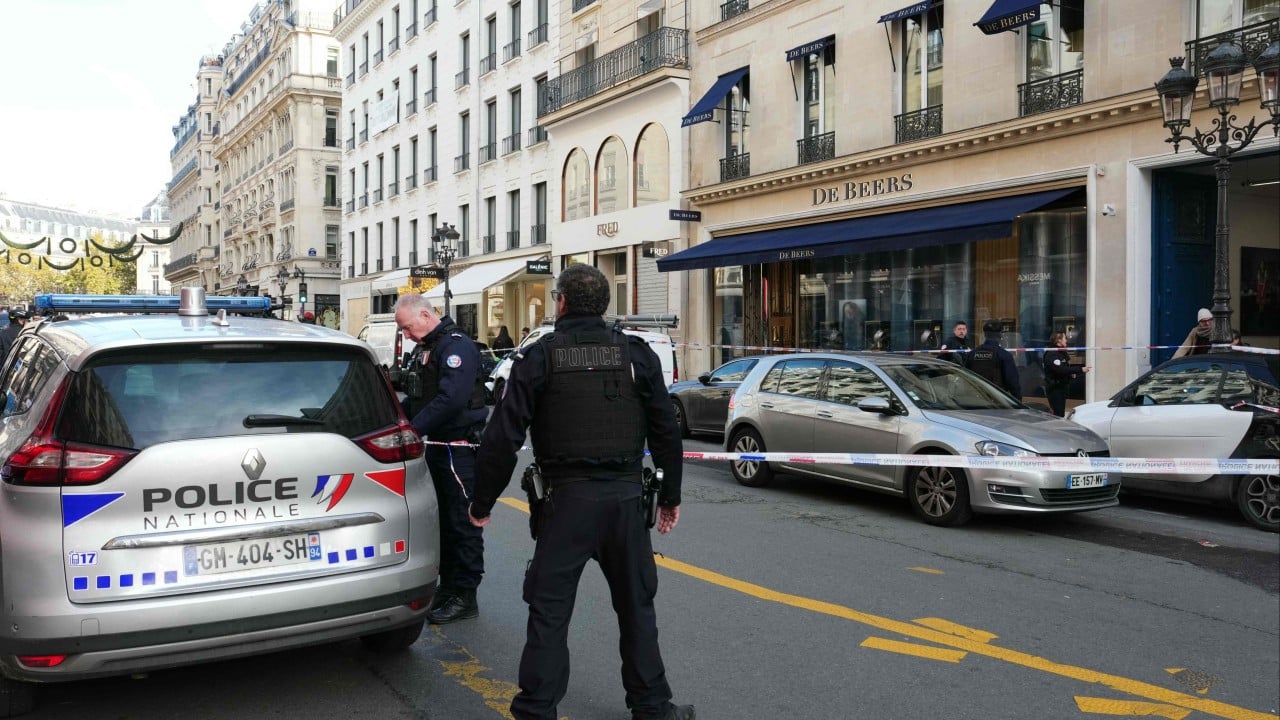
Armed robbers struck a De Beers boutique in central Paris, escaping with diamond jewelry valued at hundreds of thousands of euros in a rapid daytime raid that highlights the enduring security vulnerabilities of flagship luxury districts. While initial headlines treat the incident as an isolated flash of criminal audacity near Place Vendôme, the reality is far more systemic. Ultra-high-end retailers operate under a fundamental contradiction: their business models require inviting affluent foot traffic into open, sunlit spaces while simultaneously housing portable assets worth more than a suburban neighborhood.
When thieves target a brand like De Beers, they are not merely chasing raw carat weight. They are exploiting a predictable gap between architectural aesthetics and physical deterrence.
The Anatomy of a Modern Smash-and-Grab
Daytime luxury robberies in Paris follow a rigid operational playbook refined over decades. Unlike the cinematic, multi-week tunnel operations of the mid-twentieth century, modern crews rely on speed, shock, and urban geography.
A typical operation lasts under four minutes. Criminals enter posing as shoppers or bypass airlock mantrap doors by wedging obstacles into the threshold or threatening staff at the point of entry. Once inside, the objective is immediate psychological dominance. Brandishing handguns, axes, or tear gas canisters paralyzes both security guards and employees, who are strictly trained never to physically resist armed assailants.
Smash-resistant glass slows them down, yet it rarely stops them entirely. Reinforced display cases are designed to withstand blunt force for two to three minutes—just long enough for silent alarms to alert local police precincts. However, in dense commercial corridors like Rue de la Paix or Rue Saint-Honoré, two minutes is an eternity. Thieves clear the high-value vitrines, dump the pieces into reinforced bags, and vanish onto waiting scooters or high-powered motorcycles before patrol cars can navigate narrow, pedestrian-choked streets.
The getaway is the true masterstroke of the operation. Paris’s labyrinthine arrondissements, combined with constant construction bottlenecks and restricted vehicle zones, actively work against four-wheeled police cruisers. Scooters slip through alleys, mount curbs, and disappear into the surrounding banlieues within moments.
Why Place Vendôme Remains an Irresistible Target
Place Vendôme and its surrounding streets represent the absolute pinnacle of global jewelry retail. Every major heritage house maintains a flagship presence within a few hundred meters of the Vendôme column. For organized crime syndicates, this concentration creates an efficiency of scale that exists almost nowhere else in the world.
Consider the logistics from a criminal perspective. Instead of casing isolated boutiques across different regions, a crew can surveil multiple targets within a ten-minute walk. They observe shift changes, delivery schedules, and the exact positioning of private security personnel.
Furthermore, the sheer density of wealth attracts specialized international crews. French law enforcement has long tracked mobile criminal networks originating from Eastern Europe—notably the loose confederation often referred to by investigators as the Pink Panthers—alongside domestic crews from the Paris suburbs. While the former historically favored meticulous planning and international transit routes, younger local crews often operate with higher aggression and lower concern for forensic traces, treating luxury boutiques as high-yield, low-barrier targets.
Luxury conglomerates spend tens of millions of euros annually on private security, ballistic glazing, and biometric access controls. Yet, they refuse to turn their boutiques into bunkers. High-net-worth clients expect champagne, soft lighting, and seamless hospitality—not airport-style metal detectors and armed checkpoints. Brands calculate that aggressive, visible fortification damages the emotional allure of the purchase, potentially costing more in lost sales than an occasional insured loss.
What Actually Happens to Stolen High Jewelry
A common misconception among the public is that thieves simply walk into a pawnshop or sell stolen diamonds on the black market for half their retail value. In reality, liquidating high-end branded jewelry is extraordinarily difficult.
Pieces from houses like De Beers carry distinct design signatures, serial numbers, and microscopic laser inscriptions on the girdle of the stones. Selling a recognizable necklace or ring intact immediately flags the seller to international law enforcement networks and industry watchdogs like the Jewelers' Security Alliance.
To convert stolen goods into spendable cash, fences must dismantle the pieces entirely.
- Metal Melting: Platinum and gold settings are stripped of their stones and melted down into untraceable ingots, yielding only a fraction of the piece's original retail markup.
- Recutting Stones: Significant diamonds are sent to clandestine cutting workshops—often located in major diamond centers like Antwerp, Tel Aviv, or Surat—where master cutters shave off the laser-inscribed girdles and alter the facet proportions.
- Weight Loss: Recutting inevitably reduces the carat weight and occasionally alters the clarity grade, sacrificing up to thirty or forty percent of the stone's market value just to erase its provenance.
This harsh economic reality explains why thieves aim for sheer volume during a raid. A haul valued at five hundred thousand euros on the boutique floor might net the actual robbery crew less than eighty thousand euros once broken down, recut, and laundered through middlemen. The risk-to-reward ratio only makes sense for syndicates operating at scale or desperate crews seeking quick liquidity.
The Invisible Burden on Retail Staff and Insurers
When a heist makes the evening news, coverage inevitably focuses on the sticker price of the missing merchandise. What rarely gets reported is the acute psychological toll on boutique employees and the quiet tightening of the specialty insurance market.
Sales associates in flagship stores are effectively frontline workers in a high-risk environment, despite wearing bespoke suits and working in serene showrooms. Being held at gunpoint or pepper-sprayed leaves lasting trauma that corporate counseling programs struggle to erase. Turnover in flagship security and sales roles frequently spikes following a major incident, stripping brands of experienced relationship managers who hold deep ties with VIP clientele.
Simultaneously, the specialty specie insurance market—dominated by syndicates at Lloyd’s of London—has grown increasingly intolerant of repeatable security failures. Following a string of high-profile Paris robberies over the last decade, underwriters have quietly rewritten policy terms.
Deductibles have surged. Insurers now routinely mandate strict limits on the total value of merchandise permitted on display outside of vaults during operating hours. If a boutique leaves high-carat pieces in front-facing vitrines rather than locking them in interior safes, the insurer may refuse to pay out the full claim. The display cases shoppers admire along Rue de la Paix increasingly contain lower-value items or sophisticated replicas, while the true masterpieces remain locked in basement vaults, brought out only by private appointment.
The Structural Paradox of Luxury Retail
Law enforcement agencies in Paris have responded to these waves of thefts with dedicated anti-banditry brigades, plainclothes patrols, and dense networks of municipal CCTV cameras equipped with automated license plate recognition. While these measures have improved arrest rates after the fact, they have failed to eliminate the crime itself.
The fundamental vulnerability remains architectural and cultural. Luxury retail depends on visibility, prestige, and accessibility. As long as flagship brands insist on clustering in historic, traffic-congested city centers and displaying portable fortunes behind panes of glass, organized crews will continue to test their defenses.
Security directors can upgrade alarm systems, reinforce hinges, and station former special forces operatives at the front door. None of it changes the basic math of an armed raid: a motivated crew with heavy tools and fast scooters only needs three minutes of chaos to turn a multimillion-dollar storefront into a crime scene.