Temporary Protected Status for roughly 200,000 Salvadoran immigrants occupies a state of severe administrative limbo as federal authorities weigh whether to let the designation expire. For more than twenty-five years, these individuals have built deep roots, raised U.S.-citizen children, bought homes, and paid taxes under a humanitarian program originally triggered by devastating earthquakes in 2001. Now, as the Department of Homeland Security delays its definitive ruling, an entire community faces the sudden erasure of legal authorization to live and work in the United States.
The mechanics of Temporary Protected Status were never designed for longevity. Conceived under the Immigration Act of 1990, the mechanism was intended as a temporary bridge for foreign nationals fleeing active armed conflict, environmental disasters, or extraordinary temporary conditions. Yet, bureaucracy transformed a short-term humanitarian relief measure into a multi-decade reality. Generations grew up. Mortgages were paid off. Small businesses were launched.
When a policy spans a quarter-century, the term "temporary" becomes a legal fiction. That fiction is colliding with an aggressive executive branch intent on dismantling protected statuses across the board. During the current presidential term, the administration has systematically terminated protections for more than one million people across more than a dozen countries, including Venezuela, Haiti, Honduras, Nicaragua, and Syria.
The legal bedrock supporting these terminations shifted dramatically when the Supreme Court ruled that the Department of Homeland Security holds broad, unchecked authority over TPS designations and terminations. That judicial green light removed the primary obstacle preventing mass expirations. Without federal intervention or an automatic six-month rollover triggered by administrative inaction, hundreds of thousands of long-term residents find themselves staring down structural deportation.
The human cost extends far beyond the direct beneficiaries. Demographic data compiled by immigration research institutions shows that the overwhelming majority of Salvadoran TPS holders are parents to children born in the United States. These children are American citizens by birthright. Splitting these families means choosing between uprooting minor citizens to a country they have never known or fracturing households entirely.
Economic integration creates another layer of complexity that Washington policy wonks routinely underestimate. Salvadoran beneficiaries are not recent border crossers living in legal gray zones. They are deeply embedded in the American labor force, particularly in construction, hospitality, healthcare, and logistics. Stripping work authorization from 200,000 workers creates immediate operational shocks for regional economies from the Washington D.C. corridor to suburban Los Angeles and Houston. Employers face sudden labor deficits, while state and local tax bases brace for sudden contractions.
The geopolitical dimension adds yet another bizarre twist to the equation. El Salvador has undergone a massive transformation under President Nayib Bukele, whose aggressive security campaigns drastically lowered national homicide rates. U.S. officials frequently point to these drops in violent crime to argue that El Salvador is safe enough for its citizens to return.
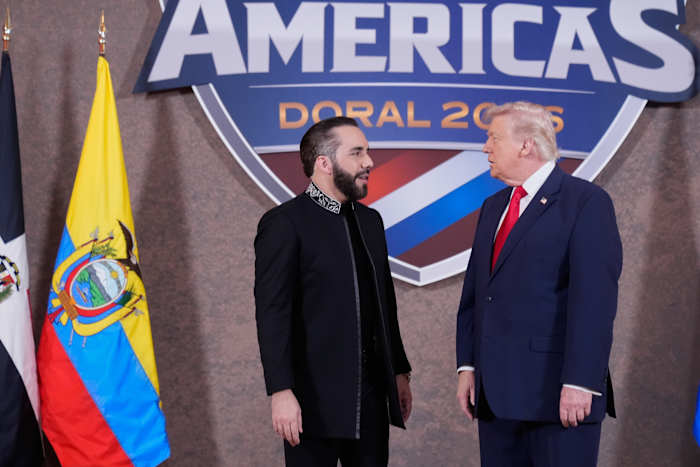
During bilateral meetings between Donald Trump and Nayib Bukele, the question of mass deportations loomed heavily. Yet, the calculus of remittances complicates any easy homecoming. Salvadoran expatriates living in the United States sent nearly $10 billion back home last year alone. That capital accounts for roughly a quarter of El Salvador's entire gross domestic product. Forcing two hundred thousand productive workers back into an economy unequipped to absorb them risks triggering an entirely different economic and humanitarian crisis south of the border.
Immigration advocacy networks argue that Congress bears the ultimate blame for failing to enact permanent legislative fixes over the past twenty-five years. Lawmakers on both sides of the aisle treated TPS as a political football, kicking the can down the road through successive administrative renewals rather than forging a pathway to permanent residency or citizenship. Every time a renewal deadline approached, communities organized rallies, attorneys filed emergency injunctions, and politicians offered temporary comfort without structural solutions.
Now, the runway has run out. Judicial avenues have narrowed. The executive branch holds absolute cards.
Thousands of families sit in silence, refreshing agency portals for notices that dictate whether their lives in America will continue or terminate overnight. The administrative machinery does not pause for human nuance. It operates on statutory triggers, Federal Register notices, and cold definitions of legality.
The clock ticks down. A generation of quiet integration faces the ultimate administrative guillotine.