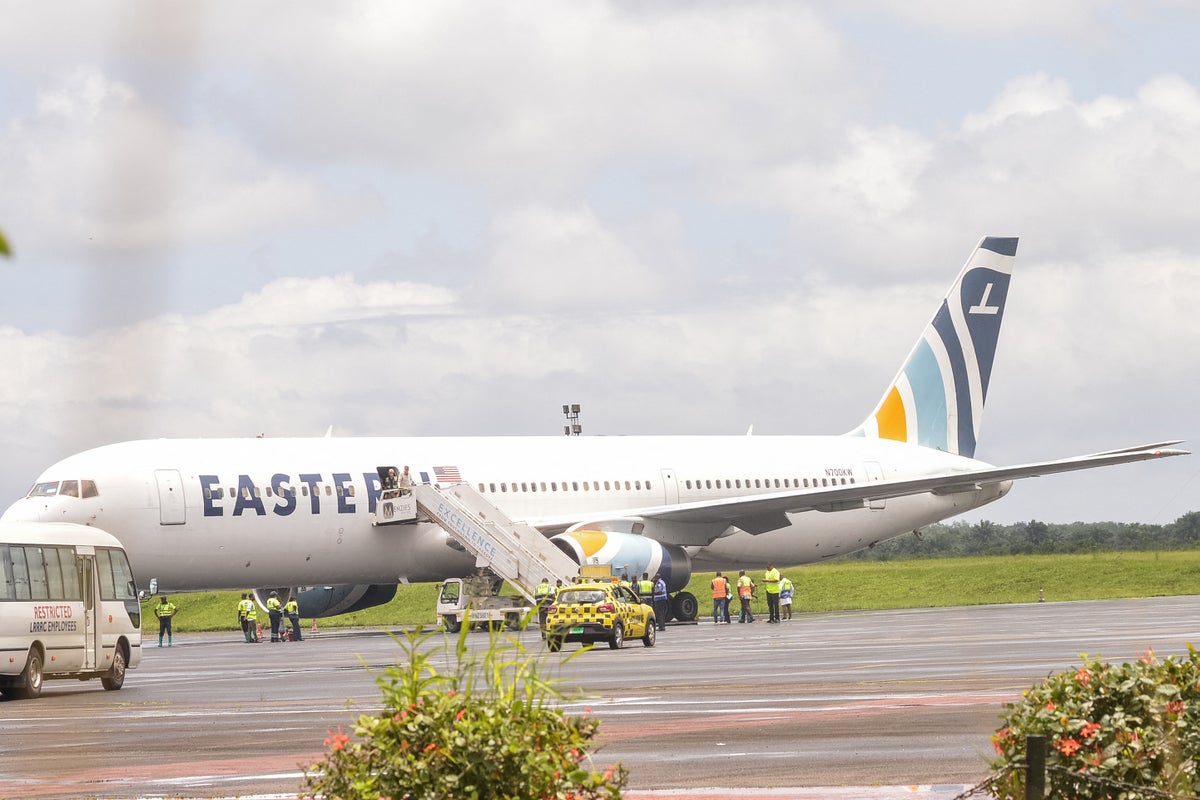
An Immigration and Customs Enforcement charter flight touched down at Roberts International Airport outside Monrovia, delivering twenty non-citizen deportees to West Africa. None of them were Liberian. None of them had prior roots in the country. They were simply the opening installment of a sweeping, opaque arrangement between Washington and Monrovia to accept up to 1,200 third-country nationals over the coming year.
This flight marks a significant expansion of the Trump administration's strategy to bypass traditional removal limits by offloading migrants onto foreign soil. For decades, international norms dictated that a deportee returned to their country of origin. When direct deportations became legally or practically impossible—frequently due to judicial protection orders or violent instability in a migrant's homeland—the United States stayed its hand.
Today, that rulebook has been discarded. Washington has quietly stitched together an archipelago of host agreements spanning more than thirty-five nations, routing individuals thousands of miles away to nations they have never set foot in.
The Mechanics of Offloaded Exile
The architecture of these third-country agreements relies on administrative shortcuts and diplomatic pressure. Under standard domestic legal protections, an immigration judge may grant a withholding of removal or deferral under the Convention Against Torture. These judicial safeguards explicitly recognize that returning a specific individual to their home country exposes them to persecution, torture, or death.
Third-country removals bypass the intent of those protections without technically violating the literal text. By flying an individual to a cooperating host nation, the federal government satisfies the order preventing removal to country A, while depositing the person into country B.
Liberian officials insist their participation is purely humanitarian. Information Minister Jerolinmek Piah framed the agreement as an echo of the nation's historical legacy as a refuge, telling reporters that arrivals would be received as guests, granted shelter, and given the option to apply for local asylum or depart freely. Justice Minister Natu Oswald Tweh noted that local authorities screened the initial manifest, classifying the arrivals primarily as individuals with standard immigration offenses.
Yet, human rights organizations and legal observers view these assurances with deep skepticism. Past deployments under similar agreements reveal a darker pipeline. Previous congressional oversight reports and watchdog investigations exposed arrangements where host governments received millions of dollars to accept small groups of transferees. In several instances, transferred individuals found themselves isolated in unfamiliar environments, subjected to intense local pressure, and ultimately forced back to the very nations they fled—a dynamic legal scholars term chain refoulement.
The Diplomatic Quid Pro Quo
Governments rarely absorb thousands of foreign nationals without an incentive. While Liberian leadership maintains there is no direct quid pro quo tied to the arrangement, the timing and surrounding diplomatic maneuvers tell a more complex story.
Bilateral talks gained momentum following high-level diplomatic exchanges in late 2025, which coincided with parallel discussions over economic cooperation, visa validity extensions for Liberian citizens, and major infrastructure concessions. International relations analysts point out that smaller developing economies often face an asymmetrical negotiating table when dealing with Washington's enforcement priorities. Securing developmental aid, trade concessions, or avoiding punitive travel restrictions frequently depends on a state's willingness to absorb Washington's intractable immigration bottlenecks.
The U.S. State Department has remained tight-lipped about the precise terms of the Liberian compact, declining formal comment while emphasizing that completing the administration's mass enforcement agenda remains a primary national security objective. Meanwhile, Homeland Security officials regularly deflect operational inquiries, citing security protocols.
Legal Quagmires and Human Toll
The human cost of this sprawling network is borne by individuals caught in indefinite administrative limbo. Many of the migrants swept into third-country flights have lived inside the United States for years, building families, securing employment, and fighting their cases through protracted legal battles. When administrative closures or policy shifts strip away their defense mechanisms, they discover that physical removal no longer points toward home, but toward an arbitrary destination across an ocean.
Legal challenges are mounting. Advocacy groups and specialized legal teams have filed sweeping federal lawsuits, such as ongoing litigation targeting Asylum Cooperative Agreements, arguing that the practice violates statutory requirements that third-party host nations must guarantee authentic safety and fair procedural protections.
As the legal battles grind forward in federal courts, the flights continue. Twenty people arrived in Monrovia on a Thursday charter operated by Eastern Airlines, stepping off the tarmac into an uncertain future governed by secret pacts and shifting geopolitical winds. Another 1,180 seats remain unfilled on the ledger. The infrastructure of globalized exile is no longer a theoretical debate; it is an active, daily operation unfolding quietly on runways across the globe.