The death of a senior researcher at a premier Russian biological research facility should have triggered international alarm, joint epidemiological investigations, and immediate transparency. Instead, it exposed a system defined by institutional paranoia, information blackouts, and the persistent hazard of high-containment laboratories operating behind impenetrable state walls. When an investigator specializing in dangerous pathogens succumbs to an undisclosed illness contracted within a high-security enclosure, the narrative rarely stays contained within the perimeter fence.
The Vector of Silence
Information control remains the primary protocol in state-run scientific facilities across the Russian Federation. State media and regional health directorates manage incidents involving high-consequence pathogens through calculated ambiguity.
Institutions like the State Research Center of Virology and Biotechnology, known globally as Vector, and other
Inside the Shadow State of Russian Biodefense Where Containment Protocols Fail
health, news
The death of a researcher at a Russian state-run plague institute following an unexplained illness has once again forced open a window into the opaque world of high-containment laboratories. When a scientist operating within a military-linked facility falls victim to an unknown pathogen, the implications extend far beyond a single hospital bed in Sergiyev Posad or Novosibirsk. They strike at the heart of global biosecurity assumptions, highlighting the persistent vulnerabilities inherent in classified pathogen research where institutional secrecy often supersedes transparent epidemiology.
To understand the weight of this incident, one must look at the structural architecture of the Russian biodefense network. Facilities such as the State Research Center of Virology and Biotechnology, known commonly as Vector, and the Central Research Institute of the Ministry of Defense carry deep historical lineages tracing back to the Soviet biological weapons program, Biopreparat. While post-Cold War threat reduction programs attempted to redirect many of these sites toward peaceful epidemiological surveillance, a dual-use mandate has always remained. Pathogens of concern, from hemorrhagic fevers to ancient bacterial strains, are routinely studied under maximum security conditions, known as BSL-4 or BSL-3 labs.
Yet, physical containment barriers are only as reliable as the human protocols governing them.
The Anatomy of Laboratory Vulnerability
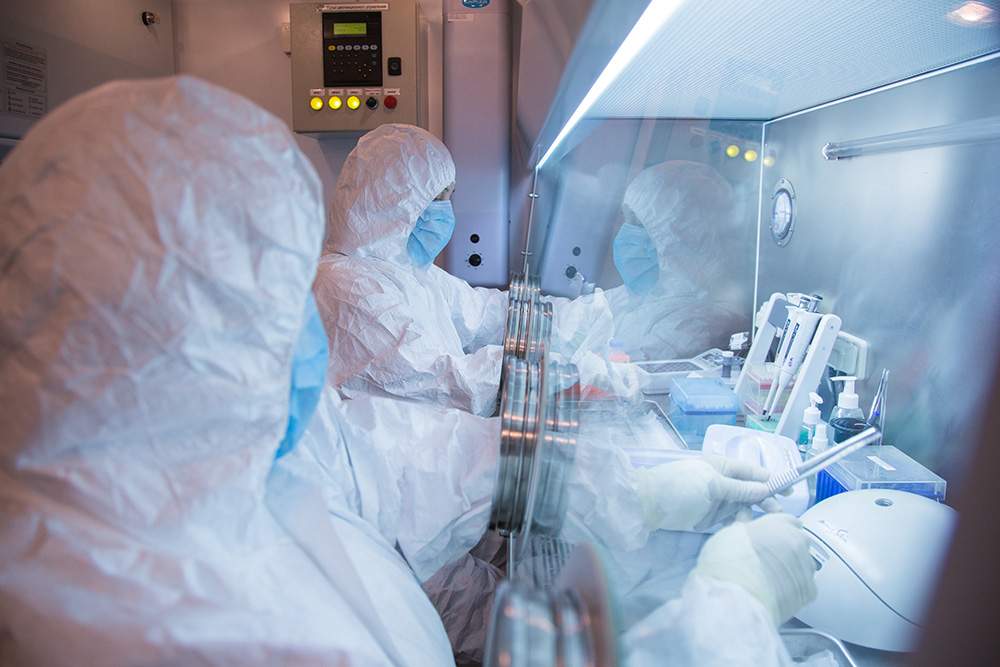
Biosafety level four laboratories rely on absolute redundancy. Positive pressure suits, double-door autoclaves, chemical showers, and dedicated air filtration systems form an invisible cage designed to keep lethal agents from breaching the perimeter. However, history demonstrates that the greatest hazard in any high-containment facility is not a structural engineering failure, but procedural drift.
When researchers handle pathogens with high mortality rates and nebulous transmission vectors, human error introduces variable risk. A micro-tear in a glove, a momentary lapse in waste disposal protocol, or an unrecorded exposure event can transform an experimental protocol into an accidental zoonotic or laboratory-acquired infection. In the case of the recent researcher death, the official narrative often follows a predictable playbook: attribute the cause to a non-laboratory origin, downplay the occupational hazard, and restrict the flow of raw telemetry data to international watchdogs.
This opacity is not merely a bureaucratic preference; it is a systemic reflex. In nations where defense research is treated as an issue of supreme national sovereignty, acknowledging a containment breach or an occupational pathogen exposure is viewed as a domestic security vulnerability rather than an international public health concern. Consequently, the global scientific community is left to decipher fragmented reports, relying on leaked intelligence or terse state media dispatches rather than peer-reviewed post-mortems.
The Surveillance Gap
Public health architecture depends on rapid data sharing. When an unknown illness strikes an individual inside a facility housing dangerous biological agents, standard epidemiological protocol demands immediate genetic sequencing, international notification, and contact tracing.
Instead, closed-loop military and intelligence oversight creates an information vacuum.
Consider the broader context of how novel or re-emerging pathogens are handled. In an open system, an unexplained death prompts a multi-agency investigation involving external academic bodies, independent pathologists, and transparent genomic publication on platforms like GISAID. In a closed system, the investigation remains internal, classified, and subject to political triage. This divergence creates a dangerous blind spot for global health security. If a novel strain adapts or escapes within a state-run facility, the rest of the world remains blind until the containment perimeter fails entirely.
The geopolitical climate further exacerbates this friction. With traditional scientific channels between Western institutions and Russian state laboratories largely frozen, collaborative biosecurity monitoring has vanished. There are no joint inspections, no shared diagnostic protocols, and no trusted verification mechanisms. Each side operates on suspicion, interpreting sporadic news of researcher fatalities through the lens of worst-case strategic planning.
Beyond the Official Narrative
Journalists and analysts tracking these developments must resist the temptation to sensationalize every incident into a cinematic outbreak scenario. Most laboratory-associated infections are contained before they reach the public, resolved through aggressive post-exposure prophylaxis and isolation. But dismissing these events as isolated anomalies ignores the structural pressures facing scientists working inside underfunded or politically pressured state laboratories.
When budgets tighten, institutional oversight fractures, or political demands prioritize speed over safety margins, the human element breaks down. The researcher who died from an unknown illness is a casualty of a system that demands absolute secrecy while denying the transparent checks and balances required to keep high-containment environments truly safe.
As long as state-sponsored biological facilities operate behind impenetrable walls of state security, these tragedies will repeat in the shadows. The danger is not merely the specific pathogen that ended a life in a Russian research institute, but the systemic refusal to learn from the breach. Until transparency replaces paranoia, the world's most dangerous laboratories will remain ticking clocks, operating without an audience until the alarm finally sounds outside their walls.