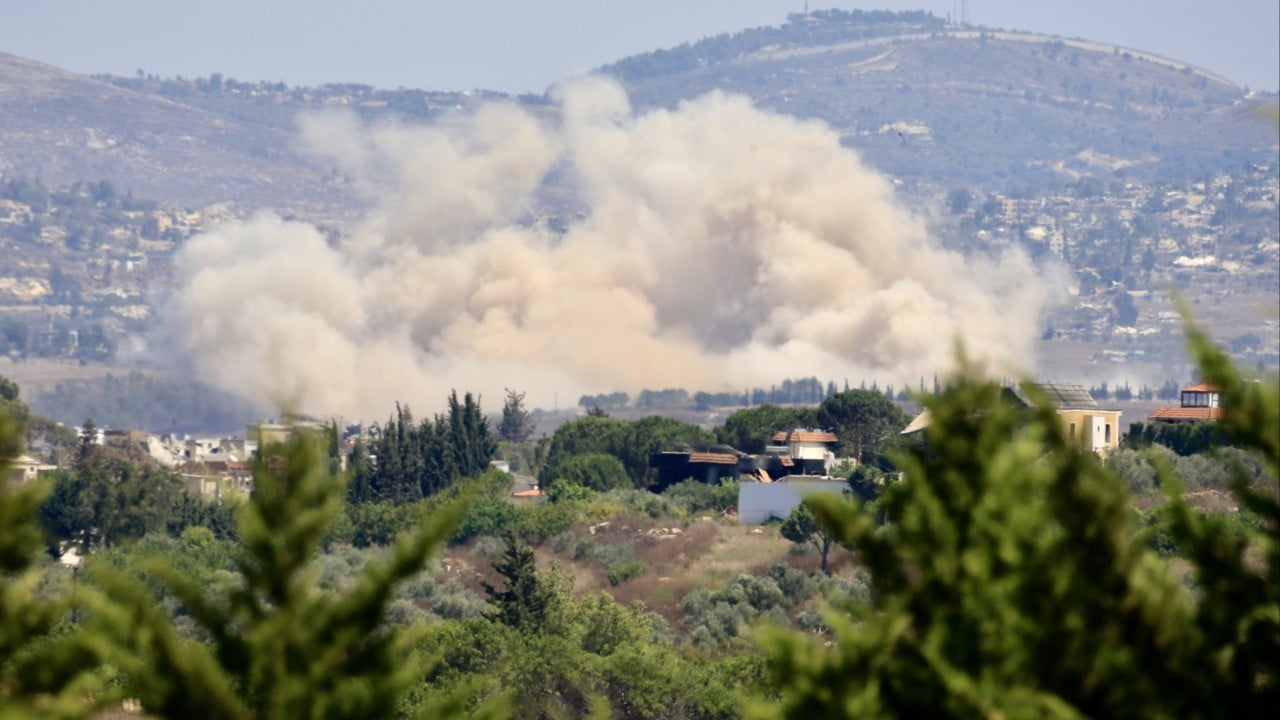
The announcements arrive with predictable monotony. A short statement from military public affairs, a blurred thermal-imaging graphic, and a casualty count. Israel says it killed several Hezbollah fighters in south Lebanon during routine border operations, framing these engagements as tactical corrections in an ongoing containment strategy. Beneath the sanitized language of official reports lies a grinding war of attrition that continues to reshape the security architecture of the Levant.
Reporting on this conflict requires stripping away the veneer of routine updates. These skirmishes are not isolated events. They represent calculated steps on a steep escalation ladder where both sides test thresholds without triggering total regional conflagration.
The Mechanics of Border Attrition
Southern Lebanon operates under a harsh physics of survival. Every ridge, olive grove, and concrete-reinforced basement functions as a potential launch site or target zone. When military spokespersons announce targeted strikes against armed personnel, they describe the visible tip of an underground iceberg.
For months, the operational reality along the Blue Line has involved a perpetual exchange of anti-tank guided missiles, artillery fire, and precision airstrikes. Hezbollah relies on decentralization. Cells operate with high tactical autonomy, utilizing entrenched tunnel networks and pre-surveyed firing positions to strike and disappear before retaliatory fire registers on radar.
Israel counters this asymmetric posture with persistent aerial surveillance and rapid-response artillery batteries. The objective is constant disruption. By systematically targeting movement along the border zone, military planners attempt to deny adversary units the freedom to mass forces for a larger cross-border operation.
Yet, this attrition favors neither side indefinitely. Each reported casualty triggers a cycle of mourning, institutional replacement, and tactical adaptation. The organization absorbs losses while refining its use of loitering munitions and reconnaissance drones, turning the rugged terrain of south Lebanon into an open-air testing ground for modern proxy warfare.
Strategic Calculations Beyond the Ridge
Why persist with this low-intensity bleeding? The answer rests on deterrence theory and domestic political survival.
For the Israeli security establishment, accepting a permanently armed adversary across an open border is untenable. The memory of past structural failures hangs heavily over current command decisions. Allowing militant groups to maintain a continuous, forward-deployed presence invites future threats that civilian populations cannot endure. Consequently, daily kinetic actions serve a political imperative. They demonstrate proactive defense to a domestic constituency that demands absolute security along its northern perimeter.
On the opposing side, leadership treats the southern front as an indispensable pressure valve. By maintaining a constant state of operational readiness, the movement ties down significant hostile resources, diverting military and economic capacity away from other theaters. This strategy aligns with a broader regional doctrine of protracted confrontation. Every rocket launched and every fighter lost reinforces a narrative of steadfast resistance, even as the civilian infrastructure of south Lebanon absorbs devastating collateral damage.
+-------------------------------------------------------------+
|               The Escalation Feedback Loop                  |
+-------------------------------------------------------------+
|  Militant Movement -> Forward positioning & drone surveys   |
|         |                                                   |
|         v                                                   |
|  Detection        -> Aerial surveillance & radar tracking   |
|         |                                                   |
|         v                                                   |
|  Kinetic Action   -> Precision strikes & artillery fire     |
|         |                                                   |
|         v                                                   |
|  Adaptation       -> Underground consolidation & retaliation  |
+-------------------------------------------------------------+
The Civilian Toll in the Shadow Zone
Abstract strategic models obscure the human cost borne by those remaining in the conflict zone. Entire agricultural sectors in southern Lebanon have collapsed. Orchards lie unharvested because movement across open fields invites immediate targeting. The acoustic environment is defined by the constant hum of surveillance drones and the thunderous impact of supersonic jet passes breaking the sound barrier.
International diplomacy continues to chase its own tail. Envoys shuttle between capitals offering phased ceasefire proposals that attempt to decouple the northern front from broader regional hostilities. These diplomatic initiatives routinely stumble over foundational disagreements. One side demands a complete withdrawal of armed units north of the Litani River as a non-negotiable prerequisite. The other insists that no political arrangements can be discussed while kinetic operations continue unabated.
As these diplomatic tracks stall, military commanders prepare for the worst-case contingency. Engineers upgrade defensive fortifications, logistical hubs stockpile medical reserves, and intelligence analysts pore over satellite imagery for signs of heavy armor concentration.
The official statements will keep coming. They will list numbers, locations, and tactical successes, masking the reality of a frontier locked in a permanent holding pattern where peace remains an abstract concept and the next escalation is only a miscalculation away.