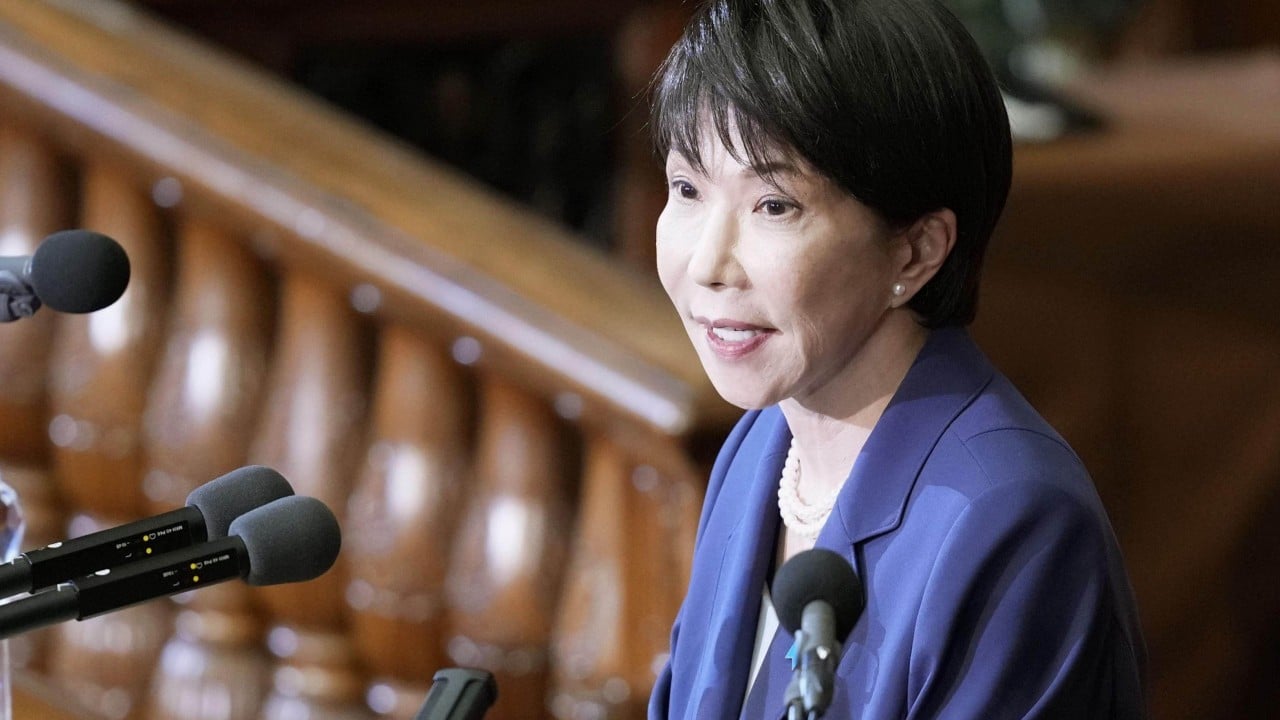
Sanae Takaichi entered her second year as Japan's prime minister with a historic 316-seat Liberal Democratic Party supermajority and a frosty reception in Beijing, yet her aggressive, top-down leadership style is quietly creating the very vulnerabilities that could unseat her.
On paper, she looks untouchable. After taking office in October 2025 following the LDP's bruising electoral losses under Shigeru Ishiba and the rupture with Kōmeitō, Takaichi gambled on a snap general election in February 2026. The bet paid off spectacularly. Voters handed her party the largest postwar lower-house haul in Japanese history, buoyed by extraordinary backing from younger cohorts and a cabinet approval rating that surged above 70 percent in major polls. For another perspective, see: this related article.
Anyone who has covered Nagatachō for three decades knows better than to confuse a landslide with durable control. Japanese political history is littered with strongmen and populist reformers who rode soaring personal numbers into the Kantei only to discover how unforgiving the machinery of the state and party can be when friction mounts. Takaichi's first year in office demonstrated speed, ideological conviction, and a willingness to break long-standing taboos. It also exposed a sharper edge—one where concentration of authority, unvarnished rhetoric, and policy overreach risk turning triumph into attrition.
The Supermajority Illusion in Nagatachō
A two-thirds lower-house majority changes the math of legislation. It does not erase the realities of coalition politics, upper-house dynamics, or backbench resentment. Further reporting on the subject has been published by Reuters.
Takaichi came to power without the traditional factional army that once anchored prime ministers like Shinzo Abe. While she forged a working alignment with Nippon Ishin no Kai and leaned on seasoned party figures such as Tarō Asō and Shun'ichi Suzuki, her authority has rested heavily on personal popularity and speed. That works when polls are climbing. It becomes brittle the moment voters feel the administration is rushing complex bills without sufficient explanation—a warning sign that surfaced in mid-2026 polling when large shares of independents and coalition backers told surveyors the government had not adequately explained its legislative push.
Power borrowed from personal approval is always on variable interest; when the rate resets, the bill comes due all at once.
Consider what happened by summer 2026. Approval ratings, while still respectable compared with several of her recent predecessors, slipped from their early highs into the high 40s in Jiji Press polling as concerns mounted over persistent cost-of-living pressures, scandal controversies, and contentious legislative priorities such as changes to the Imperial Household Law, flag-desecration penalties, and new intelligence structures. A September 2026 cabinet reshuffle opted largely for continuity rather than a dramatic reset. Stability can project calm. It can also signal a leader reluctant to loosen her grip or admit where her agenda is straining public patience.
Security Speed Versus Strategic Cushion
Few leaders in modern Japanese history have moved as fast on national security as Takaichi. Bringing forward the timeline to revise Japan's three foundational security documents, accelerating defense spending toward 2 percent of GDP, expanding defense equipment transfers, standing up the National Intelligence Council and National Intelligence Bureau, and establishing the Japan Foreign Investment Committee mark a decisive break from postwar caution.
Supporters argue that a deteriorating security environment leaves Tokyo no luxury for incrementalism. With regional flashpoints intensifying, war in Europe dragging on, and heightened Middle Eastern instability testing global supply chains and deterrence assumptions, waiting years to update doctrine looked reckless to hawks and realists alike. From that vantage point, Takaichi's decisiveness is not a flaw. It is the job.
The risk lies in how quickly rhetorical escalation can outrun diplomatic shock absorbers. Shortly after her debut at the 2025 APEC summit, Takaichi's remarks to lawmakers linking a Taiwan contingency to a potential survival-threatening situation for Japan—and the possibility of exercising collective self-defense—triggered sharp pushback from Beijing. A year later, her low-key reception at APEC underscored how icy bilateral ties had become.
Hard-line clarity can deter an adversary. It can also shrink a prime minister's room to maneuver when a border incident, trade squeeze, or supply-chain choke point demands quiet back-channel de-escalation rather than public defiance. If Tokyo's security posture hardens faster than its crisis-management channels with neighbors, every routine diplomatic friction risks turning into a full-blown test of political nerve.
Economic Populism Meets Fiscal Reality
Sanaenomics promised an energetic mix of growth strategy, economic security, and fiscal support aimed at lifting households out of inflation fatigue and rebuilding domestic industrial capacity. Yet governing an economy wrestling with sluggish real wage growth, currency pressures, and high public debt requires more than bold slogans.
Voters judge a leader's strength by what happens at the supermarket register and on their paycheck, not by white papers on dual-use research or industrial policy. When inflation lingers and relief measures feel slow or poorly targeted, even popular prime ministers lose ground fast. Tax cut pledges and stimulus packages sound popular on the stump, yet markets and voters alike eventually ask a prosaic question: how is it funded, and will it push borrowing costs or currency weakness higher?
| Policy Arena | Takaichi's Signature Move | Strategic Upside | Governance Risk |
|---|---|---|---|
| Party & Diet | Snap February 2026 election yielding a 316-seat LDP supermajority | Removes immediate legislative gridlock and projects command | Overreliance on personal popularity over deep factional roots |
| National Security | Accelerated revision of three security documents and new intelligence bodies | Signals serious deterrence and modernizes state capacity | Strained ties with Beijing and domestic pushback over pace |
| Economy & Cost of Living | Growth strategy headquarters, stimulus, and economic security screening | Protects critical tech and supply chains | Delays on household price relief erode everyday support |
To see how thin the margin can become, consider a hypothetical example. Suppose a mid-tier LDP lawmaker in a competitive district faces constituents angry over grocery prices and uneasy about rising defense outlays. If that lawmaker feels the Kantei is dictating policy from above without listening to local concerns, loyalty holds only as long as the prime minister's coattails look long enough to win the next race.
Why Her Leadership Style Cuts Both Ways
Takaichi has never been a consensus-drifting manager. Her appeal to loyalists lies precisely in her combative energy, clear ideological markers, and refusal to treat political taboos as sacred. In a political system often criticized for slow decision-making and committee paralysis, a leader who moves decisively looks refreshing.
Still, politics in Tokyo is a marathon of relationships, not a sprint of press conferences. A style built on top-down conviction and sharp lines in the sand can alienate swing voters who wanted competence and lower prices rather than an endless ideological crusade. When scandals flare or policies stumble, a centralized leadership model leaves fewer buffers between the prime minister and the blame.
Her first year proved she knows how to seize a political opening and win big. Her second year will test whether she knows how to govern with enough restraint and breadth to keep a supermajority intact when the easy tailwinds fade.
If you want to keep track of how this story evolves—or easily come back to compare notes as her second year unfolds—signing in to a Google Account lets you save your chat history and pick up right where you left off.