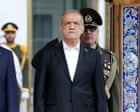
Iranian President Masoud Pezeshkian has publicly rejected widespread claims that he repeatedly threatened to resign during high-stakes diplomatic maneuvering over the Strait of Hormuz. Speaking in a televised address marking the midpoint of his term, Pezeshkian dismissed allegations propagated by opposition media and hardline clerics that he had submitted multiple resignation letters in protest of being sidelined on national security matters. The controversy brings to light deep internal fractures within Iran's political establishment regarding how to handle ongoing maritime tensions, military escalations with Washington, and regional peace talks.
The Anatomy of a Fabricated Exit
The rumors originated from statements made by conservative figures aligned with hardline networks, claiming Pezeshkian had attempted to step down dozens of times due to friction with Supreme Leader Mojtaba Khamenei and military leaders. These reports suggested that the administration felt entirely excluded from core security choices involving the critical oil choke point. Meanwhile, you can read related developments here: The Second Hand That Stopped the War.
Pezeshkian addressed these claims directly. He stated that any genuine intent to vacate his post would be communicated openly to the public rather than leaked through anonymous channels.
"If I want to resign, I will officially announce that I have resigned," Pezeshkian declared. "I will not resign, I will stand." To explore the bigger picture, we recommend the detailed report by The Guardian.
The office of the Supreme Leader also moved quickly to squash the narrative, calling the assertions fundamentally untrue. Yet the very existence of the rumor reveals the volatile atmosphere inside Tehran. The disagreement is not merely about gossip; it exposes a fundamental tactical split over foreign policy.
The Choke Point Dilemma
At the heart of the friction lies the strategic value of the Strait of Hormuz. A significant portion of the global oil supply moves through this narrow passage. Controlling or restricting transit gives Tehran immense geopolitical leverage, but it also invites crushing economic sanctions and direct military confrontation with Western powers.
Following months of regional conflict that flared earlier in the year, diplomatic channels opened through international mediators to find a permanent or temporary formula for keeping the waterway open. Moderate factions within the government argue that maintaining a state of permanent closure or perpetual military standoff drains national resources and harms the broader economy.
Conversely, conservative elements and the military elite view any concessions on maritime control as a dangerous surrender. The conservative-dominated Assembly of Experts recently issued harsh warnings against pursuing agreements with Western governments, terming such diplomatic efforts an unacceptable capitulation.
Cracks in the Consensus Model
Pezeshkian campaigned on a platform of national consensus and administrative reform. He has consistently argued that Iran must engage pragmatically with international agreements, pointing to memorandum frameworks negotiated earlier in the year as potential benchmarks for future foreign relations.
However, this moderate approach places him directly in the crosshairs of hardliners who control vital levers of state power. When foreign ministry officials suggest that an agreement on shipping lanes is close at hand, public backlash from conservative groups follows swiftly.
For instance, recent diplomatic signals concerning the operational status of the strait drew fierce criticism from domestic media outlets. These internal contradictions show a government struggling to speak with one voice.
The Broader Repercussions
The pressure on the executive branch extends beyond domestic politics. International negotiators monitoring the situation in Muscat and Islamabad are left guessing which faction holds ultimate authority. A government divided against itself struggles to honor long-term commitments, leaving foreign partners uncertain whether any signed memorandum will survive the next wave of internal political infighting.
As the administration attempts to project a united front alongside military leadership, the underlying policy friction remains entirely unresolved. Pezeshkian has chosen to stay and fight within the system, but the structural hurdles blocking his pragmatic foreign policy agenda continue to mount.