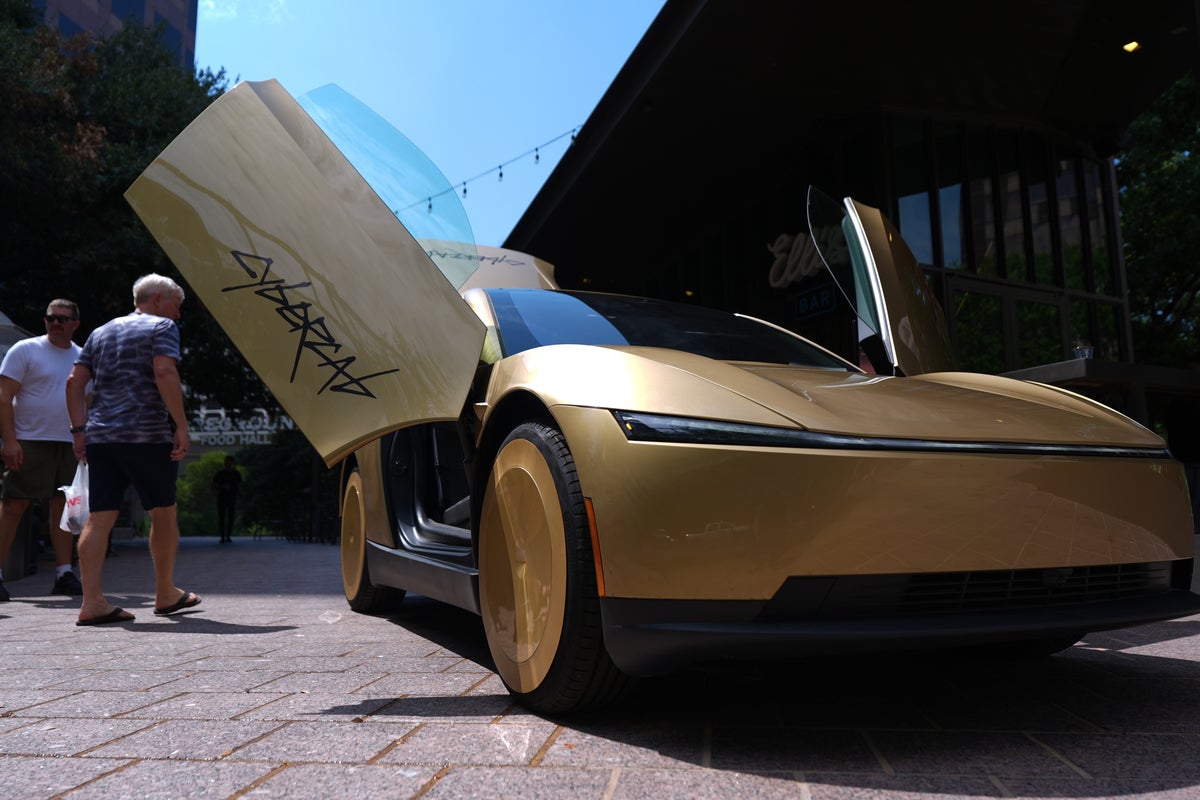
The physical safety net is gone. On a Thursday in Austin, Texas, Tesla rolled out its long-awaited Cybercab fleet onto public streets, introducing a two-seater electric vehicle stripped of steering wheels, brake pedals, and side mirrors. Passengers stepping into these gold-colored pods are asked to make a literal leap of faith, trusting an entirely automated system with zero mechanical way to intervene if the vehicle miscalculates an intersection or fails to spot a pedestrian.
This initial commercial deployment arrives at a precarious crossroads for the automaker. Tesla is fighting to reverse back-to-back years of declining vehicle sales, a bruised global brand following polarizing political alignments, and intense pressure from Wall Street to prove that its multi-billion-dollar pivot toward artificial intelligence and autonomy can actually generate revenue. Yet betting the house on a steering-wheel-free cabin requires more than engineering confidence. It demands that the public surrender control entirely to a system that remains under intense regulatory scrutiny.
The Anatomy of an Unproven Fleet
Looking closely at the hardware reveals a vehicle built from the ground up for commercial ride-hailing rather than personal ownership. The Cybercab relies exclusively on an exterior camera suite, bypassing the expensive laser-based lidar and radar sensors utilized by virtually every serious competitor in the autonomous space, including Alphabet's Waymo and Amazon's Zoox. Tesla engineers packed a 48-kilohertz battery pack into a light, aerodynamic frame designed to maximize operational uptime and lower per-mile running costs.
Without manual controls, the cabin feels sparse, almost claustrophobic, prioritizing luggage space and passenger screens over fail-safe redundancy. This minimalist philosophy cuts manufacturing expenses, but it shifts the entire burden of safety onto raw compute power and neural network prediction. If the cameras miss a hazard due to extreme sun glare or heavy rain, there is no human reflex to jerk the wheel away from danger.
The Regulatory and Market Reality
Deploying vehicles devoid of manual controls is not merely a technical milestone; it is a regulatory tightrope walk. Federal motor vehicle safety standards traditionally mandate physical driver controls. While exemptions exist for purpose-built autonomous pods, securing them requires transparent compliance filings and rigorous safety validations. Public filings show that Tesla initiated this Austin rollout with a relatively modest footprint of vehicles registered with local authorities, signaling a cautious initial phase rather than a massive flood of robotic transit.
Skepticism from consumers runs deep. Polling data consistently shows that roughly seventy percent of American adults remain uncomfortable riding in a completely driverless automobile. Overcoming that psychological barrier requires flawless execution. Unfortunately, Tesla's driver-assist software carries baggage. Federal regulators continue to investigate multiple crashes involving low-visibility conditions, unexpected lane departures, and documented incidents where vehicles ran red lights while operating on partial automation.
The Broader Business Stakes
The timing of this launch underscores a deeper corporate desperation. Traditional electric vehicle adoption rates have cooled globally, and Chinese manufacturer BYD has steadily captured market share. Investors reacted to the Austin debut with a predictable bump in share price, hungry for a narrative that positions Tesla as a high-margin robotics network rather than a standard car manufacturer facing margin compression.
Transforming everyday car owners into a decentralized fleet of commercial robotaxis remains the ultimate stated goal. Musk has frequently promised that existing customer vehicles will eventually earn money overnight via software updates. But leaping straight from semi-supervised highway driving to commercial, un-steerable robotaxis in a single dense urban testbed skips vital steps in building systemic trust.
Austin streets will now serve as the testing ground for whether high-tech optimism can override deep-seated human anxiety. Every mile logged without incident helps normalize the concept. A single catastrophic failure under the watchful eye of federal investigators could permanently freeze the rollout. The golden pods are moving, but the path forward remains entirely unpaved.