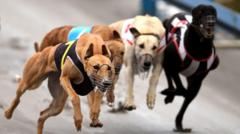
Commercial greyhound racing in New Zealand has officially concluded, leaving approximately 1,500 active dogs needing homes and exposing a massive regulatory loophole that is actively pushing displaced animals across the Tasman Sea into Australia. When the final race meeting ran at Hatrick Raceway in Whanganui, it marked the absolute termination of domestic operations after nearly eight decades. Yet, the end of the local track does not mean the end of the animals' journey. Instead, trainers, breeders, and commercial operators have found a convenient pressure valve across the ocean, shipping viable racing stock directly into Australian jurisdictions where the betting machinery continues to turn unchecked.
This cross-border pipeline reveals an uncomfortable truth about regional animal welfare policy. Governments can legislate domestic morality, but they struggle to control international spillover effects. Read more on a connected issue: this related article.
The Anatomy of a Collapse
Decades of mounting pressure culminated in the legislative shutdown. Three independent reviews spanning from 2013 onward laid bare a grim pattern of serious animal welfare harms. Despite aggressive safety overhauls by Greyhound Racing New Zealand—which successfully reduced catastrophic race-day fatalities through track modifications and stricter veterinary oversight—injury rates plateaued at levels deemed unacceptable by lawmakers.
The social licence vanished. Public sentiment shifted decisively, and Parliament responded with a rare, cross-ideological supermajority vote to pass the Racing Industry (Closure of Greyhound Racing Industry) Amendment. Further reporting by CBS Sports delves into related perspectives on this issue.
Funding for the closure came directly from the industry's own accumulated capital pools via TAB New Zealand, establishing a structured transition project overseen by the Greyhound Transition Agency. The state managed to dismantle a domestic commercial sector without draining taxpayer funds. But in its rush to clear the kennels, policymakers left a glaring structural omission regarding international transfers.
The Trans-Tasman Transit Pipeline
While the statutory ban halted local operations, it did not legally restrict owners from exporting privately owned dogs to foreign jurisdictions where commercial racing remains fully sanctioned. Months prior to the final curtain call, shipments of New Zealand-bred greyhounds were already touching down in Queensland, echoing prior export waves.
Australia maintains the largest commercial greyhound racing infrastructure in the world. For a displaced trainer holding a kennel of fit, competitive animals, the proximity of a thriving, high-stakes market just a three-hour flight away represents an irresistible financial lifeline.
Australian regulatory bodies have repeatedly stated they possess no direct statutory mechanism to police or restrict the intake of legally imported canine athletes once they clear customs. They enter the Australian racing pool, absorb local identification tattoos or microchips, and seamlessly integrate into the local grading systems. New Zealand's domestic prohibition effectively outsourced its remaining active racing inventory to an offshore neighbor.
Regulatory Vacuum and Oversight Failures
The mechanics of this transfer highlight a profound disconnect between national sovereignty and transnational animal welfare standards.
- Legal Compliance vs. Ethical Gray Areas: Exporting dogs to a country where the sport remains legal breaches no domestic New Zealand statute. The law governs local tracks, not international freight manifests.
- The Enforcement Blindspot: Australian authorities treat incoming racing stock through an administrative lens focused primarily on biosecurity and quarantine rather than tracking the ethical trajectory of individual animals.
- The Breeding Material Pipeline: Beyond active racers, questions persist regarding the movement of frozen semen, brood bitches, and un-raced puppies designed to prop up bloodlines abroad.
Consider a hypothetical scenario to understand the administrative blind spot. A Christchurch trainer with ten elite dogs faces the closure of Addington Raceway. Under the government transition scheme, they are eligible for care subsidies while attempting rehoming. However, an offer from an Australian syndicate to purchase the string for commercial racing yields an immediate cash return that dwarfs state-backed rehoming stipends. The paperwork clears customs effortlessly. The dogs trade a banned paddock for an active starting box overseas.
The Broader Precedent for Racing Codes
The ripple effects extend far beyond the greyhound community. Thoroughbred and harness racing administrators across both sides of the Tasman are watching these developments with deep anxiety.
Veterinary figures and industry analysts have long warned that setting a legislative precedent where a commercial animal sport is outlawed due to persistent injury metrics creates a direct template for activist campaigns targeting other equine codes. If the social licence can evaporate for greyhounds, the exact same arguments regarding track injuries, drop-out rates, and training stress can be weaponized against flat racing and jumping events.
By pushing the remaining greyhounds into Australian hands, New Zealand has exported its controversy while insulating its own domestic statistics. Australian tracks absorb the physical wear, the injury audits, and the eventual end-of-life accountability, while Wellington closes its books on the matter.
The Unresolved Horizon
The Greyhound Transition Agency faces a monumental task managing the roughly 1,500 dogs left behind on local soil, relying on established rescue networks to secure domestic couches. Yet, every dog shipped across the water represents a failure to close the loop on absolute accountability.
As long as lucrative racing circuits operate within a short flight radius, national bans serve merely as geographical displacement tools rather than comprehensive welfare solutions. The dogs continue to run, the betting ledgers continue to reconcile, and the foundational dilemma of commercial animal exploitation simply shifts its GPS coordinates.


