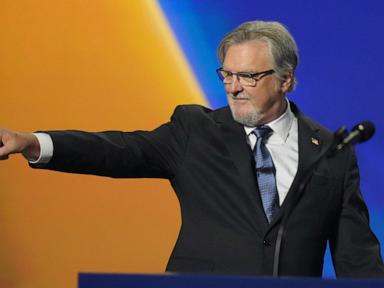
Pope Leo returns to Vatican after lung cancer surgery, stepping back inside the Leonine walls under close medical watch while raising acute questions about executive capacity, institutional secrecy, and succession inside the Roman Catholic Church. A pontiff returning from thoracic oncology care does not simply resume morning prayers and diplomatic audiences; he re-enters a medieval bureaucracy that has never built a durable framework for prolonged medical vulnerability. Every movement behind those walls now carries theological weight, political leverage, and clinical risk.
I have covered papal health scares and Roman curial politics long enough to know that official bulletins rarely tell the full story on day one. Press offices speak in reassuring euphemisms—rested well, appetite normal, recovery proceeding as expected—while surgeons, oncologists, and senior prelates calculate recovery curves in weeks and months rather than prayer cycles. When a head of state and spiritual leader of more than a billion people comes home after lung cancer surgery, the real story lies in what happens after the motorcade clears the gates.
Why Returning to the Vatican Changes Everything
Leaving a hospital ward for Vatican City looks like a triumph. In clinical reality, it shifts care from an acute-care environment with round-the-clock specialist teams into a residential compound shaped by ceremonial demands and centuries-old habit.
A pontiff's schedule is uniquely punishing. Public audiences, liturgical celebrations in unheated or drafty basilicas, international travel, and endless paper flow from dicasteries test even healthy executives. After thoracic surgery to remove a malignant lung lesion, pulmonary reserve, post-operative fatigue, and infection risk become daily variables rather than abstract chart notes.
Consider a hypothetical example of how an ordinary post-resection schedule collides with papal duty. Suppose a patient who underwent a lobectomy or wedge resection is advised to cap walking and speaking endurance during early convalescence, while curial aides line up morning briefings, afternoon visitors, and a Sunday Angelus address. Every exception requires negotiation between physicians and protocol officers who view public visibility as proof of authority.
That tension explains why Vatican spokespeople guard clinical specifics so closely. Partial disclosure keeps markets, diplomats, and dioceses calm in the short term. Yet incomplete medical reporting fuels rumor mills across Rome and creates a credibility gap the moment a setback occurs.
The Hidden Mechanics of Thoracic Oncology and Recovery
To understand what Pope Leo's return actually entails, strip away the incense and examine the medicine. Lung cancer surgery—whether video-assisted thoracoscopic surgery, robotic-assisted resection, or an open thoracotomy—requires deflating or manipulating lung tissue, navigating major vessels, and managing chest pain that naturally tempts patients to take shallow breaths.
Shallow breathing is the enemy after chest surgery. When a patient guards against pain by breathing lightly, small airways can collapse, secretions pool, and post-operative pneumonia becomes a real threat. Physical therapy, incentive spirometry, and carefully titrated pain control matter just as much as the surgical margin itself.
Oncologists also look beyond the operating room. Pathology staging, lymph node sampling, and molecular profiling determine whether surgery alone clears the immediate threat or whether adjuvant therapy—such as targeted drugs, immunotherapy, or chemotherapy—will enter the picture weeks later. Even when a tumor is caught early, long-term surveillance through periodic chest scans remains non-negotiable.
| Recovery Dimension | Clinical Priority | Institutional Friction Point |
|---|---|---|
| Respiratory mechanics | Deep inflation, airway clearance, gradual stamina gains | High vocal load during homilies and public addresses |
| Infection prevention | Limiting crowded indoor exposure and viral contacts | Constant contact with pilgrims, staff, and visiting delegations |
| Follow-up oncology | Pathology review, scan schedules, possible adjuvant care | Scheduling discretion without triggering succession rumors |
| Sleep and pacing | Protected rest blocks and measured travel | Early mornings, late curial files, and fixed liturgical calendars |
None of this means a patient cannot return to meaningful work. Modern thoracic care allows many people to regain strong daily function after lung cancer surgery. Still, age, baseline lung function, and any prior respiratory conditions heavily shape how fast stamina returns.
Institutional Secrecy Versus Governance Reality
The Catholic Church has wrestled with incapacitated or ailing popes for generations, yet its formal rules remain surprisingly thin when a pontiff is conscious, engaged, and medically compromised. Canon law provides clear pathways for resignation or death, and it outlines the College of Cardinals's role during a sede vacante—the vacancy of the Apostolic See. It offers far less clarity for a long, uncertain convalescence.
In practice, power inside the Vatican often tilts toward gatekeepers during a leader's recovery. Who controls the morning dossier? Who decides which visitors are "essential" and which can wait? When access narrows to protect a recovering patient's health, informational asymmetry grows inside the Roman Curia.
Veterans of Vatican reporting recognize the symptoms immediately:
- Delayed decrees: Routine appointments and administrative responses stretch out without public explanation.
- Delegated appearances: Senior officials read prepared texts or preside over events normally led by the pontiff.
- Selective leaks: Rival factions test narratives through friendly commentators in Rome and abroad.
- Sudden bursts of visibility: A carefully staged public appearance arrives right when speculation about fragility peaks.
None of these moves requires a conspiracy. They emerge naturally when an institution tries to project stability while managing a delicate medical recovery behind closed doors.
What Observers Miss About Succession and Power
Whenever a sitting pope faces serious illness, outside commentators jump straight to succession speculation. Who are the frontrunners? How would a conclave divide? That framing is lazy because it treats a health recovery as a foregone exit.
A serious diagnosis does not automatically end a pontificate, nor does it freeze policy overnight. Instead, it compresses timelines. A leader confronting mortality or long-term treatment often accelerates decisions on key appointments, administrative reforms, or diplomatic priorities rather than drifting passively.
At the same time, internal resistance can harden. Curial officials or bishops who oppose a pontiff's agenda sometimes wait out a recovery window, betting that physical limits will slow momentum. Conversely, loyalists may rally closer to preserve continuity, turning medical protection into political insulation.
Public faith and institutional confidence also respond differently than secular boardrooms might expect. Many believers view physical frailty alongside spiritual resolve with deep sympathy; others worry quietly about whether the global Church can afford prolonged executive strain. Both reactions coexist, often inside the same diocese.
A Checklist for Reading Every Vatican Health Update
When Pope Leo returns to Vatican routines after lung cancer surgery, headlines will swing between alarm and reassurance. Readers who want signal over noise can track a few concrete indicators rather than reacting to every rumor.
- Look for specific clinical nouns: Mentions of physical therapy, stamina progression, or scheduled follow-ups carry more weight than vague adjectives like "serene" or "improving."
- Watch voice and posture, not just words: Sustained projection, steady breathing during longer remarks, and unassisted transitions tell more than a two-minute wave from a window.
- Track delegation patterns: Notice which tasks stay with the pontiff and which are handed to the Secretariat of State or dicastery prefects.
- Separate short-term recovery from long-term prognosis: Post-surgical healing over the first six to twelve weeks is a distinct phase from multi-year oncology monitoring.
- Compare official statements against scheduling shifts: A trimmed calendar is prudent medicine, not proof of crisis—unless official claims insist nothing has changed while events quietly vanish.
Popes have governed from sickbeds, wheelchairs, and recovery rooms before, and each time the Vatican has improvised around the human reality of the man wearing the white cassock. Watching how Pope Leo paces his return will show not only how his body heals after lung cancer surgery, but how candidly the modern papacy can govern when vulnerability is part of the job.