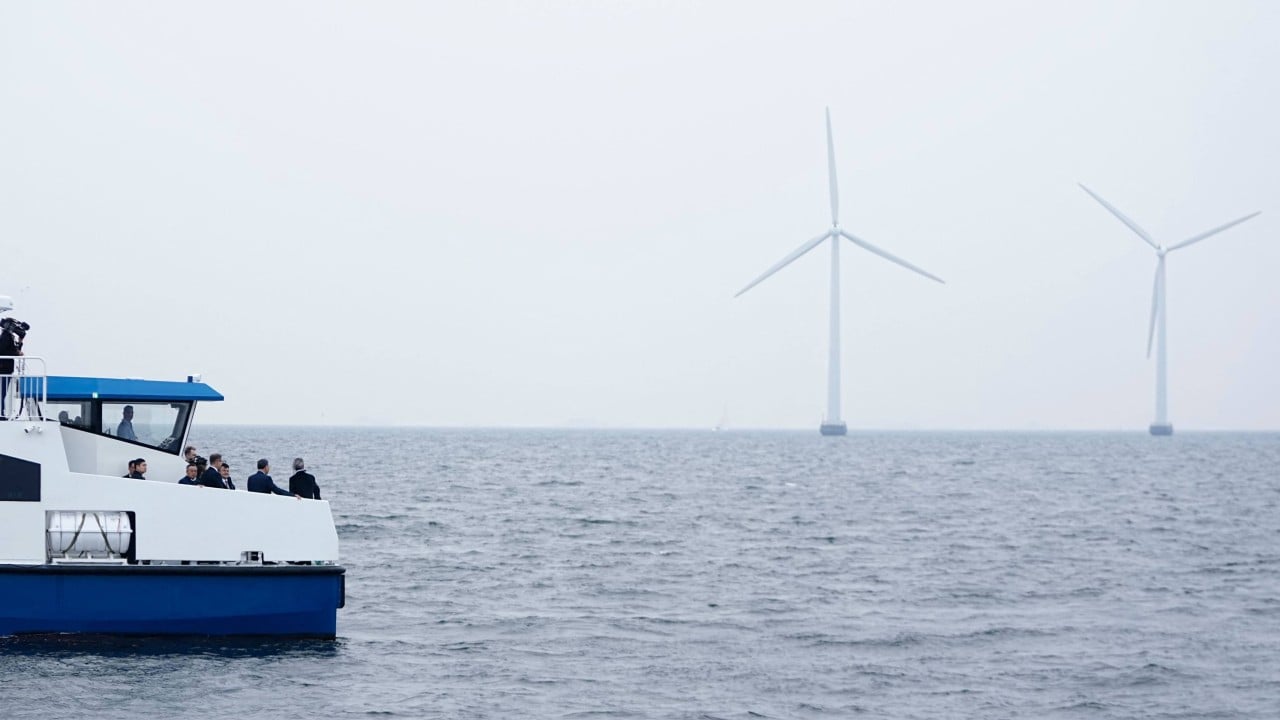
Vietnam and Denmark have spent more than a decade weaving an ambitious wind energy partnership, backed by technical modeling from the Danish Energy Agency and multi-billion-dollar commercial moves like Copenhagen Infrastructure Partners teaming up with Petrovietnam on a major offshore wind project. Yet signing memorandums and drawing turbine arrays on a map does not put megawatts onto a strained grid. Hanoi faces a brutal bottleneck of transmission infrastructure, slow permitting, and distorted electricity pricing that can turn a promising clean energy push into stranded assets.
I have watched emerging markets chase renewable targets for twenty years. Press releases always celebrate gigawatt headlines; utility engineers deal with voltage collapse, line congestion, and bankability disputes. For a deeper dive into this area, we suggest: this related article.
Why Coastal Wind Alone Cannot Rescue Hanoi
Open any glossy briefing on Vietnam wind power and the geography looks like a slam dunk. More than 3,200 kilometers of coastline sweep through tropical and subtropical waters, carrying steady winds that easily tempt energy planners and foreign developers alike. Danish technical cooperation has helped Vietnam map out massive long-term wind capacity—hundreds of gigawatts of theoretical offshore potential and six-figure gigawatt targets stretching out toward 2050.
Numbers on paper do not move electrons. Electrons follow physics and copper. For further information on this issue, extensive reporting is available at Financial Times.
In Vietnam, power demand has surged alongside export manufacturing and summer heat waves. National peak load crossed 58,400 MW in June 2026, with northern demand passing 30,200 MW for the first time. Factories in the north are hungry for steady power during blistering industrial shifts, while some of the strongest wind and solar zones sit far from northern load centers. Building long-distance high-voltage lines across rugged terrain takes years of land acquisition, environmental clearance, and procurement discipline. When transmission lags generation, operators must curtail clean power—telling wind and solar farms to throttle back because the wires simply cannot carry the load.
Consider a hypothetical example to see how quickly project economics sour. Suppose a developer builds a 500 MW coastal wind farm in a windy province, only to find the nearest 500 kV substation and trunk line already congested during peak afternoon or evening hours. Even if the turbines spin hard, forced curtailment cuts cash flow immediately, rattling lenders whose loan covenants depend on predictable output.
Vietnam's Revised Power Development Plan (Revised PDP8), approved in April 2025, laid out sprawling capacity ambitions through 2030. Plans alone do not solve execution risk. Thermal and hydropower delays have already kept pressure on energy security, and battery storage—targeted at tens of thousands of megawatts by 2030—has started from a tiny installed base. Without parallel investments in grid reinforcement, reactive power control, and fast-response storage, adding more intermittent generation without grid upgrades risks worsening bottlenecks rather than easing them.
What Denmark Actually Brings to the Table
Competitor stories love to treat Denmark as a fairy godmother waving a turbine wand over Southeast Asia. That framing misses how Danish policy, engineering, and finance actually work.
Denmark built its wind sector over decades through stubborn industrial policy, clear spatial planning, and tight coordination between grid operators and regulators. Through the Vietnam-Denmark Energy Partnership Programme, now in its fourth phase running from mid-2026 through 2030, Danish institutions have worked alongside Vietnamese authorities on energy outlook modeling, grid codes, industrial energy efficiency, and offshore wind technical standards. The Danish transmission system operator, Energinet, has shared lessons on balancing variable renewables and keeping systems stable when wind output swings.
At the same time, commercial players like Copenhagen Infrastructure Partners bring capital, structuring discipline, and offshore project experience into a market that only recently began clarifying survey and investment approval rules for offshore wind. Partnership between PVN and CIP on a multi-billion-dollar offshore wind push signals serious commercial intent.
Still, imported expertise has limits. Denmark is a compact country with a North Sea operating environment and market rules shaped by European integration. Vietnam is a fast-growing industrial economy with state-dominated utility dynamics, multi-layered administrative approvals, and acute regional imbalances between power generation and consumption. Copying a Danish regulatory template wholesale will fail if local permitting agencies, provincial authorities, and grid dispatchers lack clear authority or incentives to execute on schedule.
The Regulatory and Pricing Catch
Even the best engineering advice hits a wall when commercial rules stay murky. For years, developers in Vietnam have wrestled with prolonged Power Purchase Agreement negotiations, shifting policy guidance, and retail electricity tariffs held down to protect macroeconomic stability and control inflation.
Keep retail prices artificially low while demanding billions in upfront capital, and you create a structural squeeze. Utilities face financial strain, cross-subsidies distort price signals, and international project finance committees demand higher risk premiums—or walk away altogether. Direct Power Purchase Agreements and market reforms offer promising avenues for corporate buyers and clean energy investors, yet bankability hinges on enforceable contract terms, transparent curtailment compensation, and predictable permitting timelines.
| Bottleneck Area | What Goes Wrong in Practice | Why Danish Know-How Alone Cannot Fix It |
|---|---|---|
| Transmission Grid | Long-distance lines lag new generation; congestion forces curtailment. | Right-of-way, provincial coordination, and domestic steel/cable supply chains are local. |
| Permitting & Approvals | Complex administrative steps and slow PPA talks stall projects. | Institutional reform requires domestic political alignment and clear legal mandates. |
| Tariffs & Bankability | Subsidized consumer prices clash with high upfront capital costs. | Pricing policy is a sovereign fiscal and social choice, not a technical model. |
| Grid Flexibility | Rapid demand spikes and weather swings test dispatch stability. | Battery rollout and market rules must scale across thousands of megawatts. |
Hidden Friction Points Every Investor Should Price In
Most coverage stops at diplomatic handshakes and headline capacity numbers. Look closer and three practical frictions stand out.
First, port and supply chain readiness is often treated as an afterthought until vessels and components are ready to move. Offshore wind requires heavy-lift quays, deeper channels, marshaling yards, and skilled maritime and electrical technicians. Danish-supported mapping of port infrastructure and job creation underscores how much physical groundwork sits behind turbine installation. If port upgrades slip, installation schedules domino into costly vessel standby fees.
Second, weather and climate exposure cut both ways. Typhoons, rough seas, and shifting monsoon patterns test offshore structures and marine logistics, while heat waves and erratic rainfall stress onshore grids and hydropower availability. A power system that leans heavily on climate-sensitive generation needs stronger backup, storage, and demand flexibility—not wishful thinking about calm seas and steady breezes.
Third, industrial energy efficiency rarely gets the spotlight of a gleaming offshore wind farm, yet cutting wasted power in factories is often faster and cheaper than building new generation and transmission. Programs encouraging industrial efficiency agreements help relieve pressure on the grid while keeping export manufacturers competitive. Every megawatt-hour saved on a factory floor is a megawatt-hour that does not require a new high-voltage tower.
How to Judge Whether This Partnership Delivers
Forget counting press releases or ten-year targets. Track four concrete indicators over the next twenty-four months to see if Vietnam and Denmark turn ambition into operating wind energy capacity:
- Formal project approvals and financial close: Watch whether early flagship offshore wind proposals move past surveys and paperwork into binding approvals and financed construction.
- Transmission and storage milestones: Check actual kilometers of high-voltage lines energized and megawatts of battery storage commissioned alongside new wind capacity.
- Bankable contract terms: Look for clear risk allocation on grid connection delays, curtailment, and payment security in power purchase agreements.
- Port and local workforce progress: Verify real civil works at coastal staging ports and training pipelines rather than pilot studies alone.
Wind blows for free, yet turning it into reliable industrial power demands steel, copper, clear contracts, and grit—and that is where the real test of the Vietnam-Denmark partnership begins.


