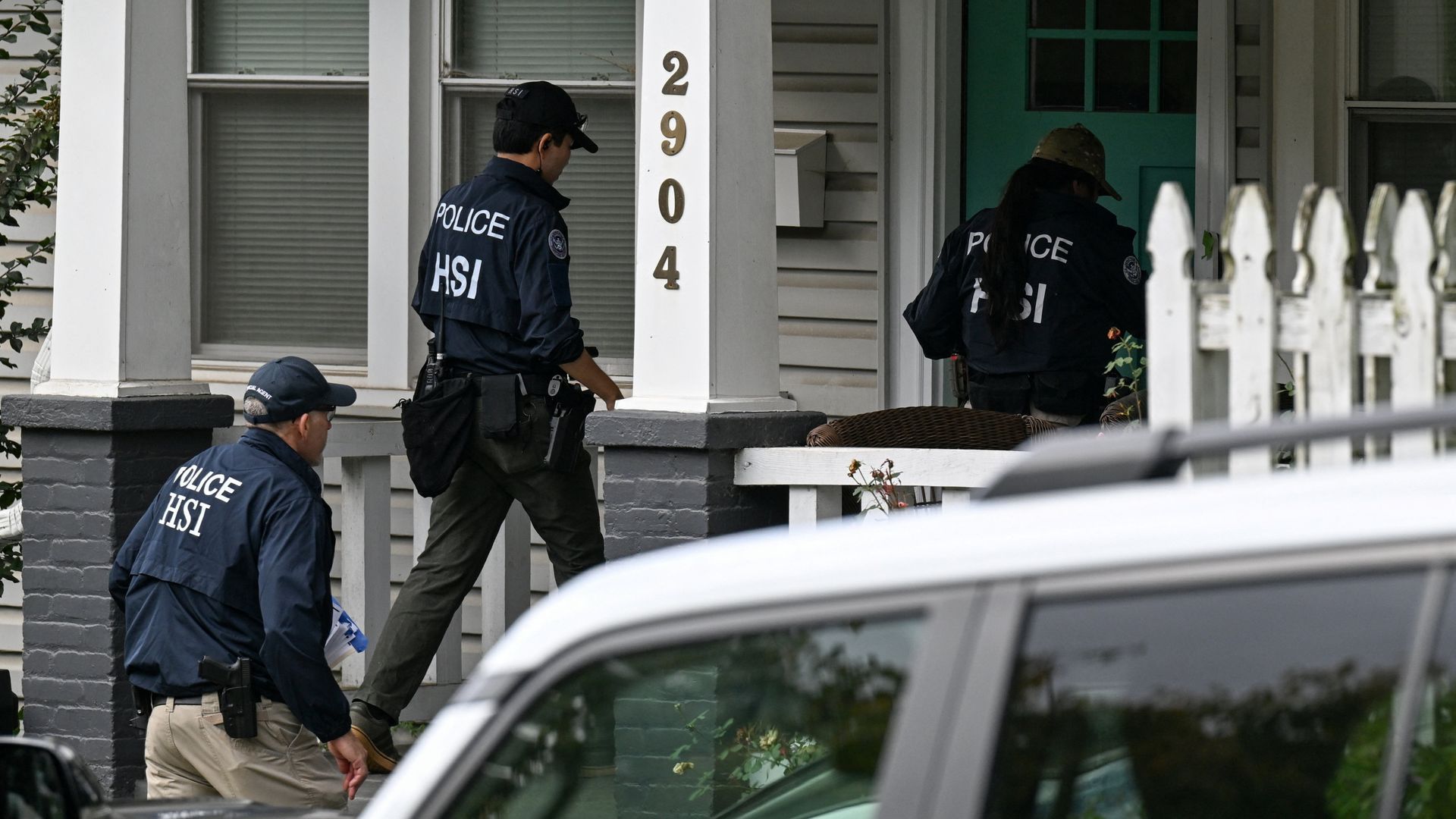
When law enforcement executes a search warrant on the primary residence of an elected official, the event immediately triggers two distinct operational tracks: the legal proceeding itself and the systemic institutional crisis that follows. This convergence creates a high-friction environment where legal defense and political positioning are inextricably linked. Understanding how an institution or an individual manages this exposure requires examining the structural protocols of federal investigations, the mechanics of public communications under legal duress, and the secondary effects on legislative operational capacity.
The Operational Anatomy of Federal Search Warrants
A federal search warrant is not an accusation of guilt; it is an authorization granted by a magistrate judge upon a showing of probable cause that evidence of a federal crime will be found in a specific location. The issuance of such an order represents a significant threshold in an investigation, typically occurring after months or years of covert inquiry involving subpoenas, financial transaction tracking, and witness interviews.
To evaluate the operational impact of a residential execution by federal agents, one must analyze three primary variables:
- Scope of Seizure: Federal agents are legally bound by the four corners of the warrant, which specifies the types of records, electronic devices, or physical assets subject to seizure. The modern reliance on digital infrastructure means that executing a warrant almost invariably involves the extraction of mobile devices, cloud-backup keys, and hard drives. This creates an immediate operational paralysis for the subject, who is stripped of communication tools and institutional access points.
- Chain of Custody and Evidence Integrity: The defense strategy in these scenarios immediately focuses on the strict adherence to Federal Rule of Criminal Procedure 41. Any deviation in inventory logging, handling of privileged communications (such as attorney-client material), or over-seizure outside the warrant's parameters establishes early leverage for suppression motions.
- Informational Asymmetry: During the execution phase, the subject possesses near-zero visibility into the underlying affidavit supporting the warrant, as these documents are frequently sealed to protect ongoing investigative techniques and witness identities. This asymmetry forces the subject's legal team to reverse-engineer the government's theory of the case purely from the specific rooms searched, the categories of documents targeted, and the questions asked by agents during the encounter.
The Cost Function of Public Defiance
When an official chooses to respond to a federal search through public statements declaring resolve rather than maintaining tactical silence, they alter the risk-reward matrix of their defense. In high-profile investigations, public messaging serves a dual purpose: maintaining constituent alignment and signaling to institutional allies that the official intends to contest the validity of the state's actions.
However, this approach introduces quantifiable risks from a legal standpoint:
- Evidentiary Exposure: Every public statement made outside the protection of formal legal proceedings can be utilized by prosecutors to establish inconsistencies, consciousness of guilt, or motive. The public relations imperative to deny wrongdoing often conflicts with the legal imperative to reserve commentary until full discovery is obtained.
- Institutional Polarization: An aggressive public posture forces legislative colleagues and party structures to take a defensive or distancing stance. The cost function here is measured in committee assignments, leadership support, and access to legal defense funding pools. When an official frames an investigation as politically motivated institutional overreach, they consolidate core political support while simultaneously alienating the moderate consensus required for effective governance.
Structural Impact on Legislative Output
An investigation targeting a sitting legislator introduces friction into the legislative process itself. The operational bandwidth of an elected official's office is finite. When leadership and staff are redirected toward crisis management, legal coordination, and media response, the core functions of constituent service and legislative drafting suffer immediate degradation.
This diversion manifests in several predictable ways:
- Committee Effectiveness: Members under active federal investigation frequently face pressure to recuse themselves from sensitive committees, particularly those involving oversight, intelligence, or judiciary functions. This exclusion reduces the member's legislative leverage and alters committee voting dynamics.
- Staff Attrition and Morale: High-turnover rates are typical in congressional offices facing external legal pressure. Institutional knowledge is lost as staffers depart to insulate their own professional reputations, leaving the office staffed by crisis communications personnel rather than policy experts.
The Strategic Outlook
The trajectory following the execution of a federal warrant is dictated by the velocity of the government's next steps. If the investigation remains in a holding pattern while seized electronic data is analyzed through forensic filtering protocols, the subject faces a prolonged period of strategic uncertainty. Conversely, a rapid transition to grand jury subpoenas or indictment signals that the government has moved past the collection phase and into the charging phase.
Managing this exposure requires strict compartmentalization between legal strategy and political communications. Maintaining operational continuity while under federal scrutiny is fundamentally an exercise in risk mitigation, where every public utterance and administrative decision must be weighed against its potential utility to prosecutors in a federal courtroom.