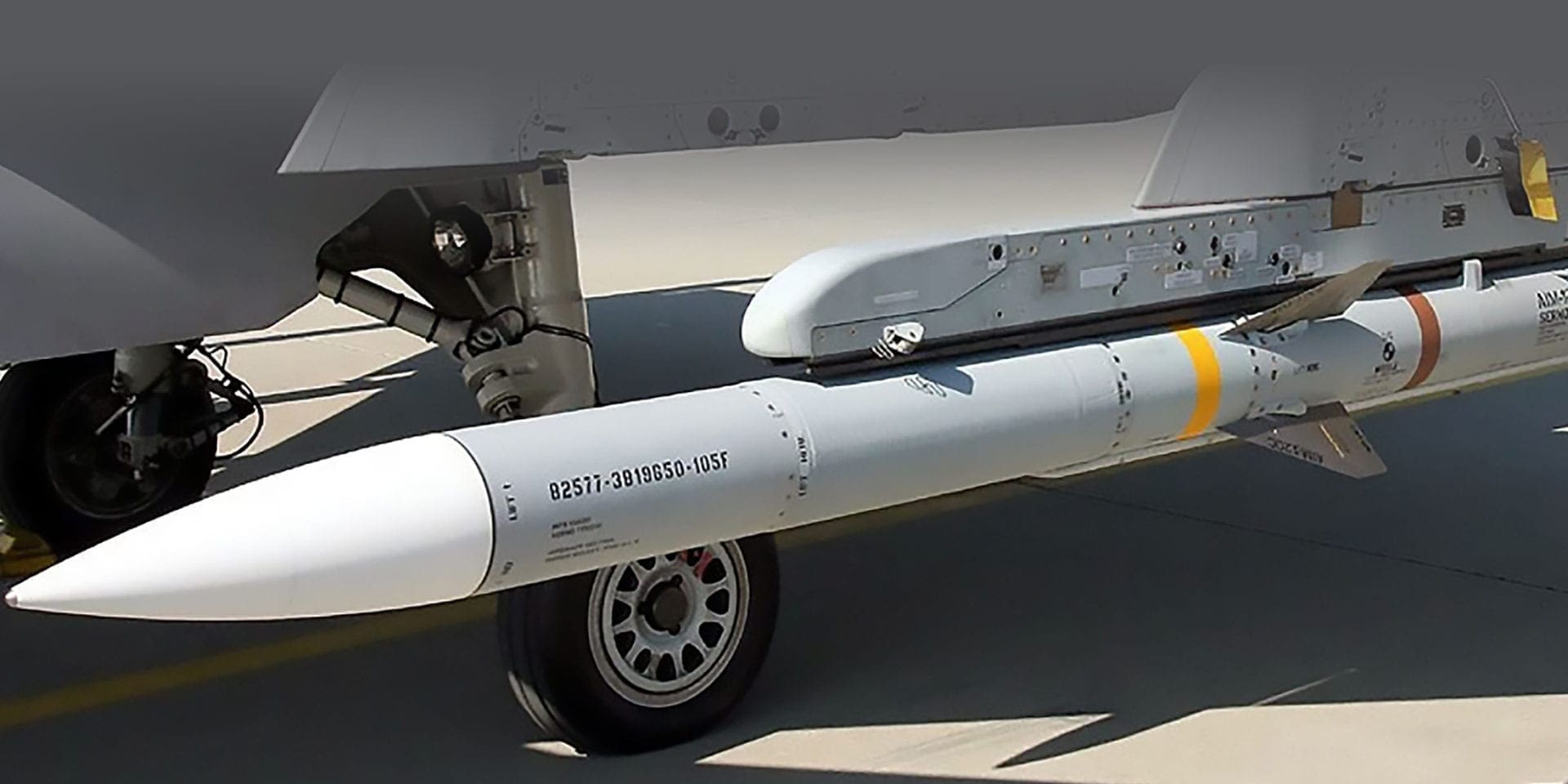
The interception of Iranian-origin ballistic missiles and Unmanned Aerial Vehicles (UAVs) by United Arab Emirates (UAE) air defenses is not merely a tactical success; it is a live-fire validation of a high-cost, multi-layered defensive doctrine. While media reports often focus on the spectacle of the "intercept," the true significance lies in the underlying math of the engagement. The UAE is currently operating at the intersection of extreme kinetic density and an unfavorable cost-to-kill ratio, forcing a shift from simple reactive defense to an integrated, predictive sensor-to-shooter matrix.
The Mechanics of Kinetic Success
Effective air defense in the Arabian Peninsula is defined by the compression of the "kill chain"—the sequence of find, fix, track, target, engage, and assess. Because the geography of the Persian Gulf offers minimal depth, the UAE must detect threats within seconds of launch to ensure engagement occurs outside of high-value terminal zones.
The UAE’s defensive architecture rests on three specific technical pillars:
- Exo-Atmospheric Engagement: Utilizing the Terminal High Altitude Area Defense (THAAD) system to neutralize Short-Range Ballistic Missiles (SRBMs) in the descent phase of their flight path. This layer addresses high-velocity threats that use parabolic trajectories to overwhelm traditional surface-to-air missiles.
- Point Defense and Area Saturation: The deployment of Patriot PAC-3 MSE (Missile Segment Enhancement) batteries. Unlike older blast-fragmentation models, these use hit-to-kill technology, relying on kinetic energy to physically destroy the incoming warhead rather than just disabling the airframe.
- C-UAS (Counter-Unmanned Aircraft Systems): Low-altitude, slower-moving threats like the "Shahed" style loitering munitions require different sensor modalities. Traditional radar often struggles with the low Radar Cross Section (RCS) and low heat signature of these drones, necessitating a mix of electronic warfare (jamming) and short-range kinetic intercepts.
The Cost Function of Asymmetric Warfare
The primary strategic vulnerability for the UAE is not a failure of technology, but an unsustainable economic delta. This is the "Interception Paradox": the defender spends millions to negate a threat that costs thousands.
- The Attacker's Cost: A suicide drone or a basic cruise missile might cost between $20,000 and $50,000.
- The Defender's Cost: A single PAC-3 MSE interceptor carries a price tag exceeding $3 million. A THAAD interceptor is significantly more.
When an adversary launches a "swarm" or a coordinated "salvo," they are not necessarily trying to hit a target. They are often attempting to deplete the defender's inventory of interceptors. Once the magazines are dry, the high-value infrastructure—ports, desalination plants, and energy hubs—becomes defenseless. This creates a bottleneck in logistics; the rate of production for sophisticated interceptors is an order of magnitude slower than the rate of production for mass-produced drones.
Sensor Fusion and the Data Bottleneck
Success in these recent engagements is attributed to the integration of disparate data streams. The UAE does not operate in a vacuum; its "Integrated Air and Missile Defense" (IAMD) relies on the "Link 16" tactical data network. This allows a radar pulse from a US Navy destroyer in the Gulf or a Saudi E-3 Sentry AWACS to feed targeting data directly to a UAE-based battery.
The technical challenge is no longer the "shooter" (the missile); it is the "processor." Discriminating between a decoy and a live warhead in a cluttered electronic environment requires massive computational power. If the system misidentifies a decoy as a primary threat, it wastes a multi-million dollar interceptor, effectively handing the attacker a victory in the economic war of attrition.
Structural Vulnerabilities in Point Defense
Despite the high interception rates reported, two specific limitations remain inherent to the current UAE posture.
The first limitation is the Saturation Threshold. Every fire unit has a finite number of tracks it can engage simultaneously. In a saturated attack, where 50 or more threats arrive within a two-minute window, the probability of "leakers"—missiles that pass through the screen—increases exponentially as the system's logic gates become overwhelmed.
The second limitation is Debris Management. An intercept does not vanish the threat; it converts a guided weapon into unguided, high-velocity kinetic scrap. In densely populated urban areas like Abu Dhabi or Dubai, the falling debris from a successful intercept can cause significant localized damage. This necessitates "keep-out zones"—calculations by the fire control computer to ensure the collision occurs over uninhabited areas or the sea, which further narrows the engagement window.
Regional Escalation and the Shift to Left-of-Launch
The recurring nature of these threats suggests that defensive measures alone are insufficient for long-term stability. The UAE strategy is shifting toward "Left-of-Launch" capabilities. This involves using intelligence, surveillance, and reconnaissance (ISR) to identify and neutralize threats before they leave the ground.
By transitioning from a purely reactive stance to a preemptive or "active" defense, the UAE aims to break the unfavorable cost-to-kill cycle. This involves deep-strike capabilities and cyber-electromagnetic activities (CEMA) designed to disrupt the command-and-control nodes of the proxy groups launching these attacks.
Strategic Recommendation
The UAE must prioritize the transition from expensive kinetic interceptors to Directed Energy Weapons (DEW), specifically high-energy lasers and high-power microwaves. These technologies offer a "near-infinite magazine" and a cost-per-shot measured in dollars rather than millions. Until the economic disparity of the intercept is corrected, the defender remains at a structural disadvantage, regardless of how many missiles they successfully shoot down. Future procurement should move away from additional heavy battery acquisitions in favor of mobile, high-cadence electronic and laser-based point defenses capable of handling low-cost swarm threats.