The receipt in your coat pocket looks harmless. Two pounds eighty for a flat white in Leeds, maybe three-forty if you are rushing through Euston Station before the rain starts. You tap your card, the terminal beeps, and you walk out into the grey morning without thinking twice about the Strait of Hormuz.
You should.
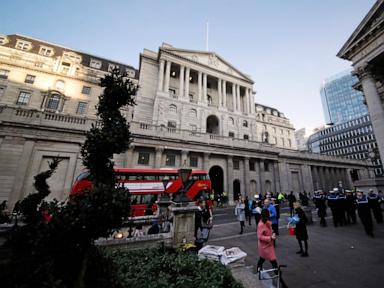
Because right now, thousands of miles away from your local high street, smoke is rising over shipping lanes that carry the lifeblood of the global economy. And in a windowless room on Threadneedle Street in London, nine economists just looked at those plumes of smoke, looked at the price of your coffee, and decided that your life needs to get a little more expensive so that it doesn't get catastrophically more expensive later.
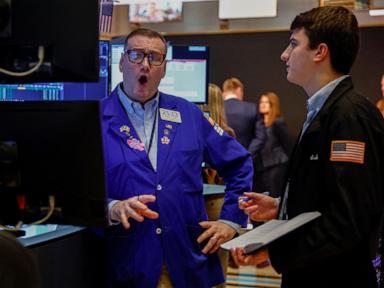
The headlines were clinical, as financial headlines always are. The Bank of England raised its main interest rate by a quarter of a percentage point, pushing the base rate to 4 percent, citing inflationary pressures sparked by the escalating conflict with Iran.
Read that sentence again. Notice how clean it is. Notice how completely it sanitizes the reality of what just happened to millions of British households. A "quarter point" sounds like dust on a windowsill. "Four percent" sounds like a low battery warning you can safely ignore until you find a charger.
It isn't dust. It is a heavy, deliberate hand pressing down on the brakes of an entire nation while the engine is still screaming.
The Kitchen Table Calculation
To understand why a missile strike in the Persian Gulf forces a central banker in London to tighten the screws on a homeowner in Manchester, we have to leave the trading floors behind. Let us invent a family—a hypothetical household, though you will recognize them instantly because they live three doors down from you.
Meet Sarah and David. They are in their late thirties. They have two kids, a Labrador that eats shoes, and a three-bedroom semi-detached house they bought four years ago when money was practically free. Their fixed-rate mortgage—the financial shield that has protected them from the chaos of the last few years—expires in six weeks.
When Sarah sits at the kitchen table tonight with a mug of tea gone cold, scrolling through mortgage comparison sites on her laptop, she isn't thinking about monetary policy transmission mechanisms. She is looking at a number that just jumped by £140 a month.
"Why?" David asks, leaning over her shoulder, still wearing his high-vis jacket from the depot. "Things were finally settling down. Groceries stopped jumping every week. Why are they doing this now?"
David's question is the exact one echoing across the country. For months, the narrative had been one of cautious relief. Inflation had cooled from its feverish highs. The central bank had been eyeing cuts, preparing to slowly ease the pressure on families who had spent three years white-knuckling their budgets.
Then, the Middle East caught fire again.
When conflict erupts involving Iran, the market doesn't wait for the first tanker to sink before it panics. Markets trade on fear, and the fear surrounding the Strait of Hormuz—a narrow chokepoint of water barely twenty-one miles wide at its narrowest point, through which roughly a fifth of the world's petroleum passes—is absolute.
Oil prices don't trickle upward during a crisis like this. They gap. They surge.
And here is the brutal, inescapable truth of modern life: everything you touch is made of oil, moved by oil, or grown with oil.
The Dominoes You Cannot See
Consider what happens next.
A barrel of Brent crude jumps in price on a Tuesday morning in London. By Friday, the wholesale cost of diesel has climbed. The haulage company that drives refrigerated lorries from the ports in Kent to the distribution centers in the Midlands sees its fuel bill spike by tens of thousands of pounds overnight. That company operates on razor-thin margins; it cannot absorb the hit. So it adds a fuel surcharge to the supermarket's invoice.
Meanwhile, natural gas prices—which move in sympathetic terror alongside oil whenever conflict threatens the Gulf—begin to climb. The massive industrial bakeries that churn out millions of loaves of sliced white bread every morning run on gas-fired ovens. Their energy costs surge. The plastic bags those loaves go into are made from petrochemicals. Their costs surge, too.
Within three weeks, the price of a loaf of bread, a carton of milk, and a bunch of bananas creeps up by ten pence here, fifteen pence there.
This is what economists call a "supply shock." It is the worst kind of inflation because it doesn't happen because people are buying too much stuff; it happens because the stuff itself suddenly costs more to make and move.
And this puts the Bank of England in an impossible, agonizing trap.
Think of the UK economy as a house that is already slightly cold, and the Bank of England has only one thermostat. If the central bank leaves interest rates alone—or cuts them, as David hoped they would—cheap money keeps flowing through the economy. Businesses keep raising prices to cover their soaring energy bills, workers demand higher wages so they can afford the higher prices, and businesses raise prices again to pay those higher wages.
Economists have a terrifying name for this: the wage-price spiral. Once it starts spinning, it takes years of economic misery to stop it.
So the Bank of England does the only thing it has the power to do. It cannot send warships to clear shipping lanes. It cannot conjure cheap oil out of the North Sea overnight. All it can do is make borrowing money more expensive.
By raising the base rate to 4 percent, the Bank is deliberately trying to take money out of your pocket before you can spend it. If Sarah and David have to pay an extra £140 a month to their mortgage lender, that is £140 they will not spend at the local pub, £140 they will not spend on a weekend trip to the coast, and £140 they will not spend on new trainers.
Multiply Sarah and David by ten million households. Demand drops. Shops find they cannot raise prices quite so easily because customers simply walk out empty-handed. The fire of inflation is starved of oxygen.
It is a blunt, brutal instrument. It feels deeply unfair—because it is deeply unfair. You didn't start a war in the Middle East, yet you are the one canceling your summer holiday to pay for its economic fallout.
The Ghosts of 1973
If this feels like a nightmare we have somehow wandered into without a map, history suggests we have actually walked this exact road before.
In October 1973, an oil embargo triggered by war in the Middle East sent crude prices quadrupling in a matter of months. Back then, western central banks hesitated. They feared that raising interest rates during an energy shock would crush jobs and plunge their countries into deep recessions. They tried to cushion the blow, keeping money relatively loose while energy prices exploded.
The result was a decade of economic purgatory. Stagflation. Stagnant growth paired with runaway, double-digit inflation that ate people's life savings alive. In Britain, inflation peaked at nearly 25 percent in 1975. Mortgages became unobtainable, strikes paralyzed the country, and the British government eventually had to go cap-in-hand to the International Monetary Fund for a bailout.
The nine members of the Monetary Policy Committee who voted to push rates to 4 percent know that history by heart. Every central banker on earth studies the 1970s the way surgeons study botched operations—obsessively, looking for the exact moment the patient began to slip away.
I remember talking to a retired steelworker in Sheffield a few years ago about what the seventies felt like on the ground. He didn't talk about GDP figures or bond yields. He talked about his wife crying at the post office counter because the price of stamps had gone up again, and how he used to cash his pay packet on a Friday afternoon and run straight to the butcher to buy meat before the prices changed on Saturday morning. Money became like melting ice; if you held onto it, it vanished in your hands.
That is the ghost haunting Threadneedle Street right now. When the Bank of England raises rates to 4 percent, they aren't trying to punish Sarah and David. They are trying to stop the ice from melting.
The Ripple Effect Beyond the Mortgage
Even if you don't have a mortgage—even if you rent a flat in Bristol or live mortgage-free in a cottage in Devon—the hike to 4 percent still reaches into your life, though its touch is quieter.
If you are a renter, your landlord is likely staring at the same refinancing cliff as Sarah and David. When a buy-to-let mortgage jumps by hundreds of pounds a month, that cost rarely stays on the landlord's spreadsheet for long. It shows up in your inbox six months later as a polite email proposing a "market adjustment" to your monthly rent.
If you run a small business—say, a specialty coffee roaster or an independent plumbing firm—that quarter-point hike just made your business overdraft more expensive. If you were thinking about taking out a loan to buy a second van or hire an apprentice, you pause. You look at the news from Tehran and Tel Aviv, you look at your bank's lending rate, and you decide to wait six months. Multiply that hesitation across hundreds of thousands of small businesses, and the entire economy slows to a crawl.
There is, however, one small silver lining tucked into the gloom, though it rarely makes the front pages.
Walk past a high street building society tomorrow and look at the posters in the window. For pensioners, savers, and young people painstakingly scraping together a house deposit in a cash ISA, higher interest rates mean their money finally earns something. When rates sat near zero for over a decade after the 2008 financial crisis, savers were quietly bled dry by even modest inflation. At 4 percent, a savings account actually fights back. It isn't a windfall, and if inflation spikes hard enough, real returns can still turn negative, but it offers a small shield to those who have spent years watching their caution go unrewarded.
What Happens When the Smoke Clears?
The hardest part about living through moments like this is the uncertainty. Nobody—not the Governor of the Bank of England, not the intelligence analysts in Whitehall, not the oil traders in Canary Wharf—knows how long the conflict with Iran will last or how wide it will spread.
If diplomacy somehow prevails next month and tankers move freely through the Gulf again, oil prices will tumble almost as fast as they rose. The inflationary spike will prove to be a temporary fever, and the Bank of England will have the breathing room to start cutting rates again, bringing relief to Sarah and David's kitchen table.
If the war drags on, if refineries burn and supply chains fracture further, 4 percent may not be the ceiling. It might just be the first step on a staircase none of us want to climb.
We like to believe that our daily lives are insulated from the grand, violent chess games played by nations on the other side of the world. We build routines. We plan school runs, budget for birthdays, and argue about whether to retile the bathroom this spring or next. We assume the ground beneath our feet is solid.
Then a siren wails in a port city five thousand miles away, a red line ticks upward on a screen in the City of London, and the ground shifts by a quarter of a percent.
Tomorrow morning, you will walk back into that same coffee shop. The barista will steam the milk, tap the portafilter against the knock-box, and slide your cup across the counter. You will pay for it without thinking about oil tankers, supply shocks, or the ghosts of 1973.
Yet as you wrap your hands around the warm paper cup and step back out into the cold air, you will be holding the exact weight of a world at war—priced to the penny, and paid for in full.