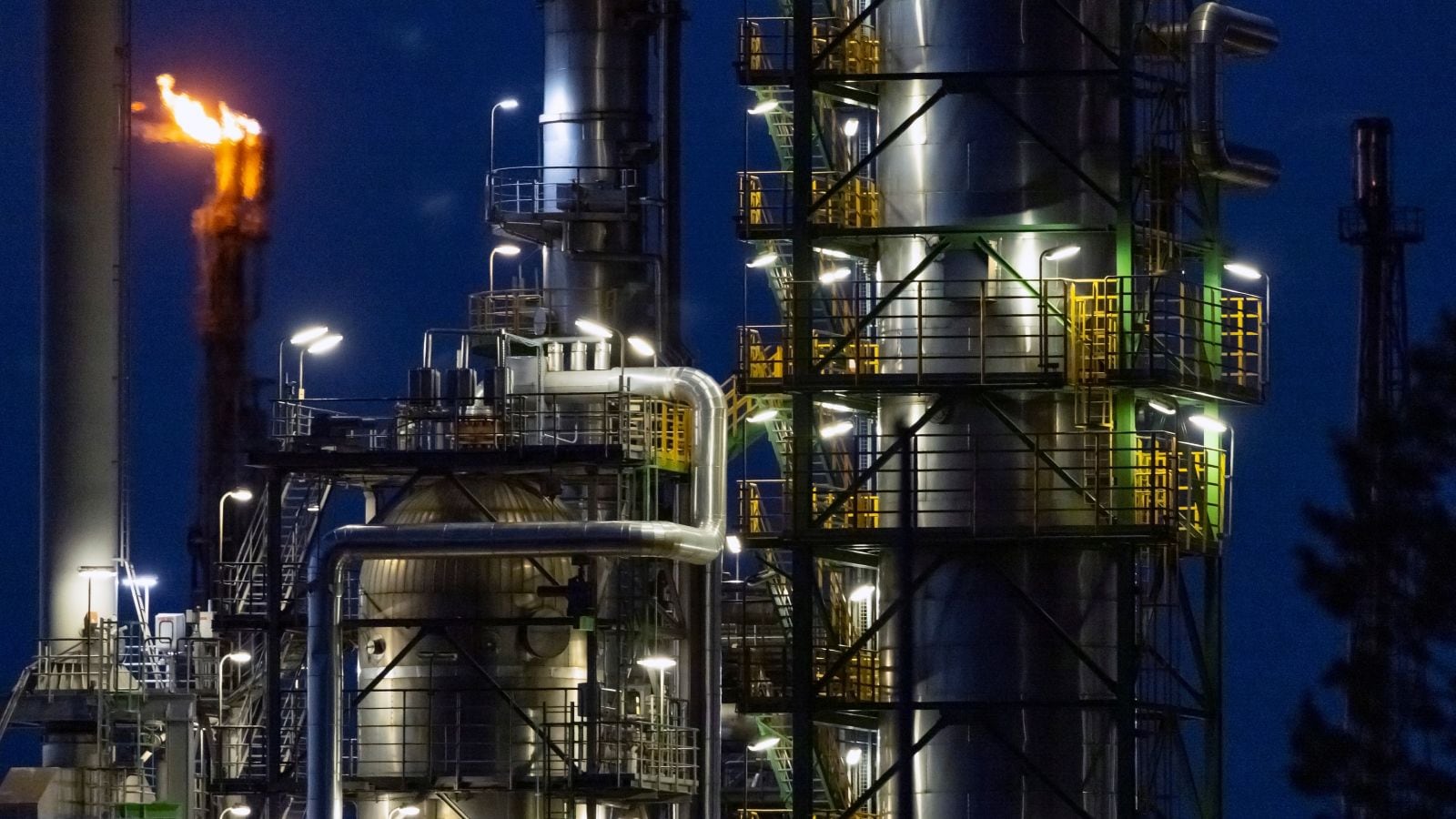
Dusk falls heavy over the Persian Gulf, painting the water the bruised color of a fresh asphalt road. Out past the shipping lanes, where the horizon blurs into a hazy, salt-stung soup, a tanker sits motionless. It is a floating city of steel, six times the length of a football field, packed tight with two million barrels of crude oil.
On the bridge, the air smells of stale coffee and hot electronics. The third mate stares out into the dark, watching the amber glow of a distant radar screen. Every crew member on that ship knows the math. The Strait of Hormuz is barely twenty-one miles wide at its narrowest point. Through that tight bottleneck flows a massive chunk of the liquid energy that keeps global commerce breathing.
Right now, the water is quiet. Diplomatic murmurs drift across the wire from capitals thousands of miles away. Word has slipped out that backroom talks might finally unclench the fist that has kept this vital artery squeezed shut for months. Hope is a fragile currency, but tonight, it is enough to make crude prices tumble on the open market. Traders in London and New York are breathing a collective sigh of relief, watching green numbers flash red as barrels shed value.
Yet, four thousand miles away to the north, the mud is freezing over in the trenches of Eastern Europe.
Artillery thunders across a gray horizon. Drones hum like angry hornets through the biting wind. The war between Russia and Ukraine grinds on, a meat grinder of steel and attrition that has rewritten the rules of European energy supply. For months, Western markets have played a cruel game of tug-of-war, balancing the terror of sudden supply shocks against the grim resilience of patched-together pipelines and shadow fleets carrying sanctioned fuel.
How can the world cheer for peace in the desert while the ground trembles beneath a relentless war in the snow?
Markets are bipolar beasts, driven by fear one second and fantasy the next. When negotiators whisper about a breakthrough in Middle Eastern shipping corridors, the algorithmic trading desks panic in reverse. They sell off safety. They price in stability. They assume that if the tankers can move freely out of the Gulf, the global economic engine is suddenly immune to everything else.
This is the great illusion of the ticker tape.
Consider what happens next: a barrel of oil is not just a commodity traded by men in expensive suits. It is your morning commute. It is the diesel burned by the combine harvester gathering wheat in Kansas. It is the plastic casing of the laptop on your desk, the asphalt beneath your tires, the heating oil keeping a grandmother warm in Chicago. When prices drop because of a hopeful headline about Hormuz, ordinary people feel a momentary lightness in their wallets. Gas station signs tick down by ten cents. Freight costs dip.
But oil does not care about your optimism. It respects only physics and politics.
Deep beneath the surface of the current market relief lies a terrifying fragility. Russia’s war machine continues to chew through resources, and Western sanctions remain a tangled web of loopholes and enforcement headaches. Refineries are running on razor-thin margins. If a single missile strays off target, or if a diplomatic breakthrough in the Gulf proves to be nothing more than a mirage, the market will whip back with the ferocity of a snapped rubber band.
We have lived through this cycle before. Every few years, a flashpoint threatens to choke the global supply chain. The world holds its breath. A tentative deal is struck, or a blockade is narrowly avoided. Prices dip. Everyone relaxes. And then, in the blind spot of our collective relief, the next crisis quietly takes root.
The drop in oil prices today is real, but it is built on quicksand. It assumes that geopolitical stability is a steady state rather than a brief pause between disasters. It asks us to forget that energy security is an illusion so long as the world’s most critical shipping lane can be held hostage by a handful of regional players, while a major European breadbasket remains an active war zone.
So look at the falling prices. Enjoy the momentary break at the pump. But listen closely to the low, steady rumble beneath the surface of the global economy.
The tanker in the Gulf weighs anchor, its engines thrumming to life as it guides its precious cargo toward the open sea. In the distance, the sun begins to rise, sharp and blinding, casting long shadows across a world that is always just one headline away from the edge.