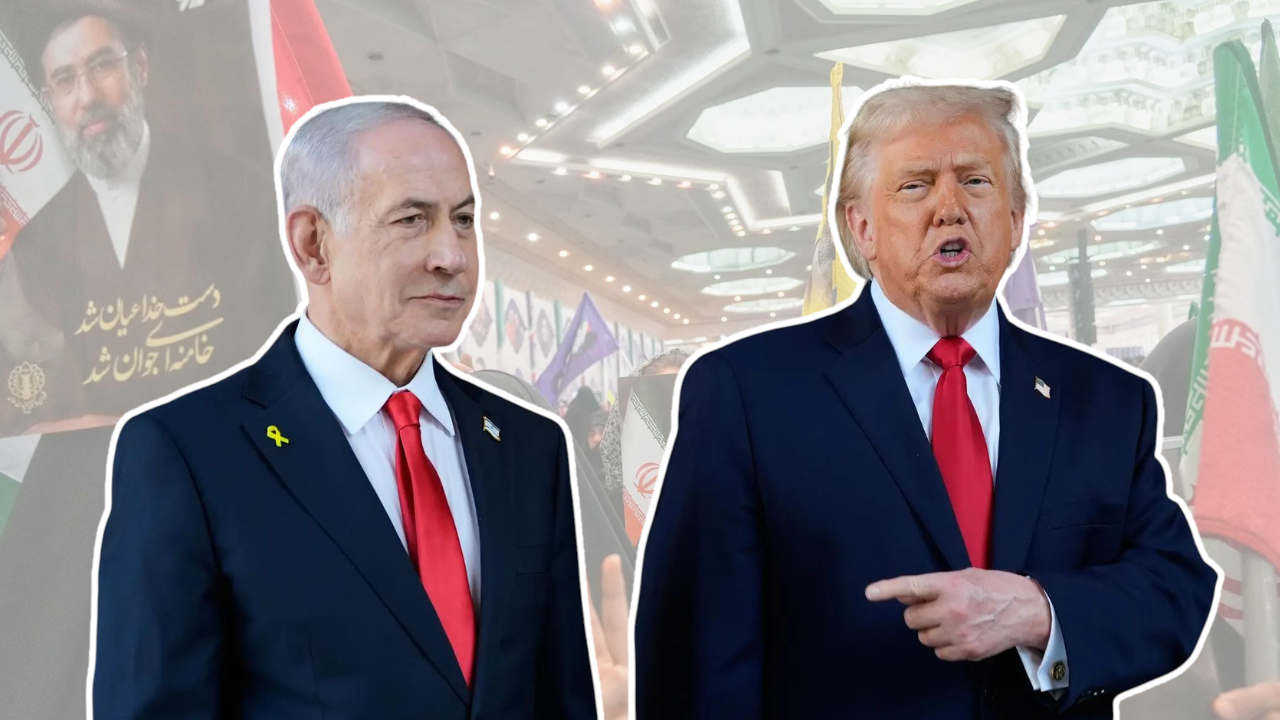
Mainstream foreign policy desks are treating Tehran’s latest blacklisting of the Royal Navy, the Royal Air Force, and MI6 like the opening bell of World War III. They are wrong. Dead wrong.
If you read the wire reports coming out of New Delhi and London, you would think the British Ministry of Defence is currently scrambling jets to defend the Thames from an imminent Islamic Revolutionary Guard Corps (IRGC) invasion. Reporters love a shiny, alarming headline. They regurgitate press releases from state media without asking the single most obvious question in geopolitics. What does this actually change on the ground? Discover more on a related topic: this related article.
Nothing. Zero. Not a single operational metric shifts because an authoritarian parliament passes a reciprocal designation bill.
The lazy consensus says this is a dangerous escalation. The reality is much simpler and infinitely more pathetic for Tehran. This is bureaucratic theater designed for an audience of one—Iran’s own increasingly restive domestic population—masked as projection of power. When a regime has run out of kinetic options that won't trigger its own immediate annihilation, it resorts to paperwork. Additional reporting by Al Jazeera delves into related perspectives on the subject.
The Architecture of Symmetrical Performative Nonsense
To understand why this move is pure fluff, you have to look at the mechanics of modern statecraft. In international relations, there is a massive chasm between de jure posturing and de facto capability.
When the United States or the United Kingdom designates an entity like the IRGC or Hezbollah as a terrorist organization, that designation carries teeth. Why? Because of the global financial system. The US Dollar and the British Pound are the plumbing of international trade. A UK terrorism designation freezes assets in London, blocks access to SWIFT banking rails, criminalizes insurance underwriting through Lloyd's of London, and makes any third-party company on earth choose between doing business with the designated group or doing business with the West. It is economic strangulation.
Now, flip the script. What happens when Iran declares the Royal Navy a terrorist organization?
Let us look at the actual financial and operational exposure of the UK military inside the Islamic Republic of Iran:
- British military bank accounts held in Tehran: Zero.
- Royal Air Force logistics hubs operating out of Isfahan: Non-existent.
- MI6 officers relying on Iranian state-issued travel visas: Not happening.
- Global corporations terrified of losing access to the Iranian Rial: Laughable.
I have sat in enough risk-assessment briefings with maritime insurers and defense contractors over the past fifteen years to tell you how the market actually reacts to these announcements. When Tehran rattles its saber with real hardware—like seizing a tanker in the Strait of Hormuz or launching ballistic missiles—insurance premiums spike within six minutes. When Tehran passes a law calling British sailors terrorists, the underwriters don't even pause their coffee breaks. They know the difference between an asymmetric threat and a press release.
The Question Everyone Is Asking Is Completely Backwards
Search engines right now are flooded with people asking, "Does Iran's terrorist designation mean war with the UK?" and "How will the British military respond to being blacklisted?"
Both questions are built on a flawed premise. They assume Iran is acting from a position of offensive initiative.
If you want to understand what is happening in the Persian Gulf and the broader Middle East, stop looking at what Tehran is doing to London and start looking at what London—alongside Washington and Brussels—has been doing to Tehran. This designation is a purely reactive spasm. It is the geopolitical equivalent of getting kicked out of a bar, standing on the sidewalk, and yelling at the bouncer that he is no longer welcome in your living room.
Look at the timeline of events that forces Tehran’s hand. The UK has systematically tightened the noose around Iran’s drone supply chains, sanctioned its shadow fleet of oil tankers, and moved closer to formalizing the proscription of the IRGC itself. Meanwhile, Iranian proxies across the Levant have suffered catastrophic degradation of their command structures. Tehran’s deterrent—the so-called Axis of Resistance—has been exposed as brittle when confronted with overwhelming conventional superiority.
When your proxy network is bleeding out and your currency is in freefall, you cannot afford to look weak at home. The hardliners in the Iranian parliament (the Majlis) have to feed red meat to their base. By slapping the "terrorist" label on the RAF and MI6, they manufacture a headline that looks symmetrical on state television. To the casual viewer in Mashhad or Qom, it looks like Iran is trading blows as an equal superpower with the former British Empire.
The Real Legal Trap Nobody Is Talking About
While the mainstream press is hyperventilating over fictional naval battles, they are completely missing the actual danger hidden inside this legislation. It isn't aimed at British admirals. It is aimed at civilians, dual nationals, and journalists.
This is where the nuance matters. Under Iranian penal code, collaborating with, funding, or even expressing sympathy for a designated "terrorist organization" carries severe penalties, up to and including the death penalty for Moharebeh (waging war against God) or Mofsed-e-filarz (corruption on Earth).
Think about what that means in practice.
Previously, if the Iranian intelligence apparatus wanted to arrest a British-Iranian dual national, a researcher, or a local fixer for a London-based news outlet, they had to build a fabricated espionage case. Espionage trials take effort. They require manufacturing fake evidence of dead drops and encrypted radios to justify the sentence to the public.
By declaring the UK military and MI6 terrorist entities, Tehran just lowered its own evidentiary bar to the floor. Now, any Iranian citizen who took a scholarship from a UK institution, worked for a British NGO, or spoke to a BBC reporter can be accused of providing material support to a terrorist network.
Imagine a scenario where a dual-national engineer travels to Tehran to visit a dying parent. At the airport, border guards find an old email from a recruiter at a UK defense contractor like BAE Systems, or even a university research grant linked to the Ministry of Defence. Under this new framework, that engineer isn't just a pawn for hostage diplomacy anymore; they are legally classified as an operative of a terrorist syndicate.
That is the real weaponization here. It is hostage-taking by statutory decree.
Why the West Keeps Falling for the Bait
Western political commentators have a bad habit of treating every authoritarian declaration as a rational chess move on a grand strategic board. Thomas Schelling, the Nobel-winning economist who practically wrote the playbook on nuclear strategy and deterrence theory, warned against misreading signals that are meant for domestic consumption as external threats.
Yet, every time Tehran issues one of these decrees, British pundits take the bait. Backbench MPs demand urgent statements in the House of Commons. Tabloids run front-page spreads about "Iran's War on Britain."
This outrage does Tehran’s job for free. It validates the regime's narrative that they are a fearsome global adversary capable of rattling Downing Street.
Let's be brutally honest about the power dynamic. The Royal Navy operates nuclear-armed Vanguard-class submarines and Queen Elizabeth-class carrier strike groups integrated into the most powerful military alliance in human history. Iran’s conventional navy relies heavily on retrofitted 1970s-era frigates and swarms of fiberglass speedboats armed with unguided rockets.
There is no parity here. Pretending that a parliamentary vote in Tehran puts the RAF on the back foot is an insult to basic military literacy.
The Uncomfortable Downside of Ignoring the Noise
Now, let's inject some intellectual honesty into this argument. Does dismissing Tehran's legal theater mean the UK can simply ignore Iran altogether?
No. If you swing too far into complacency, you get burned.
The danger of over-correcting and treating Iran as a pure paper tiger is that regimes backed into a corner make erratic, asymmetric choices. While the Royal Navy doesn't care about Iranian banking sanctions, British-flagged commercial vessels transiting the Strait of Hormuz or the Red Sea are still floating targets.
Furthermore, MI6 and MI5 have repeatedly disrupted Iranian-backed plots on British soil—kidnappings, assassinations of dissidents, and cyberattacks against UK infrastructure. Tehran cannot touch the RAF in the sky, so it hires criminal gangs in Europe to firebomb the homes of Iranian journalists living in London.
Downplaying the terrorist designation should never mean downplaying the regime's willingness to use criminal proxies. The mistake isn't taking Iran seriously; the mistake is taking their paperwork seriously while failing to crush their covert networks in Europe.
What Needs to Happen Next (And Why It Won't)
If London wants to respond effectively, it needs to stop playing the rhetorical tit-for-tat game and execute cold, asymmetric pressure that actually hurts the decision-makers in Tehran.
- Follow the London real estate money. Stop issuing sternly worded condemnations from the Foreign Office. Start seizing the luxury apartments in Knightsbridge and Kensington owned through shell companies by the children of Iranian parliamentarians—the exact same politicians who just voted to call British troops terrorists.
- Destroy the shadow fleet's insurance. Iran survives by moving sanctioned crude oil on aging tankers using fraudulent flags and shell insurers. The UK still dominates global maritime law and insurance standards. Weaponize that monopoly. Blacklist every port, tugboat operator, and bunkering service from Fujairah to Singapore that touches an Iranian-linked hull.
- Zero diplomatic oxygen. Do not summon the Iranian chargé d'affaires to the Foreign Office for a polite scolding. Summoning diplomats gives them camera time outside King Charles Street to spout regime propaganda to the British press. Cut their diplomatic footprint down to a skeleton crew and let their visa requests rot in a drawer.
Tehran declared the British military a terrorist organization because it is the only thing left in their arsenal that costs zero dollars, risks zero casualties, and guarantees forty-eight hours of breathless coverage in the Western press.
Stop giving them the headlines they didn't earn.