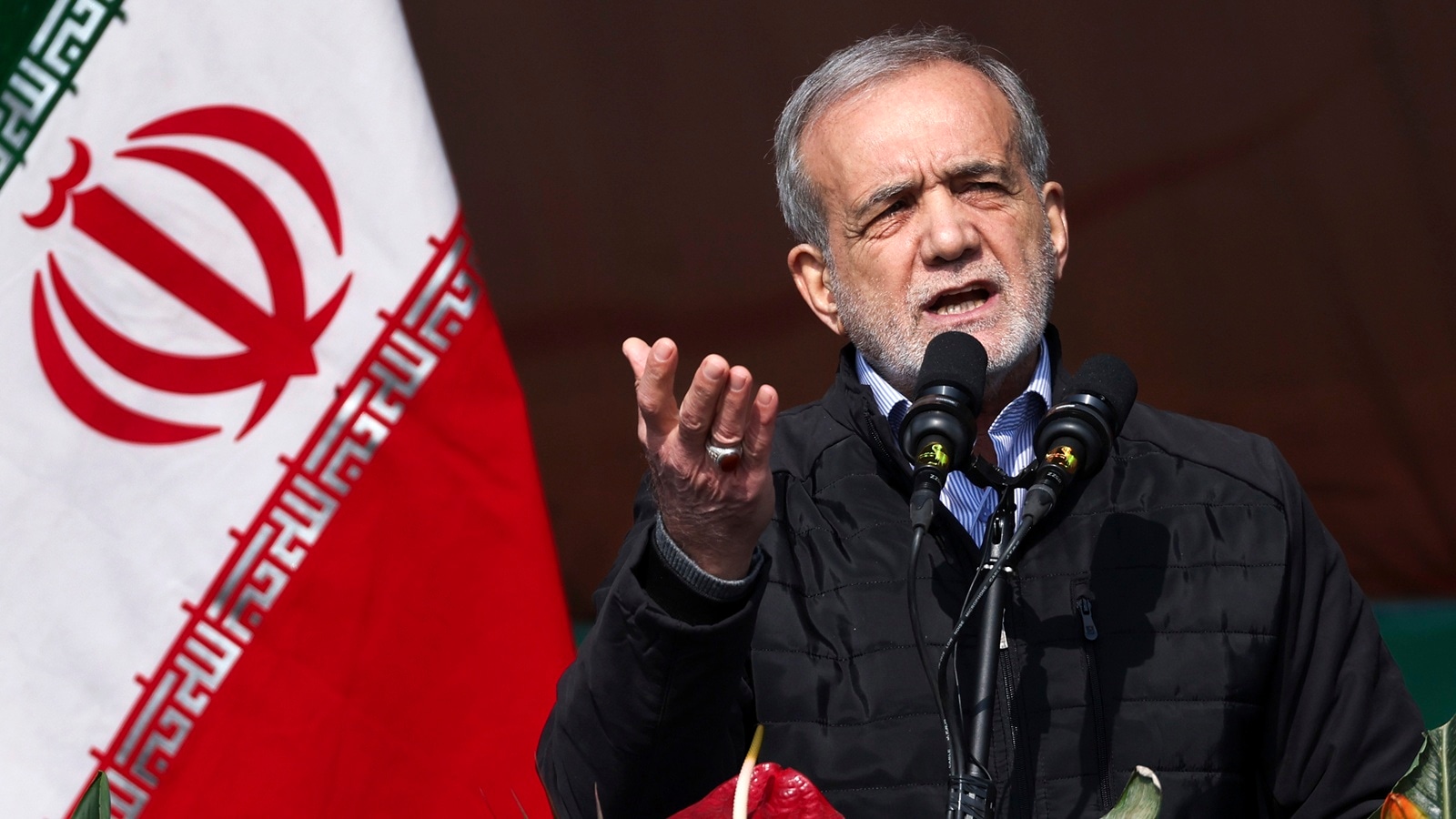
The fragility of the ceasefire between Israel and Hezbollah has reached a breaking point as Iranian President Masoud Pezeshkian explicitly warns that Tehran considers the agreement compromised. The core of the crisis lies in a fundamental disagreement over what constitutes a "violation." While the diplomatic framework was intended to freeze the conflict, the reality on the ground has become a series of tactical skirmishes that threaten to drag the region back into a full-scale war. Pezeshkian’s rhetoric marks a shift from cautious optimism to a direct threat of military recalibration.
The Illusion of a Static Front Line
Modern warfare rarely respects the clean lines drawn on maps by diplomats in remote capital cities. The ceasefire in Lebanon was built on the premise that both sides would simply stop. This ignored the deep-seated strategic objectives that both Israel and Hezbollah still view as unfinished business. Israel maintains that its strikes are "defensive responses" to prevent the re-arming of militant groups. Conversely, Tehran views every Israeli drone flight and artillery shell as a deliberate tearing of the peace treaty.
When Pezeshkian says his hand is on the trigger, he isn't just speaking for the Iranian regular army. He is signaling to the entire "Axis of Resistance" that the period of restraint is over. This is a calculated message intended to deter Israel from further incursions, but it also creates a dangerous trap. If every minor breach requires a major response to maintain credibility, the path to escalation becomes a one-way street.
Tactical Reality Versus Diplomatic Paperwork
The ceasefire agreement was marketed as a definitive solution to the northern border crisis. It isn't. The document lacks a robust, independent verification mechanism that both parties trust. Currently, the monitoring process relies on UNIFIL and a secondary committee that often finds itself debating events days after they occur. By the time a violation is "confirmed," the tactical advantage has already been seized and the retaliatory strike has been launched.
The Problem of Preemptive Action
Israel’s security cabinet has operated under a policy of "active defense." This means they will not wait for a missile to be fueled before they strike a storage facility. From a military standpoint, it is logical. From a diplomatic standpoint, it is a violation of the ceasefire. This creates a paradox where the very actions intended to prevent war are the actions that trigger it. Pezeshkian is exploiting this contradiction to frame Iran and its allies as the defenders of an international agreement that Israel is allegedly dismantling.
Iranian Proxy Dynamics
Tehran does not need to move its own troops to make good on a threat. The infrastructure of influence built over decades allows Iran to dial the tension up or down through local actors. If Pezeshkian feels the diplomatic route is exhausted, we will see an uptick in activities from groups in Iraq, Yemen, and Syria, not just Lebanon. This multi-front pressure is the "trigger" he refers to. It is a sophisticated, decentralized system of leverage that Western intelligence agencies find difficult to intercept entirely.
Economic Desperation as a Driver of War
We cannot analyze Pezeshkian’s statements without looking at the internal pressure cooker that is the Iranian economy. The President was elected on a platform of reform and sanctions relief. If he cannot deliver a diplomatic win that eases the burden on the Iranian people, he risks losing the support of the hardline elements within the Revolutionary Guard.
A "strongman" posture on the international stage serves a dual purpose. It satisfies the domestic hawks who view diplomacy as a sign of weakness, and it attempts to force the international community to pressure Israel into a stricter adherence to the ceasefire. If the ceasefire collapses, Pezeshkian can claim he tried the path of peace but was forced into conflict by outside aggression. It is a classic political maneuver used by leaders who are backed into a corner.
The Intelligence Gap
One of the most overlooked factors in this tension is the degradation of reliable intelligence on both sides. After months of heavy fighting, the usual channels of communication—clandestine or otherwise—have frayed. When Israel strikes a target, they believe they are hitting a specific threat. When Iran reacts, they are often working off a different set of assumptions about Israel's long-term goals.
- Communication breakdowns: Third-party mediators like France and the United States are struggling to keep the lines open.
- Miscalculation: Small-scale tactical successes are being mistaken for strategic shifts.
- Internal Pressures: Political survival in both Jerusalem and Tehran is increasingly tied to "not backing down."
These factors combined create an environment where a single mistake by a low-level commander could ignite a fire that no diplomat can extinguish. The President's warning is not just a threat; it is an admission that the current system of oversight is failing.
The Strategic Failure of Buffer Zones
The history of the Middle East is littered with failed buffer zones. The idea that a few miles of demilitarized land can provide security in an age of long-range missiles and drone technology is anachronistic. Hezbollah does not need to be physically present at the border to pose a threat, and Israel does not need to cross the Litani River to deliver a devastating blow.
This technological reality makes the terms of the current ceasefire almost impossible to enforce. If a drone is launched from twenty miles back, is that a violation of the "border" agreement? If an electronic warfare suite jams a civilian communication tower, does that count as an act of war? The "trigger" Pezeshkian mentions is now digital and long-range, making the traditional definitions of a ceasefire obsolete.
Logistics of the Next Phase
If the ceasefire officially dissolves, the next phase of the conflict will look significantly different from the previous year. We are seeing a shift toward high-intensity, short-duration strikes. Both sides have learned from the attrition of the past months. Iran has been replenishing stocks through corridors that remain operational despite ongoing surveillance.
Israel, meanwhile, has refined its targeting data. The window for a "clean" diplomatic exit is closing because the military infrastructure on both sides is moving into a state of permanent readiness. You cannot keep a military at peak tension indefinitely; eventually, that energy must be released.
The Role of External Powers
The United States and Russia find themselves in an awkward position. Washington wants to pivot away from the Middle East to focus on other global theaters, yet it is repeatedly pulled back by the threat of a regional war. Russia, while preoccupied, benefits from the distraction a Middle East conflict provides.
Neither power seems capable of restraining their respective partners. Pezeshkian’s rhetoric suggests that Tehran no longer believes Washington can or will control Israel’s military movements. This loss of faith in the "guarantors" of the ceasefire is the final nail in the coffin of the current agreement. When the parties involved stop believing the mediators have influence, they stop listening to the mediators altogether.
Broken Trust and the Path Forward
Trust is the currency of any ceasefire. Currently, the vault is empty. Israel believes Hezbollah is using the lull to dig deeper tunnels and move more advanced guidance kits into the country. Iran believes Israel is using the pause to map out the next generation of targets for an eventual decapitation strike against Hezbollah’s leadership.
When Pezeshkian speaks of his hand on the trigger, he is acknowledging that the period of "strategic patience" has reached its limit. The warnings have been issued. The troop movements have been recorded. The diplomatic cables have been sent and ignored. We are no longer waiting to see if the ceasefire will hold; we are watching the slow-motion preparation for what comes after it fails.
The reality of the situation is that a ceasefire without a political settlement is just a reload period. Without a fundamental change in the security architecture of the region, the triggers will remain pulled back, and the next spark is a matter of when, not if. Military commanders on both sides are already operating under the assumption that the peace is a ghost. They are positioning assets not for a defense of the ceasefire, but for the opening salvo of the next escalation.
Security is not found in a signed piece of paper that neither side intends to fully honor. It is found in a balance of power that is currently tilting toward a dangerous disequilibrium. The President of Iran has made his position clear: the diplomatic experiment is over, and the military reality is the only one that remains.


