The probability of an Iranian nuclear breakout is no longer a question of "if" but a calculation of "when" based on three specific technical bottlenecks: HEU (Highly Enriched Uranium) accumulation, weaponization engineering, and delivery system integration. Current intelligence frameworks suggest that the timeline for producing enough weapons-grade uranium—enriched to the 90% threshold—has compressed from months to weeks. However, the political fallout in the United States, specifically regarding the stability of the executive branch and the legal vulnerabilities of its leadership, creates a secondary crisis of deterrence. When domestic political survival competes with foreign policy redlines, the resulting paralysis shifts the regional balance of power toward Tehran.
The Mechanics of Enrichment and the Breakout Window
Breakout time is defined as the duration required to produce $W_{u} = 25\text{ kg}$ of uranium enriched to 90% $U^{235}$, which is generally considered the minimum for a single crude implosion-type device. Iran currently operates several cascades of advanced IR-6 centrifuges, which are significantly more efficient than the older IR-1 models.
The enrichment process is non-linear. The energy required to move from natural uranium (0.7%) to 4% is roughly 75% of the total work needed to reach 90%. Because Iran has already stockpiled significant quantities of 60% enriched uranium, they have already completed approximately 98% of the necessary Separative Work Units (SWU). The final leap from 60% to 90% is technically the shortest phase of the process.
- The Technical Bottleneck: While fissile material production is fast, "weaponization"—the process of turning that material into a deliverable warhead—is a distinct engineering challenge. This involves miniaturization, heat shielding for atmospheric re-entry, and reliable detonator electronics.
- The Intelligence Gap: Monitoring the 60%-to-90% jump is easier than monitoring clandestine weaponization labs. If Iran chooses to "break out" (publicly) or "sneak out" (privately), the international community may only detect the enrichment shift after the material has already been moved to secret locations.
Strategic Paralysis and the Domestic Feedback Loop
The effectiveness of any military or diplomatic deterrent is a function of perceived "will." In the current American political climate, the executive branch faces unprecedented domestic pressure that degrades its ability to project credible threats. Recent claims by advisors regarding the vulnerability of the Trump administration's position highlight a critical intersection between criminal proceedings, electoral stability, and foreign policy.
A weakened president is a strategic asset for an adversary. If the U.S. executive is preoccupied with legal defense or internal political insurrection, the "Cost of Action" for a military strike on Iranian facilities increases exponentially.
- The Diverted Focus: Executive energy is a finite resource. When high-level national security meetings are superseded by legal strategy sessions, the quality of intelligence synthesis drops.
- The Perception of Lame-Duck Status: If Tehran perceives that the current administration will not survive the next political cycle—either due to legal removal or electoral defeat—they have no incentive to negotiate. They will simply wait for a more favorable or more chaotic successor.
- The Escalation Ladder: Deterrence requires the adversary to believe that an aggressive act will be met with a cost that outweighs the gain. If the U.S. is viewed as internally fractured, the "certainty of retaliation" variable in the deterrence equation approaches zero.
The Three Pillars of Iranian Strategy
Tehran does not view the nuclear program in isolation; it is a component of a broader "Forward Defense" doctrine. This doctrine utilizes three primary levers to ensure the survival of the regime while pursuing regional hegemony.
- The Nuclear Hedge: Maintaining a "threshold" status where they can build a bomb quickly but choose not to, using this as a permanent bargaining chip to lift sanctions.
- The Proxy Network: Utilizing groups in Lebanon, Yemen, and Iraq to create a "Ring of Fire" around regional rivals, ensuring that any strike on Iranian soil triggers a multi-front conventional war.
- The Strategic Depth via Multi-Polarity: Strengthening ties with Moscow and Beijing to create an economic and diplomatic shield that renders Western sanctions ineffective.
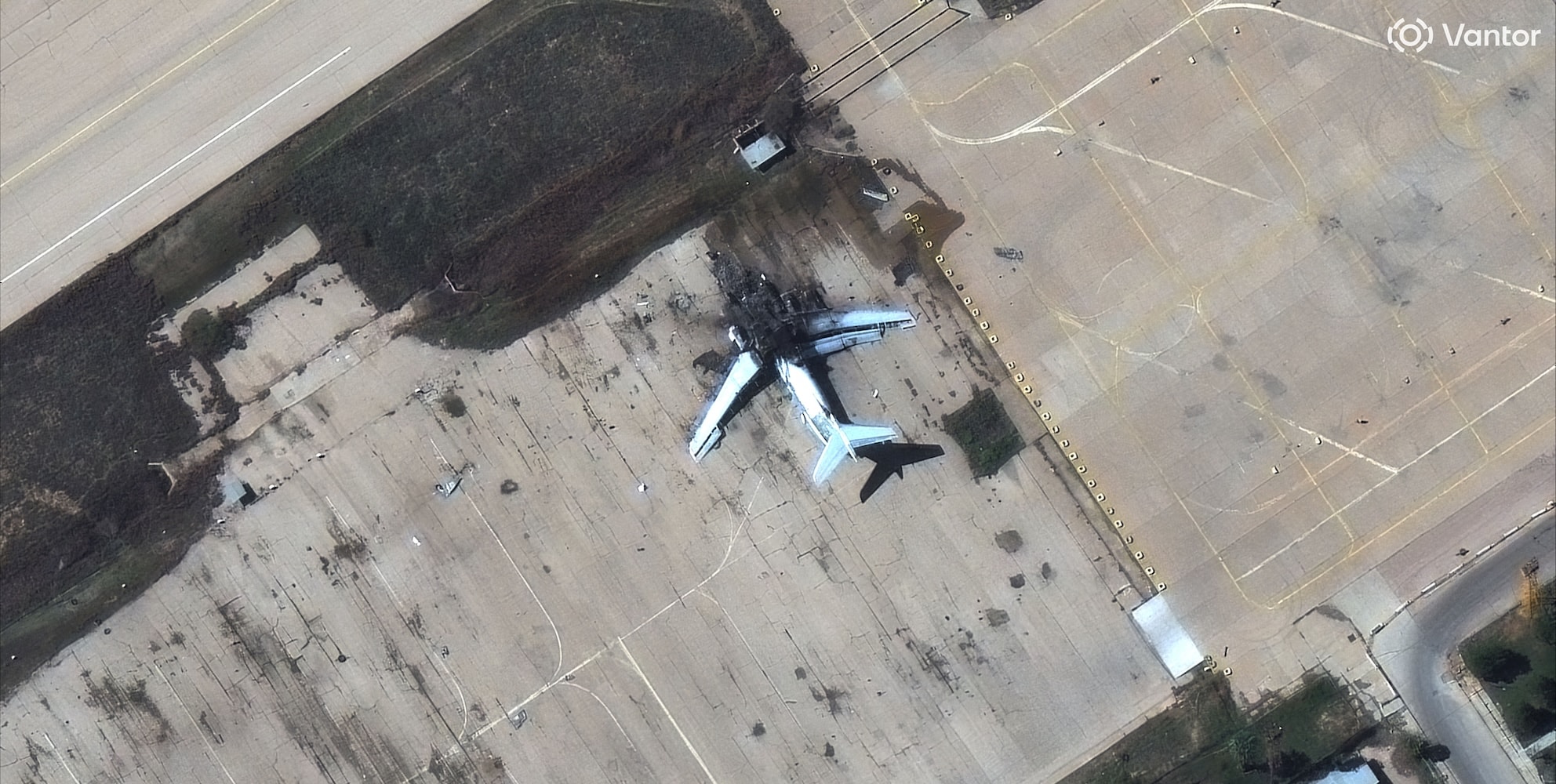
The relationship between Iran and Russia, in particular, has evolved from tactical cooperation to a structural alliance. The exchange of drone technology for advanced aerospace assets (like Su-35 fighters) suggests that Iran is modernizing its conventional defenses to protect its nuclear core.
The Failure of Maximum Pressure and the Diplomatic Void
The "Maximum Pressure" campaign was designed to bankrupt the Iranian state and force a collapse or a total capitulation on the nuclear issue. While the economic impact was severe, the strategic outcome was the opposite of the intent. Instead of folding, Iran accelerated its centrifuge deployment and restricted IAEA access.
This creates a "Security Dilemma." Each move the U.S. or Israel makes to secure their interests (sanctions, sabotage, cyberattacks) prompts Iran to increase its nuclear capabilities as a form of "defensive insurance." This cycle has led to the current state where the "JCPOA" (the 2015 nuclear deal) is effectively dead, and no viable framework has replaced it.
Quantifying the Risk of Miscalculation
The danger of a nuclear Iran is often framed through the lens of a direct strike on Israel or the U.S., but the more immediate risk is "Nuclear-Backed Aggression." Once Iran possesses a nuclear deterrent, its conventional and proxy operations become significantly more dangerous.
If a nuclear-armed Iran closes the Strait of Hormuz, the international response is hampered by the risk of nuclear escalation. This is the "stability-instability paradox": stability at the strategic (nuclear) level allows for more instability at the tactical (conventional/proxy) level.
The domestic instability in the U.S. serves as an accelerant. When an American president is fighting for political or legal survival, their "Time Horizon" shrinks. Strategic decisions are made based on the next news cycle or court date rather than the next decade. This short-termism is the ultimate vulnerability in a long-term geopolitical contest.
The Weaponization Component: The Final Mile
While enrichment gets the most media attention, the "Group Feat" (the alleged secret Iranian body responsible for weaponization research) remains the most critical unknown. Converting uranium hexafluoride ($UF_{6}$) into metal and then machining it into a sphere requires high-precision metallurgy.
- Detonics: High-speed cameras and specialized electronics (krytrons) are needed to ensure the conventional explosives around the uranium core fire with microsecond synchronization.
- Neutron Initiators: A device must be placed at the center of the sphere to provide a burst of neutrons at the precise moment of maximum compression to start the chain reaction.
There is no "civilian" use for these technologies. Any evidence of Iran conducting experiments in these areas constitutes a "Redline" that transcends enrichment percentages.
Structural Recommendation for Regional Stability
The current trajectory points toward a regional arms race. If Iran achieves breakout, Saudi Arabia and Turkey will likely seek their own nuclear deterrents to maintain the balance of power. To prevent this cascade, U.S. policy must decouple domestic political crises from the national security apparatus.
The focus must shift from "Stopping Enrichment" (which is technically no longer possible given the knowledge Iran has acquired) to "Capping the Arsenal." This involves a cynical but necessary shift toward a containment strategy similar to the Cold War.
- Formalizing the Redline: A clear, multi-partisan declaration that weaponization—not just enrichment—will trigger a kinetic response, regardless of who occupies the Oval Office.
- Hardening Regional Alliances: Moving beyond temporary "Abraham Accords" style agreements toward a formal regional defense architecture that integrates missile defense and intelligence sharing.
- Sanctions Precision: Moving away from broad-based economic warfare, which punishes the population, toward "Surgical Financial Interdiction" targeting the specific entities involved in the IRGC’s procurement chains.
The survival of the American executive’s credibility is now inextricably linked to the nuclear clock in Tehran. If the domestic legal and political battles in Washington result in a failure to address the 90% enrichment threshold, the post-proliferation era of the Middle East will begin by default, not by design. The strategic play is no longer about prevention; it is about managing the fallout of a degraded deterrent.