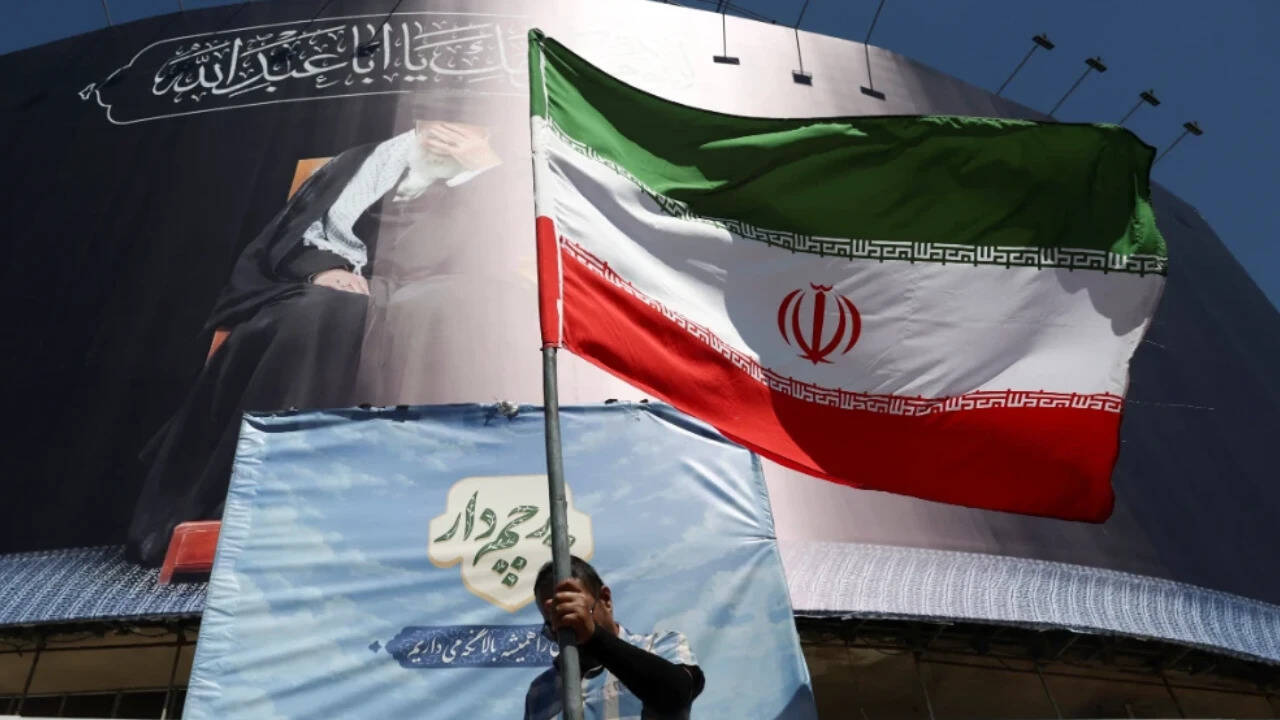
Every time Tehran issues a threat about striking first, cable news anchors hyperventilate on cue. They treat every translated press release from the Islamic Revolutionary Guard Corps (IRGC) as an imminent countdown to World War III.
They are falling for the oldest trick in the geopolitical playbook. For another look, consider: this related article.
When Iranian officials declare they are "not Cuba or Venezuela" and warn they will not wait for an American attack before responding, mainstream commentators frame this as terrifying escalation. They see a bold, unpredictable adversary rewriting the rules of engagement. That consensus is lazy, historically illiterate, and completely backward.
Loud declarations of preemptive intent do not signal military confidence. They broadcast acute strategic vulnerability. Further insight on the subject has been published by The Washington Post.
The Anatomy of Strategic Desperation
To understand why Tehran is yelling about striking first, you have to look at what happens when a regional power loses its buffer. For decades, Iran relied on a strategy known in defense circles as forward defense. Instead of fighting enemies on Iranian soil, Tehran funded, armed, and trained a network of regional proxies—Hezbollah in Lebanon, Hamas in Gaza, the Houthis in Yemen, and various militias in Iraq and Syria—to absorb the blow and project power outward.
That architecture has been systematically dismantled.
When your forward shield is shattered, your homeland is exposed. Your air defense networks are suddenly the primary line of defense rather than a last resort. And when military planners in Tehran look at the capabilities of modern stealth aircraft, precision-guided munitions, and electronic warfare suites operated by the United States and its allies, they confront an uncomfortable mathematical reality. They cannot win a conventional war of attrition, nor can they survive a coordinated, multi-wave air campaign designed to decapitate their command-and-control infrastructure.
I have sat in enough defense briefings and watched enough war games in Washington and Europe to recognize the pattern. When a state possesses genuine, survivable second-strike capability, it rarely feels the need to scream about preemptive action on state television. Quiet confidence looks like submarine patrols and hardened underground facilities. Panic looks like press conferences comparing your military posture to the Cuban Missile Crisis.
Why the Cuba and Venezuela Comparisons Fail
By invoking Cuba and Venezuela, Iranian officials are trying to frame themselves as a sovereign powerhouse that cannot be bullied or regime-changed on a whim. Yet the historical parallels actually undermine their own argument.
In 1962, the Soviet Union placed nuclear-capable missiles in Cuba specifically because Moscow lacked intercontinental ballistic missiles capable of reliably reaching the American mainland from Soviet territory. It was a desperate gamble to offset massive strategic inferiority. Similarly, Venezuela’s socialist government survived decades of American pressure not because of its military might, but because Washington decided the economic and humanitarian costs of direct military intervention outweighed the strategic benefits of removing Caracas from power.
Neither example demonstrates the triumph of preemptive military aggression. Both illustrate the limits of conventional power when dealing with asymmetric political realities. By invoking them, Tehran accidentally admits its primary defense mechanism is not its missile arsenal, but the political reluctance of its adversaries to absorb the economic and diplomatic fallout of a wider war.
The Deterrence Trap of "Use It or Lose It"
Military theorists have studied this exact dilemma since the early days of the Cold War. Thomas Schelling, the Nobel Prize-winning economist and nuclear strategist, spent decades analyzing the mechanics of deterrence and brinkmanship. In his foundational work Arms and Influence, Schelling explained that threats only work when the party making them has a credible way to fulfill them without committing national suicide.
When a nation adopts a posture of preemption without possessing the capability to achieve a knockout blow, it traps itself in a deadly psychological corner. Defense analysts call this the use-it-or-lose-it dilemma.
Imagine a scenario where intelligence agencies detect unusual fuel movements at ballistic missile bases in western Iran. Under a traditional deterrent posture, Washington and its allies might interpret those movements as defensive posturing—dispersing assets to protect them from a potential strike. That ambiguity buys diplomats time to de-escalate.
Now, factor in Tehran’s explicit public promise to strike first.
Suddenly, those exact same satellite images cannot be dismissed as defensive dispersion. Because Iran publicly declared it will not wait to be attacked, American commanders must assume the missiles are being fueled for an imminent, unprovoked launch against regional bases or naval assets. By promising preemption, Iran removes the very ambiguity that protects its forces during a crisis. It forces the adversary's finger onto the hair-trigger.
The Myth of the Decisive First Strike
Let us look at the cold, hard operational reality of what an Iranian preemptive strike would actually look like. Proponents of the "Iran is unstoppable" narrative point to Tehran’s massive inventory of ballistic missiles, cruise missiles, and one-way attack drones. On paper, the numbers look intimidating. Thousands of projectiles stored in underground "missile cities" carved into the Zagros Mountains.
Numbers on a spreadsheet do not win wars. Operational integration does.
To execute a successful preemptive strike that actually degrades American military power in the Middle East, Iran would need to achieve total tactical surprise across multiple theaters simultaneously. It would have to coordinate hundreds of launches across thousands of miles without alerting overhead infrared satellites, signals intelligence aircraft, or human intelligence networks.
Even if Tehran managed to launch a massive salvo, modern integrated air and missile defense systems—combining Aegis destroyers, Patriot batteries, THAAD interceptors, and airborne sensors—are specifically engineered to defeat saturation attacks. Some missiles would get through. Bases would take damage. Casualties would occur.
And then what?
A preemptive strike only works if it blinds, paralyzes, or destroys the enemy's ability to hit back. Japan tried it at Pearl Harbor and woke up a sleeping industrial giant. Israel pulled it off in June 1967 because it wiped out the Egyptian, Syrian, and Jordanian air forces on the tarmac within hours, achieving total air supremacy before its enemies could mount a counter-offensive.
Iran cannot achieve air supremacy over the Persian Gulf for five minutes, let alone five days. A preemptive Iranian strike would not cripple the United States military. It would simply hand the White House the exact casus belli required to unleash overwhelming air and naval power with full domestic and international legitimacy. Tehran would trade a handful of damaged runways and radar installations for the systematic destruction of its oil refineries, power grids, naval fleet, and nuclear infrastructure.
What Everyone Gets Wrong About Iranian Strategy
If preemptive war is operational suicide for the Islamic Republic, why do its generals keep threatening it? Because Western analysts keep confusing domestic political theater with military doctrine.
When people search online to understand whether Iran will actually attack the United States first, they are asking the wrong question. They are trying to predict military behavior by reading political speeches. The real question is not whether Tehran plans to launch a surprise attack, but who the intended audience is for these threats.
There are three distinct audiences Tehran is trying to manipulate every time it threatens a preemptive strike:
- The Domestic Hardline Base: The regime’s survival depends on projecting absolute strength to its own security apparatus. If the rank-and-file members of the IRGC and the Basij militia begin to believe their leaders are weak, hesitant, or intimidated by Western power, internal cohesion fractures. Tough talk keeps the enforcers loyal.
- Regional Arab Neighbors: Gulf states like Saudi Arabia, the United Arab Emirates, and Qatar host critical American military infrastructure, yet their economies rely entirely on uninterrupted shipping through the Strait of Hormuz and vulnerable desalination plants along the coast. When Iran threatens to ignite the region preemptively, it is not trying to scare the Pentagon. It is trying to scare Riyadh and Abu Dhabi into lobbying Washington for restraint.
- Western Financial Markets and Voters: Tehran understands democratic politics better than most give it credit for. Oil price spikes kill incumbent administrations. By keeping the Middle East on a permanent knife-edge of perceived imminent war, Iran imposes an invisible geopolitical risk premium on global energy markets without firing a single shot.
Dismantling the Common Misconceptions
Let us address the prevailing myths surrounding this standoff directly.
Is Iran actually capable of closing the Strait of Hormuz?
Temporarily, yes. Permanently, no. Iran can lay naval mines, deploy fast-attack craft, and fire anti-ship missiles from coastal batteries to halt commercial tanker traffic for days or even weeks. Insurance rates would skyrocket, and global markets would panic. However, the United States Navy has spent four decades preparing for this exact contingency. Clearing mines and hunting coastal missile batteries is messy, dangerous work, but the outcome is never in doubt. Closing the Strait is an economic suicide pact for Iran, which relies on those exact same waters to export its own oil to buyers in Asia.
Does Tehran's nuclear threshold status change the math?
Many commentators assume that sitting just weeks away from weapons-grade uranium enrichment gives Iran a nuclear umbrella under which it can conduct conventional aggression. This completely misunderstands nuclear deterrence. Having the components for a bomb is not the same as having a deliverable, tested, survivable nuclear warhead mounted on a reliable ballistic missile. Until a weapon is fielded and integrated into military doctrine, threshold status actually increases vulnerability. It gives adversaries maximum incentive to strike before the threshold is crossed, while offering zero retaliatory nuclear protection if they do.
Are we seeing a return to Cold War brinkmanship?
No. During the Cold War, Washington and Moscow maintained direct hotlines, clear red lines, shared escalation ladders, and decades of arms control treaties that institutionalized crisis management. Today, communication channels between Washington and Tehran are indirect, mediated through third parties like Oman or Switzerland, and distorted by domestic political pressures on both sides. Calling this a new Cold War insults the disciplined strategic stability that kept the superpowers from annihilating each other for forty-five years.
The Downside of Calling Tehran's Bluff
Recognizing that Iran’s preemptive threats are rooted in weakness does not mean Washington should treat the situation casually. In fact, there is a massive danger inherent in this exact contrarian analysis.
Weak, cornered regimes make catastrophic miscalculations.
History is littered with examples of leaders who knew they would lose a long war, yet initiated hostilities anyway because they believed inaction guaranteed their domestic collapse. In 1914, German military planners knew Russia’s industrialization would make it unbeatable by 1917, so they pushed for a preventive war while they still thought they had a narrow window of opportunity. In 1941, Japanese leaders knew they could not match American industrial output, yet they attacked Pearl Harbor because the American oil embargo threatened to strangle their empire within months.
The real danger with Iran is not a calculated, well-executed preemptive campaign. The real danger is accidental escalation driven by paranoia.
When an intelligence apparatus is convinced an attack is coming, it starts seeing ghosts in the radar returns. A routine naval exercise looks like an amphibious landing force. A commercial airliner transponder glitch looks like an incoming stealth bomber. A cyberattack on a local power substation looks like the opening phase of a decapitation strike.
In an environment poisoned by preemptive rhetoric, junior officers are given delegated launch authority to prevent command networks from being severed before they can fire. Once launch authority is pushed down the chain of command to regional battery commanders, the supreme leadership in Tehran loses control over the escalation ladder. A nervous colonel in a bunker misreads a radar screen, pushes a button, and suddenly both nations are locked into a war neither side actually wanted to fight.
How Strategists Should Actually Read Tehran
If you want to know what Iran is truly planning, stop reading translated speeches from IRGC commanders and start watching verifiable physical indicators. Words are free; logistics leave footprints.
- Watch the Tanker Fleet: Iran’s economy survives on its shadow fleet of oil tankers moving crude to Asian refineries. If Tehran genuinely expects an imminent, large-scale war with the United States, it will empty its major export terminals like Kharg Island and disperse its tankers into international waters to avoid losing its primary source of hard currency. When the tankers stay docked and loading schedules remain normal, the war talk is pure theater.
- Track Leadership Movements: Real preparation for a preemptive strike involves immediate dispersal of senior political and military leadership into hardened, deep-underground continuity-of-government bunkers, accompanied by sudden blackouts in domestic cellular and internet networks to prevent geolocation tracking. When senior officials are still attending public Friday prayers and holding televised press conferences in Tehran, they do not expect bombs to fall tomorrow.
- Monitor Proxy Ammunition Transfers: A genuine regional offensive requires massive logistical staging weeks in advance. Heavy airlift flights to Syria, Lebanon, and Iraq surge, and commercial maritime traffic between Iranian ports and Yemen spikes. Without the logistical tail, the operational teeth cannot bite.
The next time a headline screams that Iran has vowed to strike first, ignore the noise and check the shipping trackers. Real military power speaks softly because its capabilities are undeniable. Only those terrified of the coming storm feel the need to shout into the wind.