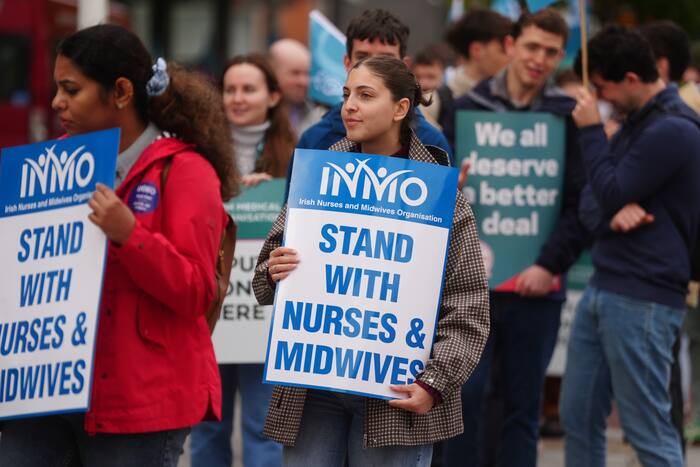
A picket line outside a Dublin hospital or a closed primary school in Galway makes for easy television. It gives pundits a neat villain and a neat victim. Usually, the villain is whoever is holding a placard, and the victim is whoever lost a day of childcare or waited months for an outpatient scan.
That framing is lazy. Worse, it is analytically sloppy.
When Irish public sector workers strike—triggering school closures and canceled medical appointments—the standard coverage treats the walkout itself as the disease. It isn't. The walkout is a symptom of a brittle, poorly sequenced state operating model that has coasted on paper surpluses and ad-hoc pay deals for years. Blaming unions for the disruption while ignoring why a single day of industrial action can paralyze essential services is like blaming the fire alarm for the smoke.
I have spent years watching public institutions and large enterprises try to patch structural bottlenecks with emergency overtime, temporary contractors, and short-term truces. Every time, leadership treats organizational friction as a public-relations problem instead of an operating-system flaw. You do not fix a fragile queue with a louder press release.
The Lazy Consensus Around Public Sector Walkouts
Conventional commentary on Irish public sector strikes falls into two predictable camps. One camp frames every dispute as greed versus taxpayers. The other frames every dispute as noble defenders of public services fighting austerity ghosts. Both camps miss the mechanics of how Ireland's public sector actually runs.
Public administration is not a commercial factory where output stops cleanly when the line stops. In healthcare, education, and local government, work is heavily coupled. A canceled outpatient appointment rarely sits in isolation; it ripples into diagnostic backlogs, follow-up delays, and emergency room pressure. A closed school forces parents—disproportionately women and lower-income workers—into immediate schedule trade-offs.
Yet treating the strike as an unnatural shock assumes the baseline system was running smoothly beforehand. Anyone who has navigated Irish waiting lists, school staffing shortages, or administrative bottlenecks knows the baseline was already strained. A strike exposes capacity limits that quiet days disguise.
Economists and labor scholars have long studied how public service monopolies behave under wage and productivity pressure. Classics of public administration and institutional economics—from William Baumol's work on cost disease in labor-intensive services to Mancur Olson's analysis of concentrated interests versus diffuse publics—explain why public sector negotiations get stuck. Productivity in teaching or clinical care does not double every decade the way microchip density does, yet wages in the broader economy rise. Pretending public services can match private-sector pay growth while magically multiplying output per head is pure fantasy.
Are Irish Public Sector Workers Actually Overpaid or Just Trapped?
People ask two questions every time a strike looms: Do Irish public sector workers have it too good? and Why do essential services shut down so easily? Both questions start from a shaky premise.
The first premise assumes a uniform public worker. There is no single "Irish public sector worker." A senior hospital consultant, a newly qualified nurse, a primary school teacher facing housing costs in Dublin, and a mid-level civil servant in a regional office experience completely different economic realities. Comparing headline averages without adjusting for grade compression, regional housing costs, and pension value obscures more than it reveals.
In Ireland, housing costs act like a silent tax on public service delivery. When entry-level wages in education or healthcare collide with steep rents and house prices in urban centers, recruitment and retention buckle—even when national pay agreements look tidy on paper. A pay deal signed in Merrion Street feels very different to someone commuting ninety minutes each way because they cannot afford to live near their workplace.
The second premise—that services shut down easily because unions hold all the cards—confuses leverage with fragility. A system is fragile when there is zero slack, poor cross-training, rigid job boundaries, and no contingency routing. If one link snaps and the entire chain stops, the design is weak.
Consider a thought experiment. Imagine a scenario where a hospital network runs at 98 percent capacity every single day with no buffer slots, no digital triage for low-risk follow-ups, and rigid role definitions that block qualified staff from shifting tasks during peak strain. When a one-day strike hits, cancellations spike immediately. Was the strike the sole cause of the cancellations, or did a high-utilization, low-slack system simply run out of runway?
Why Pay Deals Keep Failing to Buy Real Reliability
Every few years, Ireland gets a new national public service pay agreement. Headlines celebrate "industrial peace." Ministers shake hands with union leaders. Everyone breathes a sigh of relief.
Six months later, the same friction returns under a different label: recruitment delays, roster disputes, morale dips, or localized walkouts.
Why does buying peace keep failing to buy reliability? Because wage agreements settle price, not operating design. Paying people more to work inside a broken workflow still leaves you with a broken workflow. Worse, across-the-board pay deals often reward tenure and process compliance more than frontline throughput or problem-solving authority.
I have watched organizations blow millions on "transformation" initiatives that left middle management untouched, data silos intact, and frontline staff drowning in box-ticking. When workers feel that management measures compliance rather than outcomes—and that every operational change requires months of committee wrangling—pay increases feel like hazard pay rather than partnership.
At the same time, critics of public sector reform have a fair point when they warn against reckless privatization or hollowing out institutional memory. Ireland has seen plenty of expensive consulting decks and fragmented IT rollouts that delivered slideware instead of working systems. Sacking experienced staff or outsourcing core care blindly is not a cure; it is a different kind of chaos.
What Strikes Reveal About Schools and Healthcare
Looking at school closures and canceled medical appointments side by side highlights two distinct failure modes.
Schools: A Childcare and Staffing Shockwave
When schools close due to industrial action, the immediate pain lands on households and the economy. Parents scramble for cover; shift workers lose hours; small businesses feel the knock-on drag.
Beneath that disruption sits a long-running staffing and workload tension. Schools carry an expanding list of social, behavioral, and administrative expectations while competing for graduates in a tight labor market. Treating schools solely as daytime care facilities misses their educational mission, while treating teachers as martyrs who should absorb endless extra duties without realistic boundaries guarantees burnout.
Healthcare: Queue Debt Coming Due
Canceled medical appointments hit harder emotionally because health cannot wait comfortably. A postponed checkup or procedure carries real anxiety and, for some patients, clinical risk.
Yet routine cancellations happen regularly even without strikes when beds are full, diagnostics are backed up, or staffing gaps open up. A strike concentrates days of friction into a single headline. If a health system has thin buffers and slow scheduling recovery, even a brief stoppage creates a backlog that takes weeks to clear.
Where My Contrarian Take Has Real Blind Spots
Any contrarian argument that sounds effortless is probably lying to you. Pushing back against union-bashing and calling for structural reform comes with real trade-offs and blind spots I will not paper over.
First, structural reform is slow, messy, and politically expensive. You cannot re-engineer hospital workflows, housing supply, and career structures in a single budget cycle. Telling a parent whose child's school is shut or a patient whose appointment was canceled to "look at the long-term operating model" offers zero immediate relief.
Second, downplaying union power can go too far in the other direction. Organized labor in essential services has real coercive leverage. Even when workers have legitimate grievances, using essential services as bargaining chips imposes real costs on people who have no seat at the negotiating table. Acknowledging structural flaws does not absolve any party from acting responsibly or negotiating in good faith.
Third, efficiency metrics in public services are notoriously easy to game. Obsessively chasing throughput targets in healthcare or education can degrade care quality, push complex cases aside, or burn out the very people keeping the doors open.
How to Actually Break the Cycle
If Ireland wants fewer disruptive strikes—and better public services whether there is a strike or not—leaders have to stop treating every dispute as a pure tug-of-war over pay.
- Audit fragility, not just payroll. Map every point where a one-day disruption causes multi-week backlogs. Identify where single points of failure, rigid rosters, and missing digital workflows turn minor shocks into major cancellations.
- Tie pay modernization to real structural fixes. Pair fair compensation—especially where housing costs crush entry-level recruits—with concrete agreements on flexible deployment, faster hiring, and cutting pointless administrative busywork.
- Build genuine slack into high-pressure services. Running hospitals and schools with zero buffer is false economy. Reserve capacity for urgent cases, clear recovery pathways after disruptions, and realistic staffing ratios so one absence does not trigger a domino effect.
- Separate national pay talks from local operational fixes. Stop forcing every workplace bottleneck through slow, centralized arguments. Give local leaders and frontline teams clearer authority to solve practical scheduling and workflow problems on the ground.
Strikes in Ireland do not happen because workers suddenly woke up wanting to inconvenience families and patients. They happen when pressure inside a tight, under-buffered system finally exceeds what goodwill alone can hold together. Fix the system's shock absorbers, and the picket lines lose half their power before the first megaphone is switched on.