Salt crusts the windshield of the patrol car before dawn. The air smells of diesel, wet chalk, and the cold iron of the North Sea.
Out there, past the white cliffs of the Pas-de-Calais, the water is dark. It is not water that invites you; it is water that tests you. And lately, the test has changed shape.
For years, the crossing of the English Channel was a story of fragile rubber dinghies, overloaded with human lives, bouncing blindly across the shipping lanes under the cover of a moonless night. A desperate gamble against the odds. But the French coastline has shifted. The logistics have evolved. The gray monotony of the horizon is now punctuated by a different kind of presence: massive, rigid vessels. The megaboats.
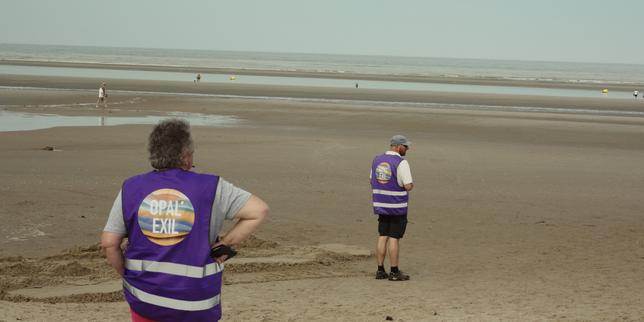
To understand what is happening here, you have to leave the dry statistics of the prefecture reports behind. You have to stand on the pebble beaches of northern France when the wind is howling at forty knots and the spray freezes on your eyelashes.
Let us be entirely transparent: the narrative below uses a composite character to anchor these realities, but the tension, the economics, and the machinery are drawn directly from the verified operational reports of maritime authorities along the English Channel.
Meet Thomas. He is a coastal observer who has watched this stretch of water for over a decade. He remembers when a failed crossing meant a punctured tube and a cold, shivering rescue close to shore. Today, the scale is industrial.
"They aren't just crossing anymore," Thomas tells me, his voice rough against the roar of the surf. "They are managing a fleet."
The Escalation of Steel
The term megaboat sounds like something out of a luxury maritime magazine, but here, it represents a grim adaptation. As security tightens along the shoreline, as drones sweep the dunes and riot-gear-clad patrols monitor every slipway, the smuggling networks have adapted.
Rubber rafts are vulnerable. They tear on the shingle. They deflate under the weight of eighty people. They are easily intercepted by rigid-hull inflatable boats operated by the French authorities.
So, the networks upgraded.
They turned to commercial-grade semi-rigid watercraft and large cabin cruisers, capable of carrying well over a hundred people at terrifying speeds. These are engines of high horsepower, sourced through complex, transnational procurement chains that bypass local scrutiny. They are hidden in agricultural sheds miles inland, then hauled to the coast by night on heavy-duty flatbed trailers.
Consider what happens next: a lightning-fast deployment. Within minutes, hundreds of desperate souls are loaded not onto a fragile toy, but onto a machine built to punch through the choppy, unforgiving swells of one of the busiest shipping lanes in the world.
The friction this creates on land is palpable.
The Pressure Cooker on the Shore
Walk through the small villages nestled behind the dunes of the Pas-de-Calais, and you will feel the weight of an invisible siege. This is not just a migration crisis; it is a profound social fracture.
Local residents wake up to find abandoned boat hulls dumped in their orchards. They hear the roar of heavy trucks on narrow country lanes at three in the morning. They watch their local economy—dependent on fishing, tourism, and quiet coastal life—become entangled in a perpetual state of emergency.
Tensions flare at town hall meetings. Fishermen complain that their nets are fouled by discarded equipment. Mayor after mayor stands up to plead for more resources, pointing out that their communities are bearing the brunt of a geopolitical failure that stretches from London to Paris and far beyond.
"We are caught in the middle," a local grocer says, wiping down a wooden counter as rain lashes the window. "On one side, you have human beings running from absolute hell. On the other side, you have a system that is breaking our towns apart. Nobody is winning. Everyone is exhausted."
The human element is often lost in the diplomatic crossfire. We talk about numbers, quotas, and border security agreements. We debate millions of euros in funding. But the reality is measured in heartbeats on a freezing beach.
The Anatomy of a Crossing
Why do they keep coming, despite the megaboats, despite the increased police presence, despite the deadly currents?
To answer that, you have to strip away the politics and look at the alternative. If you are fleeing a landscape of war, systemic corruption, or utter economic devastation, the risk of the Channel is simply the final hurdle in a marathon of survival.
The smugglers know this desperation intimately. They monetize it. They sell seats on these megaboats as tickets to a promised land, masking the lethal reality of the voyage with professionalized marketing and ruthless operational security. They operate like illicit logistics corporations, moving product—human product—with chilling efficiency.
When a megaboat launches, it triggers a chain reaction across the maritime command centers. French and British coastguards scramble. Helicopters beat the air overhead, casting blinding searchlights across the black water.
It is a high-stakes cat-and-mouse game played out against the backdrop of massive container ships moving silently through the shipping lanes. A megaboat crossing is not just an illegal transit; it is a maritime collision waiting to happen. The risk of a catastrophic accident involving a massive commercial freighter and an overloaded vessel packed with a hundred souls grows with every single launch.
The Cost of Looking Away
We want simple answers. We want a policy that closes a gate, or a law that erases a problem. But the rise of the megaboats proves that human movement, driven by despair, cannot simply be engineered out of existence. Every barrier erected merely forces an escalation in the machinery used to bypass it.
The iron horizon remains. The wind continues to whip across the salt marshes of northern France. And every night, beneath the cold indifference of the stars, another engine roars to life in the dark, carrying the weight of our shared, unresolved history across the water.