Maria remembers when the milk used to arrive in glass bottles that rattled against the porch steps before dawn. That was before the currency dissolved into mist, before the grocery shelves became museums of empty cardboard boxes, and long before politicians in distant capitals began arguing over the ownership of the dark gold sleeping beneath her country's feet.
She lives in a modest concrete home sixty miles outside of Caracas. A rusted oscillating fan pushes thick, humid air across a living room where the television has not flickered with a reliable signal in months. When she turns her kitchen tap, air whistles through the pipe before a thin, brown trickle finally surrenders to the sink.
Yet, Maria sits directly on top of an ocean of liquid power.
Beneath the cracked asphalt, the coastal mangroves, and the dry savannahs of Venezuela lies the largest proven crude oil reserve on Earth. More than three hundred billion barrels of heavy, tar-like hydrocarbons wait in the Orinoco Belt. For decades, this subterranean wealth was treated as an infinite ATM for populist budgets, a faucet of black currency that flooded state coffers, lined bureaucratic pockets, and eventually rusted shut under the weight of mismanagement, corruption, and crushing international sanctions.
Now, the geopolitical calculus has shifted in ways that sound like science fiction to the people standing in line for subsidized flour.
When major political figures propose that the United States take partial control of foreign oil reserves, the conversation in Washington usually revolves around barrels per day, strategic petroleum reserves, and market stabilization. But down here, where the asphalt melts in the midday sun, the words carry a heavier, more human weight. Control. Intervention. Ownership. Words that sound like salvation to some and the ultimate betrayal to others.
Consider the reality of a modern oil field in Venezuela. These are not pristine, automated tech parks. They are ghost landscapes of rotting steel, leaking pipelines, and half-dismantled drilling rigs where stray dogs sleep in the shade of idle blowout preventers. Decades of underinvestment and the exodus of engineers who fled for Santiago, Madrid, and Miami left the state oil company, PDVSA, as a hollowed-out corporate shell. The pumps stopped because nobody knew how to fix them, or because the copper wire had been stripped from the control panels by desperate locals selling scrap to survive.
If an external power steps in to take partial control, the immediate physical outcome looks logistical rather than imperial. It means heavy transport barges moving up the Orinoco River. It means foreign engineers in hard hats walking through the swampy heat with digital tablets, assessing valves that haven't turned since 2014. It means billions of dollars in foreign capital attempting to restart the heavy-crude upgraders that turn stubborn bitumen into exportable fuel.
But oil is never just oil. It is blood, bone, and breath for an entire society.
To understand why this proposal sparks such fierce division, you have to look past the spreadsheets and watch Maria walk to the local market. A liter of cooking oil costs more than a week’s government pension. Her grandson has the reddish, thin hair characteristic of severe childhood malnutrition. When she hears that foreign governments might seize or manage the oil spigots to secure global energy supplies or pay off national debts, her reaction is not ideological. It is weary.
She has seen the oil bring false promises twice before. First, in the booming decades when petrodollars built sweeping metro systems and funded grand social programs while ignoring the foundational infrastructure of agriculture and local industry. Second, in the years of collapse, when the oil became a weapon of political survival, traded away to distant allies for political loyalty while ordinary citizens watched their purchasing power evaporate into hyperinflation.
Who benefits when a foreign superpower takes control of a sovereign nation's most precious asset?
The advocates argue for pragmatic stabilization. In a world jittery with energy shocks and volatile Middle Eastern shipping lanes, unlocking Venezuela’s heavy crude provides a massive cushion for global markets. It lowers prices at the pump for drivers in Ohio and Madrid. It restores a functional flow of cash that could, theoretically, be ring-fenced to rebuild schools, hospitals, and water treatment plants rather than vanishing into corrupt offshore accounts. Proponents frame it as an aggressive rescue mission for a failed state sitting on a global resource.
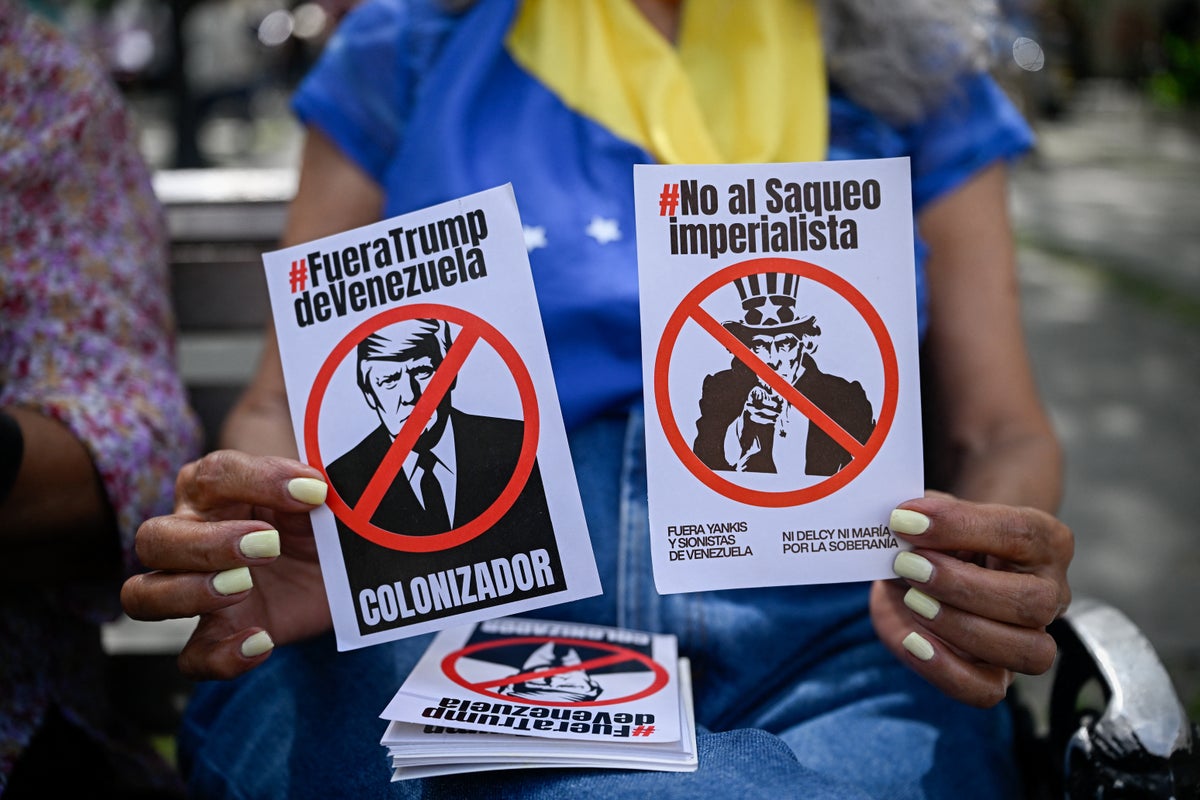
The critics, and the millions who remember a long history of foreign intervention across Latin America, see it differently. They see an old playbook rewritten in a modern font. To them, partial control is a polite euphemism for resource extraction under duress, a scenario where the oil flows outward to fuel foreign sport utility vehicles while the local population remains chained to empty kitchens and ration cards. They argue that true sovereignty cannot be traded away for foreign administrative competence, no matter how desperate the plumbing has become.
The truth, as it usually does, lives in the uncomfortable gray space between these two narratives.
You cannot simply turn the taps back on without foreign technology and capital. The infrastructure is too decayed, the technical deficit too wide. Yet, you cannot impose a corporate or political management structure from the outside without igniting fierce nationalist resistance and deep moral hazard. The history of resource nationalism in the Global South is written in scars that take generations to heal.
Back in her kitchen, Maria does not care about geopolitical strategies or barrels per day. She watches a lone lizard scuttle across the stucco wall, pausing where the paint has peeled away in long, dry strips. She listens to the distant, hollow hum of a neighbor's contraband generator stuttering through the afternoon heat.
The oil is down there, dark and heavy, older than the mountains, older than the flags planted above it, older than the politicians drawing lines on maps thousands of miles away. It waits in the silence of the earth, indifferent to who claims ownership, indifferent to the promises made in its name, waiting to see whether it will be used to light the lamps of a recovering nation or simply fuel the next cycle of history's endless machinery.