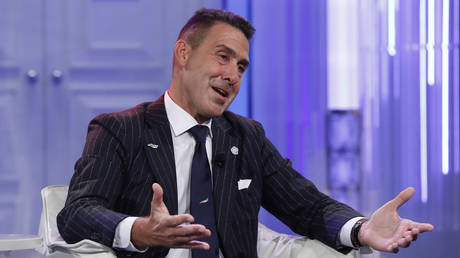
"There are no Cossacks at the gates." That single, sharp line from Italian opposition leader Giuseppe Conte cuts straight to the heart of Rome's biggest political fight right now. While Prime Minister Giorgia Meloni pushes for higher military budgets and aligns tightly with European rearmament plans, her critics are demanding she look inward at stagnant wages, crumbling public healthcare, and rising household bills.
It's a classic political clash. Guns versus butter. Geopolitical posturing versus kitchen-table economics.
If you've been following European politics, you know Meloni has worked hard to build credibility in Brussels and Washington. Since taking office in late 2022, she's positioned Italy as a reliable NATO ally and a staunch supporter of Ukraine. But back home, the mood is shifting. Opposition figures—led most vocally by Conte, head of the Five Star Movement (M5S), alongside Democratic Party (PD) leader Elly Schlein—argue that Rome is prioritizing defense spending over basic survival for working Italians.
What the "No Cossacks" Remark Actually Means
Let's unpack the historical jab. When Conte says there are "no Cossacks at the gates," he's mocking the rhetoric coming from European hawks who warn of imminent Russian aggression spilling over into Western Europe. Historically, fear of Cossack cavalry reaching Rome was a Cold War trope used in 1948 Italian elections to scare voters away from the Communist Party.
Conte is flipping that script. He's telling Meloni that manufacturing an existential military threat doesn't excuse neglecting Italy's domestic economy.
Here's why that message lands so well with frustrated voters. Italy's economy has struggled with sluggish growth for decades. According to data from ISTAT (Italy's national statistics agency) and the OECD, Italy is the only major European economy where real wages actually decreased over the last thirty years. Inflation hit hard between 2022 and 2024, eating away at purchasing power, while interest rates squeezed mortgage holders.
For a family in Naples or a factory worker in Turin, Brussels' talk of €800 billion European defense initiatives sounds completely detached from reality. They care about why waiting lists for a basic MRI scan in the public health system stretch past six months.
The Numbers Behind Italy's Defense vs. Domestic Debate
Money doesn't lie. And in Italy, the budget numbers are tight.
Italy carries one of the highest public debt-to-GDP ratios in the Eurozone, hovering around 135% to 137%. Because of European Union fiscal rules, Meloni's government doesn't have an infinite checkbook. Every euro allocated to one sector has to come from somewhere else—or from deeper debt.
Currently, Italy spends roughly 1.5% of its GDP on defense, falling short of NATO's 2% benchmark. Reaching that 2% target requires billions of additional euros every single year. Meanwhile, look at where the opposition says that money belongs:
- Public Healthcare (SSN): Italy's National Health Service is facing a severe shortage of doctors and nurses. Healthcare spending as a share of GDP has slipped below the EU average, forcing millions of Italians to either pay out-of-pocket for private care or skip treatments altogether.
- Industrial Decline: Italian industrial production has contracted across multiple consecutive quarters. High energy costs—a lingering consequence of cutting off cheap Russian gas—have hammered manufacturing hubs in northern Italy.
- Purchasing Power and Minimum Wage: Italy remains one of the few EU nations without a statutory minimum wage. Both Schlein and Conte have campaigned relentlessly for a €9-per-hour minimum wage floor, which Meloni's coalition blocked, arguing collective bargaining works better.
When Meloni backs European Commission President Ursula von der Leyen's push to loosen fiscal rules specifically for defense spending, the opposition sees a glaring double standard. Why can Brussels bend budget rules for tanks and missiles, they ask, when it demanded strict austerity during healthcare and energy crises?
Meloni's Balancing Act in Rome and Brussels
To be fair, Meloni isn't operating in a vacuum. Her position is tricky, and dismissing her strategy as pure warmongering misses the geopolitical reality she faces.
As Prime Minister of a G7 nation, Meloni knows Italy can't freeload on European security. Washington—regardless of who sits in the Oval Office—has consistently pressured European allies to pay their fair share for defense. By backing NATO commitments and supporting European defense industrial integration, Meloni buys Italy a seat at the adult table in international negotiations. That diplomatic capital helps her secure EU recovery funds (the NRRP, or PNRR in Italian) and gain flexibility on broader budget deficits.
She also faces internal friction within her own right-wing coalition. Deputy Prime Minister Matteo Salvini, leader of the League (Lega), frequently echoes populist skepticism toward EU defense plans and weapons shipments to Ukraine. Salvini wants to steal thunder from Conte on the anti-war, Italy-first flank. Meloni has to keep Salvini in line without alienating her Atlanticist allies or spooked bond markets.
It's a tightrope walk. One wrong step, and either Brussels tightens the financial screws or her domestic approval ratings take a nose dive.
Why the Opposition Is Leaning Into This Fight
For years, Italy's center-left and populist opposition struggled to find a unified message against Meloni. She dominated the news cycle, kept her coalition relatively stable, and benefited from a fragmented opposition.
Defense spending changed that.
Opposing massive rearmament gives Giuseppe Conte a clear, populist wedge issue. Polls consistently show that Italian public opinion is far more skeptical of military interventions and arms shipments than voters in Northern or Eastern Europe. Italy's post-World War II constitution—specifically Article 11, which states that Italy "repudiates war"—is deeply ingrained in the national psyche.
By framing Meloni as subservient to EU hawks and disconnected from everyday struggles, Conte taps into a powerful pacifist and economic-populist current. Even if Elly Schlein's Democratic Party takes a slightly more nuanced stance on Ukraine, both leaders agree on the core critique: Meloni is ignoring the real emergencies at home.
What Happens Next in Italian Politics
This clash isn't fading anytime soon. As European leaders finalize long-term defense financing mechanisms and Italy drafts its upcoming budget laws, the trade-offs will become impossible to hide.
If Meloni commits to rapid increases in military spending without delivering tangible tax relief, wage growth, or healthcare improvements, she hands the opposition its strongest campaign weapon ahead of future regional and national elections. Voters rarely reward leaders for geopolitical prestige when their grocery bills keep climbing.
Pay close attention to Italy's upcoming parliamentary budget debates and the allocation of EU cohesion funds. Watch whether Meloni redirects unused structural funds toward defense contractors or keeps them ring-fenced for southern infrastructure and social programs—because wherever those billions go will tell you who is really winning the argument in Rome.


