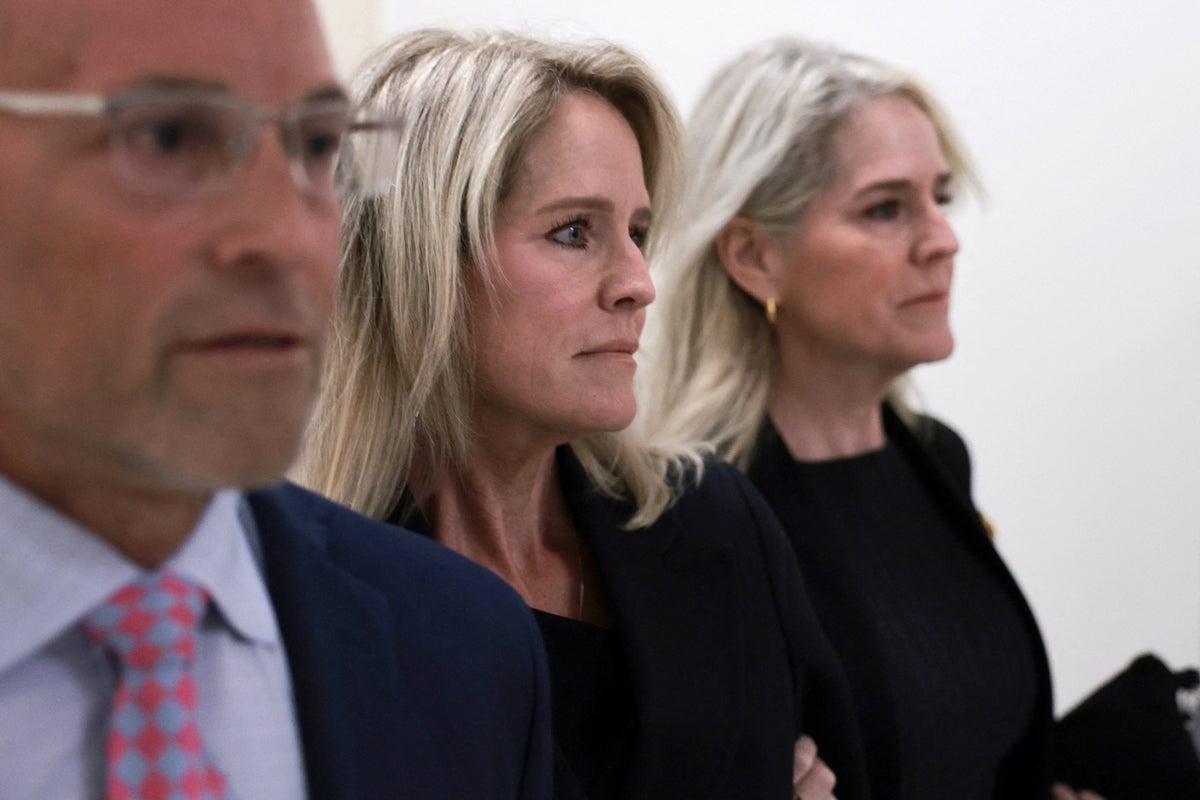
The inner workings of Jeffrey Epstein’s dark empire just faced another round of federal scrutiny, and the results are completely polarizing lawmakers. Lesley Groff, who spent nearly two decades running daily logistics as Epstein's executive assistant, sat down for a highly anticipated, closed-door transcribed interview with the House Oversight Committee.
Her defense was direct. She claims she knew nothing. She claims she saw nothing.
To her, the financier was just a master manipulator who expertly siloed his legitimate business dealings from his horrific reality as a sex trafficker.
But behind closed doors, her sweeping deflections did not sit well with everyone in the room. The testimony has exposed a massive rift in Congress, raising sharp questions about who actually qualifies as a victim, who was an active enabler, and whether high-level congressional probes are being handled with the transparency the public deserves.
The Defense of the Master Gatekeeper
Groff worked tightly within Epstein’s inner circle from 2001 until his final arrest in July 2019. Her name isn't just a footnote in this saga. It shows up more than 160,000 times across the millions of pages of internal documents released by the Justice Department.
Every single morning at 9 a.m., Epstein would ring her up with an aggressive list of tasks. Chief among them? Booking his daily massage appointments.
During her Capitol Hill interview, Groff adamantly denied knowing that the women she scheduled were underage or being systematically abused. She noted that her interactions with these women were minimal, conducted entirely over the phone, and lasted only a few seconds at a time. According to her, nobody ever sounded like they were a minor, and she never met the masseuses face-to-face.
When Epstein was convicted in Florida back in 2008 for soliciting prostitution from a minor, Groff admitted she thought about quitting. But she says Epstein weaponized her loyal nature, lying to her face by claiming he was the victim of a massive blackmail scheme and setup. She believed him. She stayed.
Her legal team has fiercely maintained her innocence for years, pointing to a 2020 civil lawsuit dropped by an Epstein survivor as total vindication. Groff views herself not as a quiet conspirator, but as another target of Epstein's legendary deceit.
Congressional Skepticism and the Transparency Battle
Lawmakers are deeply divided over whether to buy this narrative. The friction isn't just about her credibility; it is about the entire architecture of the House investigation.
Some members of the committee find the "zero knowledge" defense completely impossible to swallow. Representative Stephen Lynch openly pointed out inconsistencies in how Groff painted her deep administrative involvement versus her total lack of awareness.
Other lawmakers went much further. Representative James Walkinshaw publicly blasted the testimony, stating flatly that he found it entirely lacking in credibility. The idea that someone could manage the hyper-specific, daily logistics of an absolute predator for 18 years without sensing smoke borders on absurd to critics.
Beyond the testimony itself, a major procedural fight is brewing over how Chairman James Comer is running the House Oversight Committee's probe.
Critics are furious that these high-stakes interviews are happening entirely behind closed doors. Keeping the public and the press locked out of testimonies from key figures—like Groff or fellow assistant Sarah Kellen—prevents real-time accountability. When the stakes involve the systemic trafficking of minors and connections to the global elite, secret transcripts just don't cut it.
What This Means for Future Clout
The House Oversight Committee isn't backing down, and Groff's session is just one piece of a much larger chess board. Lawmakers are aggressively pursuing other central figures tied to the web, including plans to seek testimony from high-profile figures like attorney Alan Dershowitz.
At the same time, the Justice Department is still grinding through a mountain of evidence, with hundreds of thousands of internal Epstein documents still awaiting processing and public release.
If you are following the fallout of the Epstein investigation, the next steps are clear. Watch the committee's upcoming vote on whether to publicly release the unredacted transcripts of these closed-door interviews. True transparency won't come from parsed press statements on Capitol Hill breaks; it will come when the public can read the raw, unfiltered transcripts for themselves.