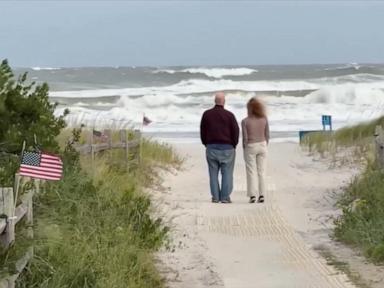
Millions of people from the mid-Atlantic up to the Canadian Maritimes find themselves under emergency advisories as a ferocious Nor'easter churns up the East Coast. Meteorologists warn of hurricane-force wind gusts, catastrophic coastal erosion, and snowfall totals measured in feet rather than inches. This is the routine headline broadcast across every cable news network whenever a classic winter cyclone takes shape. Yet behind the dramatic satellite loops and flashing warning graphics lies a quieter, more systemic failure. Coastal infrastructure remains woefully unadapted, emergency response protocols are chronically reactive, and the public conversation focuses entirely on the meteorological spectacle while ignoring the structural vulnerabilities that turn a severe weather event into a regional economic disaster.
A Nor'easter is not merely a heavy snowfall or a rainy inconvenience. It is a thermodynamic engine driven by the violent collision of cold continental air plunging southward from Canada and warm, moisture-laden air streaming up from the Gulf Stream. When these opposing air masses meet over the relatively warm waters of the Atlantic Ocean just off Cape Hatteras, the atmospheric pressure plummets. This process, known as bombogenesis, creates a tightly wound low-pressure vortex that generates ferocious onshore winds. These winds relentlessly push ocean water against the coastline for multiple tidal cycles, preventing normal drainage and turning ordinary high tides into devastating storm surges that rival those of tropical hurricanes.
Understanding the mechanics of these storms requires looking thousands of feet up into the troposphere. The jet stream, a fast-flowing river of air high above the Earth, dictates the path and intensity of every surface low-pressure system. In recent decades, warming Arctic temperatures have weakened the temperature gradient between the poles and the equator. This shift causes the jet stream to meander wildly, creating amplified loops that stall weather systems in place. When a Nor'easter forms under a stalled or slow-moving jet stream configuration, it lingers off the coast for days instead of hours. Multiple high-tide cycles compound upon one another, turning a single day of rough weather into a multi-day coastal siege.
Despite decades of accumulated data, coastal management along the Eastern Seaboard continues to rely on a defensive playbook built for a climate that no longer exists. Municipalities spend millions of dollars on temporary beach replenishment projects, dumping thousands of tons of sand onto eroding shores only for the next major storm to wash it back into the Atlantic within a single tidal cycle. This approach treats a chronic structural symptom while ignoring the underlying disease. Zoning laws still permit high-density residential and commercial development in low-lying flood zones, driven by local tax revenue incentives that prioritize short-term municipal budgets over long-term risk assessment.
The financial exposure is staggering. Trillions of dollars in real estate assets sit within feet of sea level from Boston to Norfolk. When a severe Nor'easter strikes, the damage extends far beyond shattered beach houses and flooded basements. Regional supply chains fracture. Major international airports, many of which sit on reclaimed marshland adjacent to harbors, experience groundstops that ripple across national transit networks. Commuter rail lines running parallel to the shore short out as saltwater infiltrates electrical switching infrastructure. The modern economy depends on uninterrupted logistics, yet a single winter storm regularly paralyzes the most densely populated corridor in the United States.
Emergency management agencies face an increasingly difficult communication challenge. As media outlets sensationalize every approaching weather system with dramatic terminology, public fatigue sets in. When every moderate snowfall or blustery rainstorm receives the apocalyptic marketing treatment, citizens begin to discount official warnings. When a truly historic Nor'easter arrives, people often ignore evacuation orders or fail to secure property because the warning vocabulary has been diluted by years of overhyped forecasts.
Mitigating the true cost of these storms requires a fundamental shift in public policy and engineering philosophy. Managed retreat, though politically toxic, must enter the mainstream conversation for the most vulnerable barrier islands and coastal flood plains. Hardened sea walls often accelerate erosion further down the coast by reflecting wave energy rather than absorbing it, whereas living shorelines utilizing salt marshes and dune restoration offer a more resilient, dynamic defense against storm surges. Furthermore, electrical grids must undergo aggressive undergrounding and hardening to prevent the multi-day power outages that routinely transform a weather event into a public health crisis for vulnerable populations.
The next powerful Nor'easter is already spinning up off the coast, tracking northward along the shipping lanes and commuter arteries that drive the nation. The wind will howl, the tides will breach the seawalls, and the cable news broadcasts will replay the same dramatic footage of crashing waves. Until the conversation moves past the surface spectacle and confronts the hard reality of coastal planning and infrastructure design, millions of people will remain on alert for disasters of our own making.