The lazy consensus in sports media loves a fairy tale. When a twenty-year-old specialist from the prairies captures double gold on an international stage, the headlines write themselves. They call it a dream, a watershed moment, proof that the Canadian system is finally working.
It is time to stop buying the marketing.
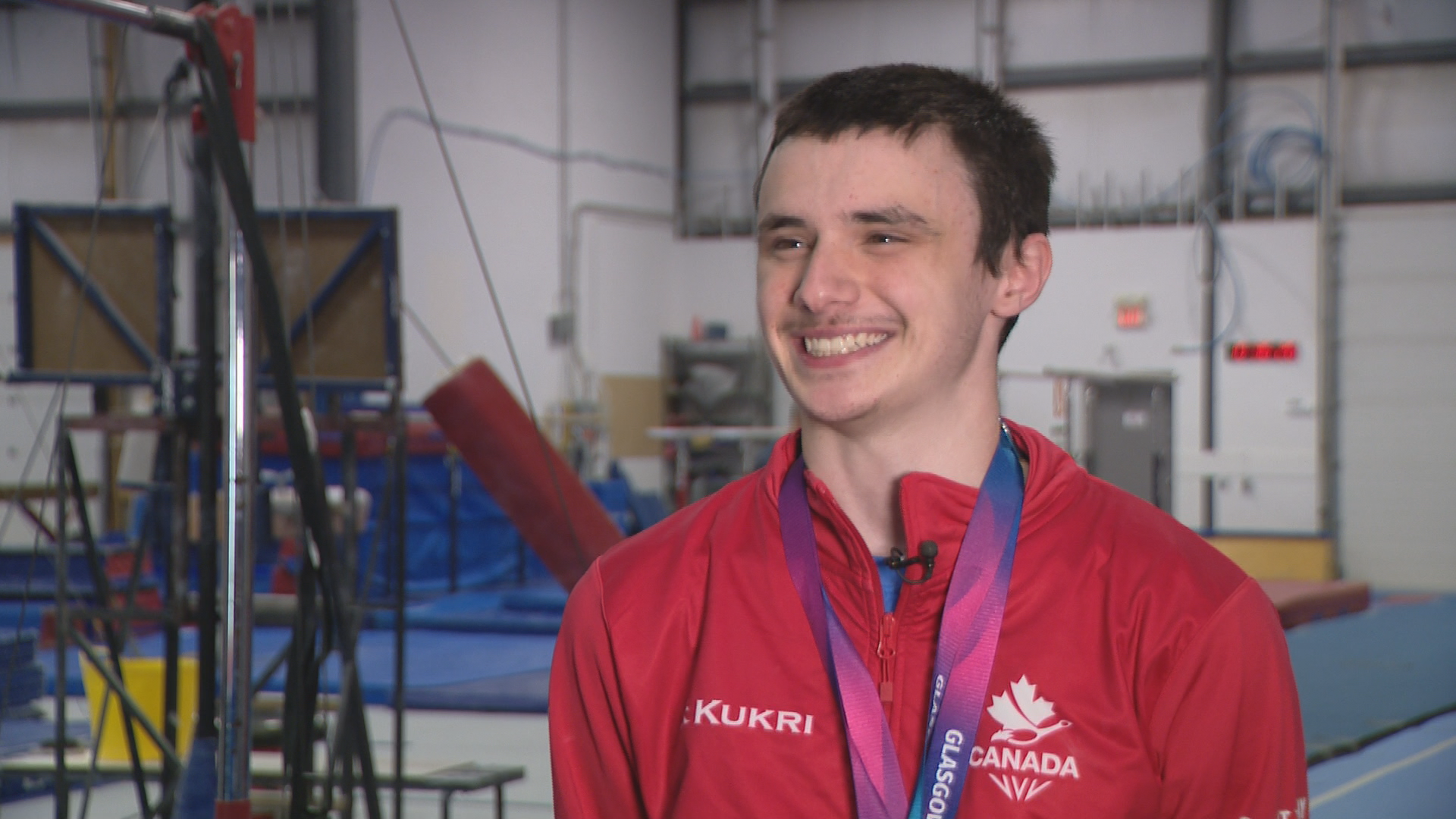
Jordan Carroll did something extraordinary in Glasgow. Putting up a 15.000 on the pommel horse to beat world-class competition takes elite physical engineering, iron discipline, and an absolute rejection of fear. But treating his double-gold performance at the Commonwealth Games as a structural turning point for Canadian gymnastics is a delusion. Medals hide rot. Flashy podium finishes obscure a domestic pipeline that remains chronically underfunded, decentralized, and entirely reliant on individual anomalies rather than institutional excellence.
The Myth of the Regional Breakthrough
The sports narrative industrial complex loves the local-hero angle. Saskatoon gets its spotlight, Taiso Gymnastics gets its flowers, and fans are led to believe that great training environments just sprout organically out of the Canadian frost.
Let us look at the structural reality. Gymnastics in Canada survives in spite of its administration, not because of it. Elite apparatus specialists like Carroll do not succeed because Canada has built a world-class sport science infrastructure. They succeed because they manage to outlast a system characterized by facility shortages, coaching attrition, and a desperate scramble for corporate scraps.
When a nation wins its first team title in two decades, the correct reaction is not celebration. It is an audit. Why did it take twenty years? If a country of nearly forty million people requires a generational outlier to execute a flawless flair sequence just to crack the international conversation, the model is broken.
Pommel Horse is Not a Baseline
In men's artistic gymnastics, the pommel horse is widely considered the most unforgiving apparatus in the gym. It is an event of millimeters, physics, and brutal biomechanical efficiency. A tenth of a point separates glory from catastrophic collapse.
This is precisely why hyper-focusing on a single apparatus gold is a trap.
We watch a 15.000 score and mistake peak execution for systemic depth. Imagine a scenario where a tech company builds one exceptional product while its entire corporate server room is on fire. That is Canadian gymnastics. We produce world-class specialists on specific apparatuses while our overall team depth, multi-event all-around pipeline, and athlete retention post- NCAA or junior levels lag dangerously behind global superpowers like Japan, China, and the United States.
Carroll's victory over elite international names proves his personal ceiling is limitless. It does not prove that Canada can replicate his path next Tuesday.
Stop Waiting for the Olympic Halo Effect
The immediate aftermath of a multi-gold performance always brings the same tired refrain: This will inspire the next generation.
Children watching a broadcast do not fund coaching salaries. They do not build climate-controlled training facilities with regulation pits. Inspiration without infrastructure is just a cruel trick we play on kids. Gyms across the country are operating at or above capacity, coaches are chronically underpaid, and elite pathways remain pay-to-play nightmares for working-class families.
If we want sustainable success instead of a sporadic flash in the pan every twenty years, we have to dismantle the amateur-sport funding model in this country. We need to stop relying on athletes to perform heroic feats to secure crumbs of public attention, while sports bureaucrats pat themselves on the back for a medal count they did nothing to engineer.
Jordan Carroll earned every fraction of his gold. He beat the reigning Olympic champion's shadow and executed under white-hot pressure.
Enjoy the medals. Frame the photos. But do not dare call it a revolution.
The system remains broken, and no routine on earth can hide the cracks.