Katy Perry has served as a UNICEF Goodwill Ambassador since December 2013, using stadium-sized pop fame to spotlight child health, education, and emergency relief from Madagascar to Vietnam. Yet celebrity philanthropy rarely survives close scrutiny without exposing its built-in friction. Pop stars sell escapism, while humanitarian agencies deal in unglamorous budgets, slow supply chains, and intractable poverty.
When an entertainer with tens of millions of followers steps onto a dusty road in rural Madagascar or Ninh Thuan Province in Vietnam, the cameras follow. That visibility can push an urgent issue past algorithm noise in minutes. Still, attention is a fickle currency, and a single field visit cannot fix underfunded clinics or weak local infrastructure on its own.
Why Pop Stars End Up in Humanitarian War Rooms
Humanitarian agencies learned decades ago that sober policy briefings rarely move mass audiences. A well-crafted press release sits unread on a desk, whereas a major chart topper can drop a line about maternal care or vaccines in front of a massive global feed.
Perry arrived at UNICEF in 2013 already fluent in mass reach, having stacked massive chart success, stadium tours, and an enormous social media following that few institutions could match on their own. UNICEF needed a megaphone that reached younger listeners who might never click a United Nations report. Perry wanted a durable platform that carried weight beyond pop charts and award shows.
Goodwill ambassadorships work best when an artist acts as an entry point to serious policy, not a substitute for long-term funding and state accountability.
That alignment explains why the partnership lasted more than a decade rather than burning out after one charity single. Over time, Perry's public advocacy has touched child protection, health access, and emergency appeals alongside her broader work on children's rights and LGBTQ+ equality.
Field Trips Versus Hard Reality on the Ground
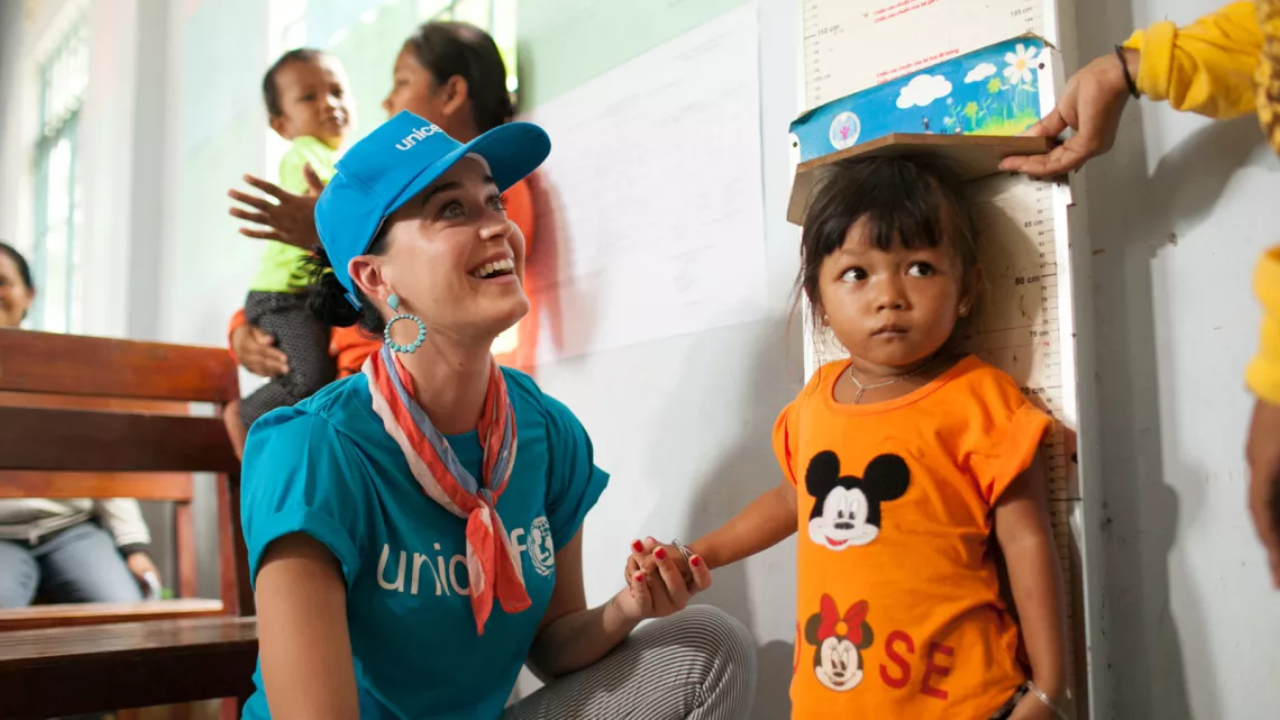
A four-day trip to Madagascar in April 2013 gave Perry her first close look at UNICEF's work before her formal appointment in December that year. Three years later, in 2016, she traveled to Ninh Thuan Province in Vietnam to highlight challenges facing children in rural communities.
Field missions do something vital for public awareness. They turn abstract statistics on malnutrition, schooling, or maternal health into recognizable human faces.
Yet every veteran aid worker knows the limits of the short field visit. A high-profile guest arrives with tight security, packed schedules, and international media in tow. Local clinics still face staffing shortages after the convoy leaves, and rural families still depend on steady municipal budgets rather than fleeting international headlines.
- Visibility spikes quickly: A celebrity post or video can send traffic surging toward an agency appeal within hours.
- Attention fades fast: Pop cycles move relentlessly from album drops to residencies and festival headliners, testing whether public interest stays put.
- Institutions do the heavy lifting: Vaccines, classrooms, and child-protection systems require trained workers, logistics, and multi-year financing that no single performer can supply alone.
The Gray Areas Nobody Likes to Admit
Celebrity diplomacy carries an uncomfortable trade-off that mainstream entertainment coverage routinely glosses over. When a pop star champions a cause, part of the spotlight inevitably reflects back onto the star's personal brand.
Critics of celebrity humanitarianism often point out that glossy imagery can oversimplify complex crises. A heartfelt speech or a viral campaign clip can make systemic problems look solvable through sympathy and donations alone. Even when the intent is genuine, the mismatch between pop spectacle and grueling aid work can feel jarring.
On the other hand, dismissing celebrity involvement altogether ignores a practical truth about modern media. Most people do not wake up looking for dense briefings on child welfare or global health logistics. If a familiar artist gets even a fraction of her audience to learn how UNICEF operates or to support emergency relief, that bridge has real value.
| Dimension | What Celebrity Advocacy Does Well | Where It Falls Short |
|---|---|---|
| Reach | Cuts through crowded feeds and reaches younger, non-policy audiences. | Attention can spike briefly and drop when entertainment news shifts. |
| Storytelling | Humanizes field visits in places like Madagascar and Vietnam for mass viewers. | Short visits cannot capture every structural or political bottleneck on the ground. |
| Impact | Boosts visibility for emergency appeals, health access, and child protection. | Cannot replace sustained public funding, local governance, or frontline staff. |
What Over a Decade of Partnership Actually Proves
Longevity alone is a revealing metric in celebrity charity. Plenty of stars attach their names to a single gala or holiday drive and quietly move on. Keeping a UNICEF Goodwill Ambassador role active from 2013 through the mid-2020s requires repeated coordination across shifting career phases, from massive pop eras to television judging, motherhood, and major live performances.
Still, supporters and skeptics alike should judge the relationship with clear eyes. Perry's role has never been to run field operations or write health policy; her job has been to keep children's needs visible when the rest of the world is distracted.
Whenever you see a pop star linked to a global charity, look past the photo op and ask what happens six months later when the cameras turn elsewhere.
Katy Perry Unconditionally UNICEF Goodwill Ambassador
This video connects directly to the article because it captures the start of Katy Perry's formal appointment as a UNICEF Goodwill Ambassador in December 2013 and how her music platform was paired with the agency's outreach.