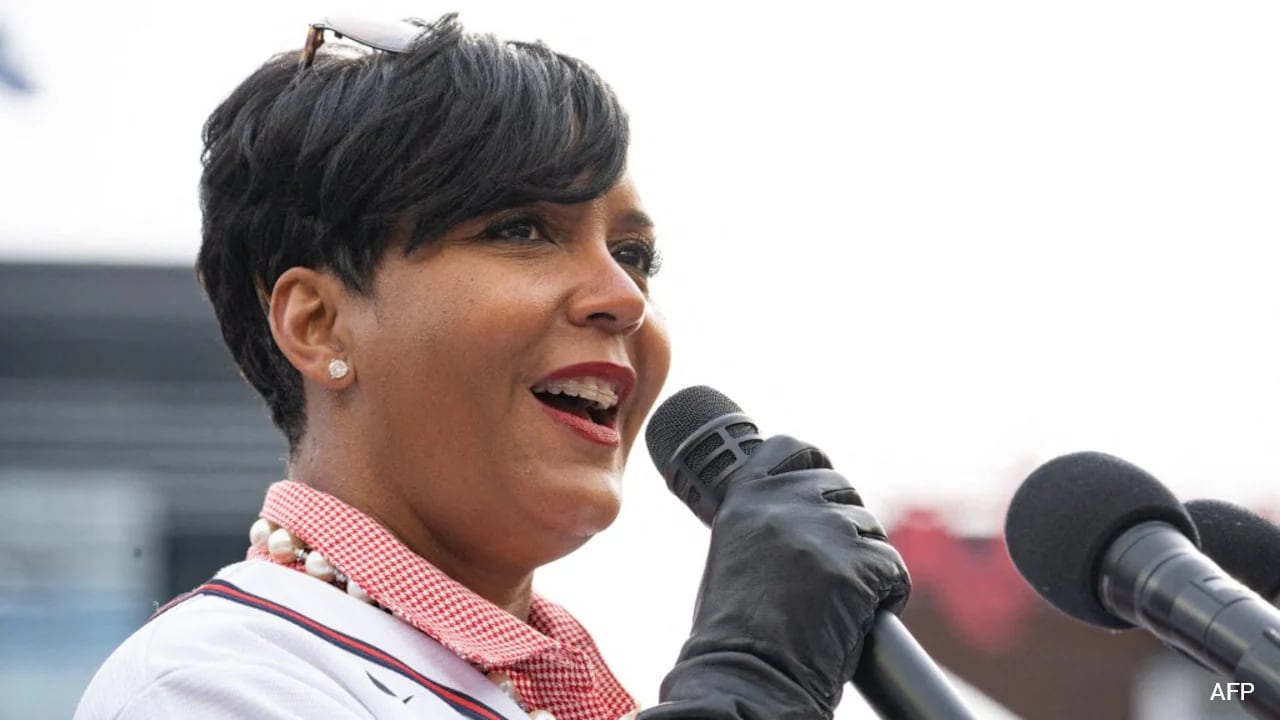
Keisha Lance Bottoms has officially made American political history by becoming the first Black woman elected governor in the United States. Following a fiercely contested gubernatorial cycle in Georgia, the former Atlanta mayor and White House senior advisor secured the state's highest office, breaking a barrier that has stood since the nation's founding across all fifty states. While prior high-profile campaigns by figures like Stacey Abrams laid the organizational groundwork and proved the financial viability of Black female gubernatorial candidates in the Deep South, Bottoms' victory converts years of demographic shifts and grassroots voter registration into executive state power.
The significance of this milestone extends far beyond symbolic representation. For nearly two and a half centuries, the American governorship remained the most stubbornly homogeneous executive tier in domestic politics. Black women had served as mayors of major metropolises, members of the House of Representatives, United States Senators, and Vice President of the United States. Yet the governor's mansion—where state budgets are written, National Guard units are deployed, judicial appointments are finalized, and redistricting maps are signed or vetoed—remained entirely out of reach. Bottoms' ascent alters the institutional balance of power in one of the nation's fastest-growing economic hubs.
The Anatomy of a Historic Coalition
Winning a statewide race in Georgia as a Democrat requires navigating a razor-thin electoral margin where every demographic bloc must perform near its ceiling. Bottoms did not win simply by running up the score inside the Atlanta perimeter. Her campaign executed a surgical expansion strategy that blended traditional urban turnout with targeted suburban persuasion and rural damage control.
Metro Atlanta remains the undisputed engine of Democratic statewide viability. Counties like Fulton, DeKalb, Gwinnett, and Cobb now account for nearly half of the state's total electorate. Bottoms leveraged her deep familiarity with the region's infrastructure, business community, and local political machinery to maximize turnout in these core jurisdictions. Having served two terms on the Atlanta City Council before becoming the city's 60th mayor in 2018, she possessed an institutional network that out-of-state strategists cannot easily replicate.
However, urban dominance alone does not win statewide elections in the South. The decisive shift occurred in the rapidly diversifying suburban ring counties—places like Henry, Douglas, Rockdale, and Newton—where Black middle-class migration from other states has fundamentally rewritten local politics over the past decade. Bottoms' messaging prioritized economic kitchen-table issues over ideological purity, focusing heavily on healthcare access, public school funding, and housing affordability. By framing her platform around pragmatic governance rather than partisan warfare, she successfully retained independent and moderate suburban voters who had previously split their tickets.
The White House Factor and Executive Credibility
Critics during the primary and general elections frequently attempted to tie Bottoms to national Democratic headwinds, pointing to the challenges she faced during her single term as Atlanta's mayor. Her decision not to seek re-election in 2021, following a tumultuous period marked by the COVID-19 pandemic, civil unrest in the summer of 2020, and rising violent crime rates across major American cities, provided ample ammunition for her opponents.
Yet her subsequent tenure in Washington proved to be an unexpected asset on the campaign trail. Joining the Biden administration as Senior Advisor to the President and Director of the White House Office of Public Engagement gave Bottoms direct exposure to federal legislative implementation, national infrastructure funding mechanisms, and crisis management at the highest level.
On the stump, she used this dual background to project executive durability. She argued that governing a major American city during a once-in-a-century pandemic and subsequently managing national stakeholder coalitions in Washington prepared her for the statehouse in ways a traditional legislative career never could. Voters responded to the distinction between lawmakers who pass bills and executives who manage complex bureaucracies under pressure.
Overcoming the Double Bind of Race and Gender
To understand why it took until 2026 for a Black woman to win a governorship anywhere in the United States, one must examine the structural mechanics of statewide executive elections. Unlike congressional districts, which can be drawn to reflect specific communities of interest, state borders are fixed. Statewide candidates must appeal to an entire electorate, including rural and exurban areas where racial and gender biases often manifest as doubts about a candidate's "electability" or perceived ideological extremism.
Political scientists have long documented the "double bind" facing Black female candidates. They are frequently viewed by moderate voters as more liberal than their actual policy positions suggest, while simultaneously facing intense scrutiny regarding their temperament and executive toughness. During her time as Atlanta mayor, Bottoms gained national visibility for her forceful public addresses during the 2020 protests, famously urging demonstrators to go home and channel their anger into voting while condemning the destruction of property in downtown Atlanta.
That specific moment—characterized by a blend of maternal empathy and law-and-order pragmatism—became the template for her gubernatorial persona. It allowed her to neutralize Republican attacks painting her as soft on crime without alienating the progressive base that demanded systemic accountability. She refused to let opponents define her on their terms, consistently pointing to her background as a former magistrate judge and prosecutor alongside her advocacy for criminal justice reform.
The Shadow of 2018 and 2022
No analysis of Bottoms' victory is complete without accounting for the campaigns that preceded hers. Stacey Abrams' 2018 and 2022 runs for governor fundamentally altered the financial and organizational architecture of Georgia politics. Before 2018, national Democratic donors largely wrote off Georgia as a deep-red state unworthy of eight-figure investments. Abrams proved that a Black woman could raise over $100 million, build a year-round voter registration apparatus, and come within 55,000 votes of the governor's mansion.
Bottoms inherited that hardened infrastructure, but she also learned from its limitations. While previous campaigns relied heavily on expanding the electorate by registering unlikely voters, Bottoms' team placed equal emphasis on persuasion—specifically targeting low-propensity voters who had sat out recent midterms due to economic frustration. Her field operation utilized granular precinct-level data to identify households where split-ticket voting had occurred in prior cycles, deploying targeted digital and door-to-door outreach focused strictly on state-level economic policies.
Governing a Divided Statehouse
Winning the election is only the opening chapter; governing Georgia as a Democratic executive presents an entirely different set of institutional hurdles. Unlike states where the governor wields near-absolute authority over the executive branch, Georgia distributes power across multiple independently elected constitutional officers, including the Lieutenant Governor, Attorney General, and Secretary of State. Furthermore, Bottoms enters office facing a state legislature where Republicans retain structural advantages in both the House and the Senate.
This divided government reality means Bottoms cannot govern by executive fiat. Her ability to deliver on core campaign promises—most notably the full expansion of Medicaid under the Affordable Care Act, which Georgia has resisted for over a decade—will depend entirely on her capacity to broker deals with conservative legislative leaders.
The financial math surrounding Medicaid expansion has shifted considerably in recent years, giving Bottoms a potent negotiating tool. Rural hospitals across Georgia have closed at an alarming rate, leaving vast swaths of Republican-represented districts without emergency obstetric or trauma care. Bottoms has signaled that she intends to frame Medicaid expansion not as a partisan social program, but as a rural economic stimulus package backed by billions in federal matching funds. Whether conservative lawmakers will yield on a long-standing ideological refusal remains the central test of her first hundred days.
Economic Policy and the Corporate Tightrope
Georgia's economic identity over the past twenty years has been built on aggressive corporate recruitment, low business taxes, and massive investments in logistics, film production, and electric vehicle manufacturing. Previous administrations successfully courted major international corporations by offering generous tax incentives and a predictable regulatory environment.
Bottoms faces the delicate task of maintaining Georgia's status as a premier destination for corporate capital while addressing the demands of organized labor and environmental advocates within her own coalition. During the campaign, business leaders in Atlanta's Buckhead and Midtown districts expressed quiet concern that a Democratic administration might roll back corporate tax incentives or impose stricter labor regulations.
Bottoms sought to assuage those fears early by emphasizing continuity in economic development. Having worked closely with Atlanta's Fortune 500 executives during her tenure as mayor—particularly during the city's successful bid to host major international sporting events and corporate headquarters—she understands the language of the boardroom. Her economic blueprint focuses on workforce development, technical college funding, and expanding public transit infrastructure to ease the gridlock that threatens metro Atlanta's long-term competitiveness.
The National Ripple Effect
The political consequences of Keisha Lance Bottoms' victory extend well beyond the borders of the Peach State. For the national Democratic Party, her win offers a blueprint for competing in Sun Belt states where rapid urbanization and demographic diversification are colliding with entrenched conservative governance.
For decades, party strategists debated whether the path back to power in the South ran through nominating moderate white candidates who could appeal to rural voters, or energizing a multiracial coalition led by candidates of color. Bottoms' victory demonstrates that the dichotomy itself is flawed. A Black woman can win statewide in the Deep South when she combines authentic cultural connection to the party's most loyal constituency with disciplined, centrist-leaning executive messaging on the economy and public safety.
At the same time, her win places immense pressure on future candidates across the country. The psychological barrier that allowed donors and party bosses to whisper that a Black woman "can't win statewide" has been permanently dismantled. From North Carolina and Texas to Maryland and California, prospective candidates now have a tangible precedent to point to when building statewide campaigns and demanding institutional financial backing.
In Atlanta, the transition of power is already underway, marked by the quiet reality of a state adjusting to a new political era. The portraits lining the walls of the Georgia State Capitol tell an unbroken story of white male governance stretching back to the colonial period. When Keisha Lance Bottoms takes the oath of office, she will not merely be adding a new face to that gallery; she will be rewriting the fundamental rules of who gets to wield executive authority in the American South.