Body counts sell newspapers. They do not win wars.
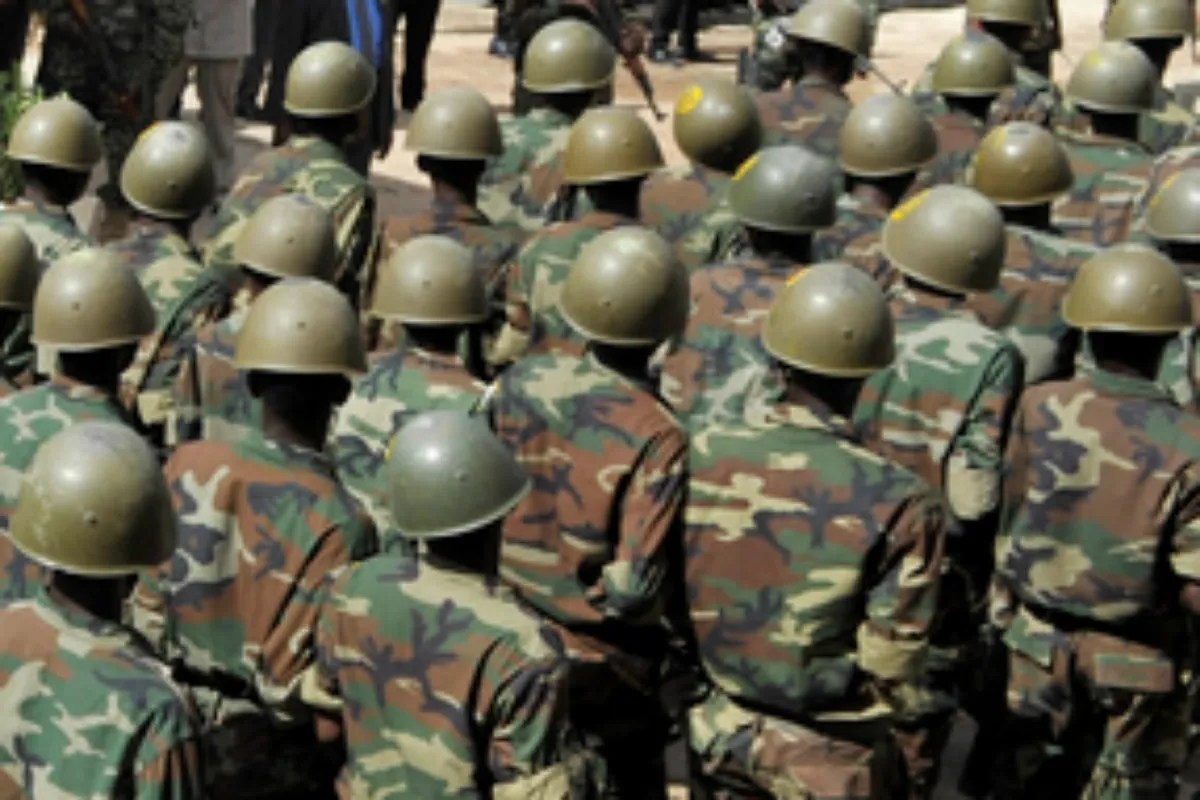
Every time a headline screams that Somali forces wiped out seventy-five al-Shabaab militants, the lazy consensus kicks in on autopilot. Cheers go up in newsrooms. Press releases get recycled. Analysts talk about momentum, turning points, and crippling blows to an insurgency that has survived drones, air strikes, clan shifts, and over a decade of international intervention.
I have watched defense budgets burn through hundreds of millions of dollars on campaigns built around this exact math. Kill enough fighters, hold enough towns, declare victory, and act shocked when the same flag goes back up three months later.
If you measure counter-insurgency in dead bodies against a deeply rooted militant group like al-Shabaab, you are staring at the wrong scoreboard. Worse, you are helping the group recruit its next class.
The Body Count Trap
Let us define the terms before anyone confuses a tactical raid with strategic progress. Attrition is the slow wearing down of an opponent's personnel and material over time. Counter-insurgency (COIN) is a political-military struggle to secure populations, build legitimate governance, and strip an armed movement of its operating room.
People treat those two concepts as twins. They are not.
In an asymmetric conflict, a militant organization does not need to out-gun a state army or match its casualty figures. It only needs to outlast the political patience of the state and its backers while remaining indispensable or unavoidable in daily life. When Somali forces kill seventy-five fighters in a single operation, that is a real tactical loss for a unit on the ground. Experienced commanders die. Local cells lose muscle.
Yet al-Shabaab has operated for years as more than a collection of gunmen. It functions as a shadow administration, a tax collector, a dispute resolver, and a ruthless enforcer across swaths of central and southern Somalia. When a militant dies in a clash or air strike, the group loses a rifle. Unless the underlying political vacuum, clan grievance, or lack of state service delivery changes, the group does not lose its recruitment pipeline.
Imagine a scenario where a district town changes hands three times in two years. Each time, security forces arrive with fanfare, push the militants into the bush, and then struggle to pay civil servants, keep courts running, or protect farmers from extortion. Who looks like the permanent authority to a local shopkeeper trying to stay alive? Not the temporary garrison.
Scholars of irregular warfare like David Kilcullen and analysts studying the Horn of Africa—including researchers at the International Crisis Group and the Combating Terrorism Center at West Point—have hammered this point for years. Insurgencies thrive on governance gaps and social friction, not merely on headcount. You cannot shoot your way out of a legitimacy deficit.
Why Headlines Miss the Real War
Read a standard wire report on a major clash in Somalia and look at what is missing. Usually, you get the number of militants killed, maybe a mention of recovered weapons or a destroyed vehicle, and a quote from an official calling it a major blow.
What you rarely get is the harder, quieter truth:
- Who held the ground at dusk? Clearing a village takes hours. Holding it while maintaining supply lines and local trust takes years.
- How was the fight funded and taxed? Al-Shabaab's revenue model—extorting businesses, taxing trade corridors, and squeezing communities—keeps it solvent even when hit hard on the battlefield.
- Which clan dynamics were triggered? Somalia's politics run along intricate clan lines. A poorly sequenced operation can alienate a local clan and push fence-sitters straight into militant arms.
- What replaced militant justice? Slow, corrupt, or absent state institutions make brutal but predictable militant arbitration look attractive to people desperate for basic order.
When coverage stops at seventy-five dead militants, the audience walks away with a distorted picture. They think the war is a math problem where subtracting enough bad guys equals peace.
That is comforting. It is also wrong.
Dismantling the Usual Questions
When a big raid hits the news, people rush to ask the same predictable questions. Most of those questions are built on shaky assumptions.
Did this operation cripple al-Shabaab?
No. A single engagement—even a bloody one—rarely cripples a seasoned insurgency unless it destroys a critical command node or severs a vital supply artery that cannot be replaced. Al-Shabaab is decentralized enough to absorb heavy tactical losses, disperse into smaller cells, shift routes, and strike soft targets elsewhere to prove it still exists. Crippling an insurgency requires breaking its finances, its local leverage, and its ability to regenerate fighters faster than they are removed.
Are Somali security forces finally ready to stand alone?
Asking whether the Somali National Army is "ready" in a binary yes-or-no way misses how real armies mature. Parts of Somalia's security apparatus have shown real grit, especially specialized units that have taken heavy casualties in tough terrain. At the same time, building a cohesive, sustainably funded national force out of units that often reflect clan loyalties, uneven logistics, and shifting foreign support is a grinding generational project. Readiness is not a light switch. It is institutional staying power.
Will more military pressure force al-Shabaab to the negotiating table?
Military pressure alone rarely makes an armed group surrender when it still believes time is on its side. Pressure can create leverage, especially when paired with local uprisings and financial squeeze, but negotiations—if they ever happen in any meaningful way—depend on political calculus, internal divisions within the group, and credible state strength. Without political cohesion in Mogadishu and real local governance, battlefield wins evaporate fast.
What Actually Works (And What Costs You)
If body counts are a trap, what should policymakers, commanders, and readers actually focus on?
First, tie every military push to civilian administration from day one. Do not send troops into an area without a plan for local police, basic courts, municipal services, and clear communication with clan elders. If the state shows up only with guns and leaves behind nothing but rubble and checkpoints, you have planted seeds for the next insurgency.
Second, follow the money and the checkpoints. Al-Shabaab acts like a predatory tax authority. Cutting off extortion networks, auditing financial flows, and protecting trade routes hurts the group far more consistently than a splashy press release about battlefield casualties.
Third, invest in political settlements and local reconciliation. Wars in Somalia are never purely ideological; they are tangled up in land disputes, clan rivalries, marginalization, and center-periphery resentment. Real progress means doing the unglamorous political work that makes communities want the federal and regional states to succeed.
Now for the honest part—because pretending there is no downside to this approach would be just as lazy as cheering body counts.
Focusing on governance, economics, and politics instead of kinetic raids is slow, messy, and politically thankless. Governments hate waiting years for institutional reform to show results, especially when voters or donors want visible action now. Worse, if you hold back offensive pressure while trying to build institutions, a ruthless group like al-Shabaab will exploit the breathing room to regroup, intimidate civilians, and launch attacks that shatter public confidence.
There is no clean shortcut here. Pure force without governance fails. Pure governance work without security gets overrun. The hard truth is that Somalia needs both, sequenced carefully and funded for the long haul, without falling for the illusion that a high death toll equals strategic victory.
Seventy-five dead fighters is a tactical event, not the end of the story. Watch who governs the town next month.