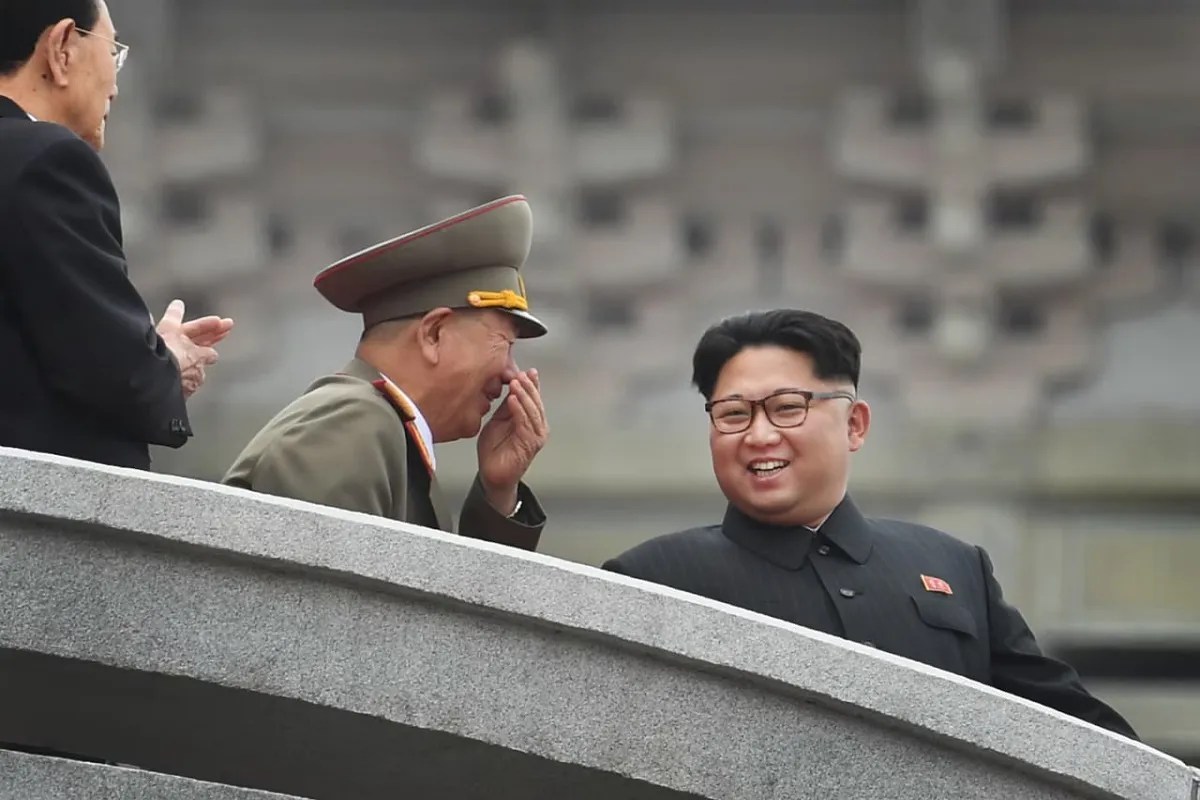
Kim Jong Un is rewriting the rules of survival in Pyongyang, and he is starting by shrinking the shadows of his own ancestors.
If you have watched North Korea for any length of time, you know that the entire state machinery rests on the mythos of the Mount Paektu bloodline. State founder Kim Il Sung and his successor Kim Jong Il were practically treated as deities. Their names, quotes, and portraits anchored every single aspect of public and political life. That absolute reliance on past glory is shifting. Recent documents analyzed by intelligence groups show that North Korea's ruling Workers Party of Korea has officially scrubbed the remaining references to the achievements of Kim's grandfather and father from its core party charter.
This is not a minor bureaucratic tweak. It is a calculated move to cement absolute, unshared authority around the current supreme leader as he enters a new phase of his rule.
What Actually Changed in the Party Charter
The Institute for National Security Strategy in Seoul recently published a detailed breakdown of the revised Workers Party charter. Adopted during major political congress proceedings, the updated text strips away the final paragraphs dedicated to "Kim-Il-Sung-ism" and "Kim-Jong-il-ism" legacy markers.
For decades, the ruling party's preamble leaned heavily on the historical accomplishments of the first two leaders to justify its current mandate. By removing those explicit nods, Kim Jong Un is shifting the ideological anchor away from family nostalgia and onto his own distinct political identity. He is basically telling the elite that legitimacy no longer flows exclusively from who your father was. It flows from execution, loyalty, and the institutional power he wields right now.
Alongside these removals, the charter adjustments formalize concrete administrative powers for the general secretary. Instead of broad, sweeping descriptions of leadership, the new text explicitly grants Kim the authority to summon party meetings, handpick or dismiss top officials, expel members at will, and dissolve entire party departments. He has streamlined his control so that every single lever of statecraft terminates directly at his desk.
The Two-State Reality and War Preparations
You cannot separate these domestic text changes from Pyongyang's aggressive foreign policy overhaul. North Korea has completely dropped any official goal of peaceful reunification with South Korea from its guiding documents.
The old language talking about a shared national destiny and a united front has been ripped out. In its place stands the codified doctrine of "two hostile states". Seoul is no longer viewed as a brotherly neighbor trapped under foreign occupation. It is officially categorized as a primary adversary nation at war.
This shift explains why the regime has simultaneously introduced stringent wartime provisions into its legal framework. The state is hardening its posture. By framing the Korean Peninsula as a permanent zone of conflict between separate nations, the regime justifies continuous military mobilization, tighter domestic information control, and rapid testing of advanced weapons systems.
Moving Away From the Shadow of the Past
Why would a dictator deliberately downplay the very bloodline that birthed his dynasty?
Living in the literal shadow of a legendary grandfather and a powerful father creates a unique political trap. As long as a leader’s legitimacy is derived primarily from ancestors, he remains merely the custodian of someone else's revolution. By systematically thinning out those historical references, Kim Jong Un is engineering a transition into what analysts call an independent era of his own.
He has spent over a decade in power. He has survived economic shocks, international sanctions, and a global pandemic. He no longer needs to borrow legitimacy from the past. He is manufacturing a political environment where his own pragmatic decisions, economic plans, and uncompromising security stances form the sole basis of the state's ideology.
Expect fewer references to the past mistakes or triumphs of previous generations inside North Korean state media. The focus has narrowed entirely to the present moment, controlled tightly by a leader who intends to rule without historical competition, even from his own family tree.